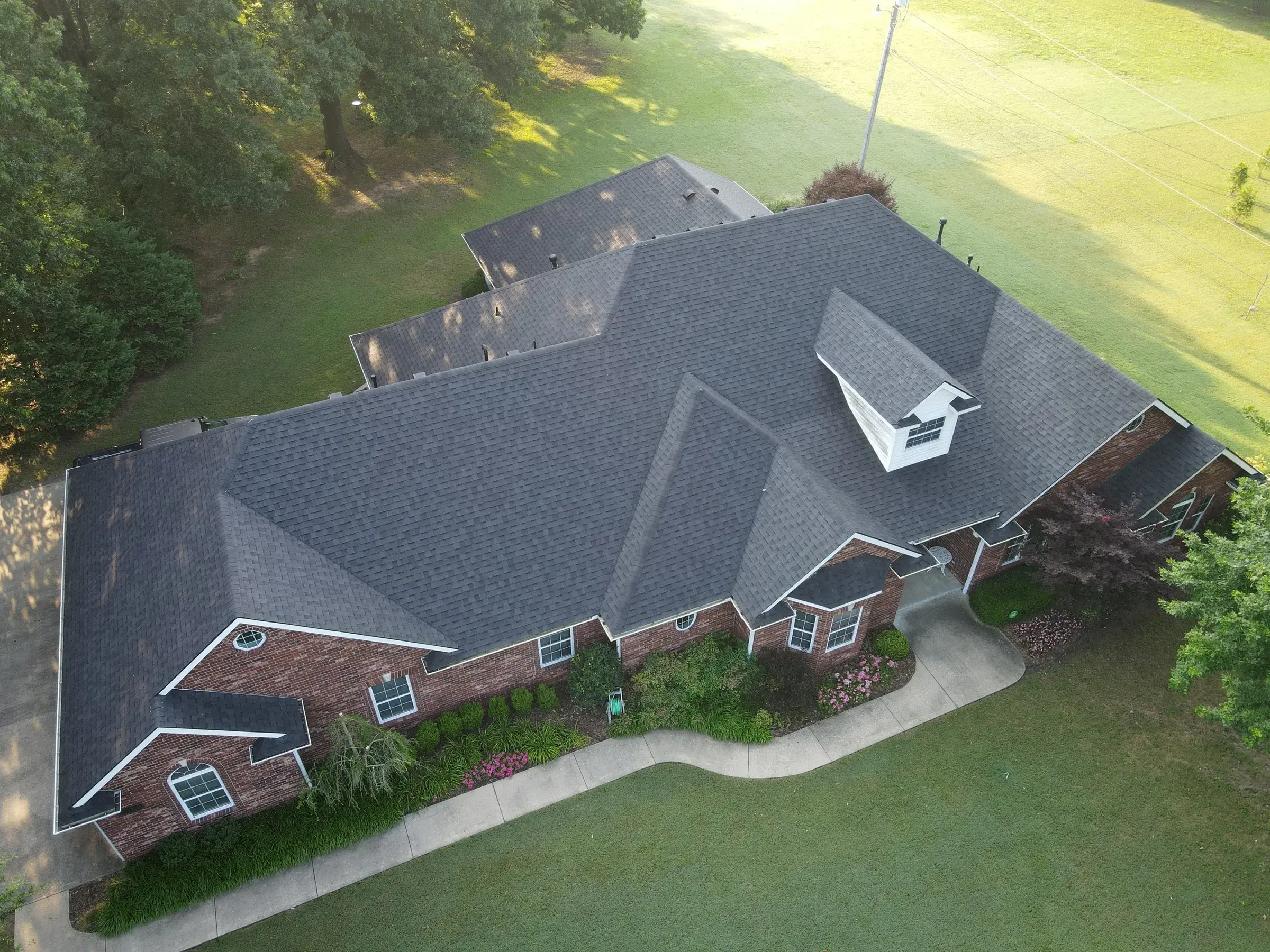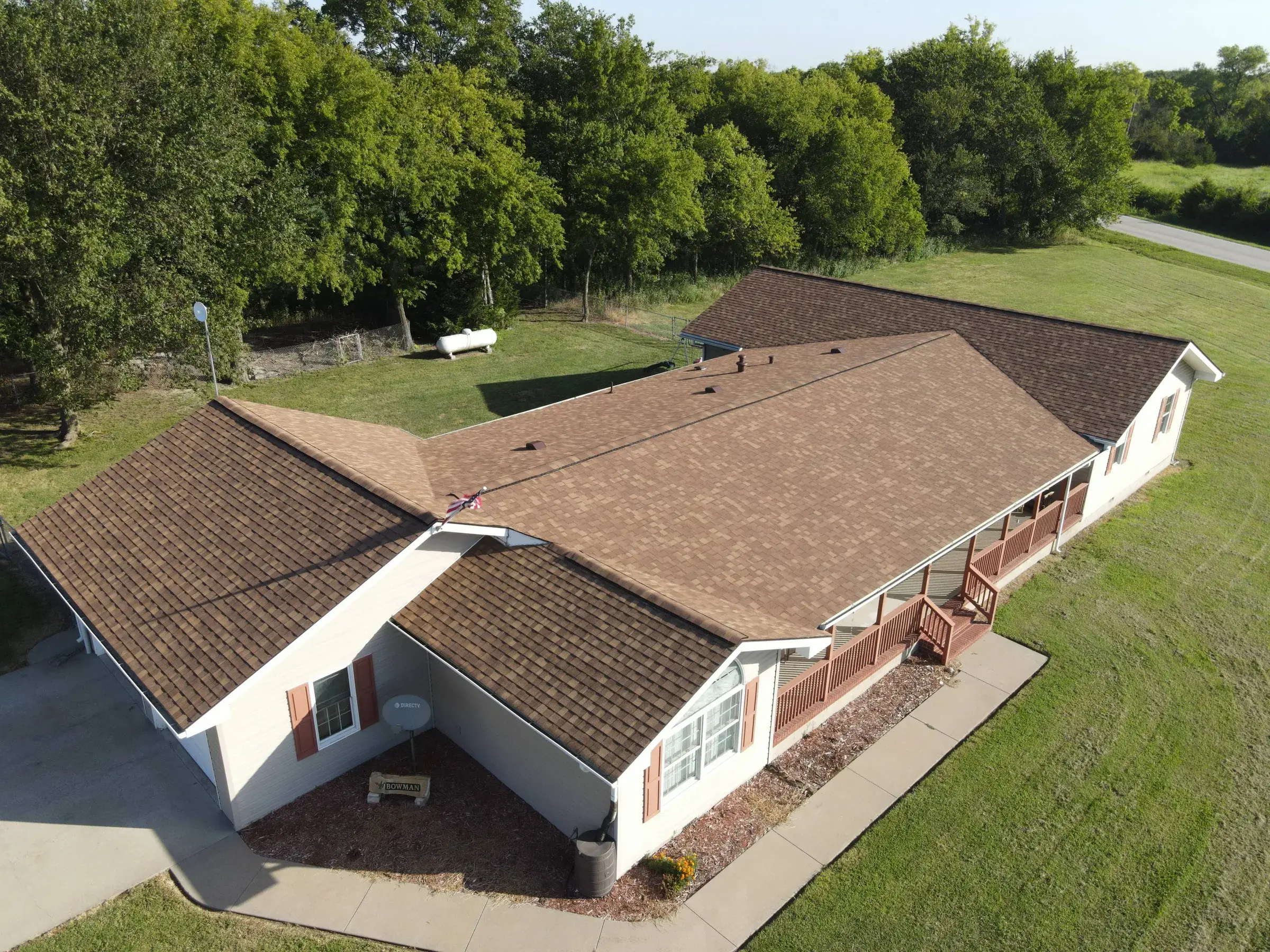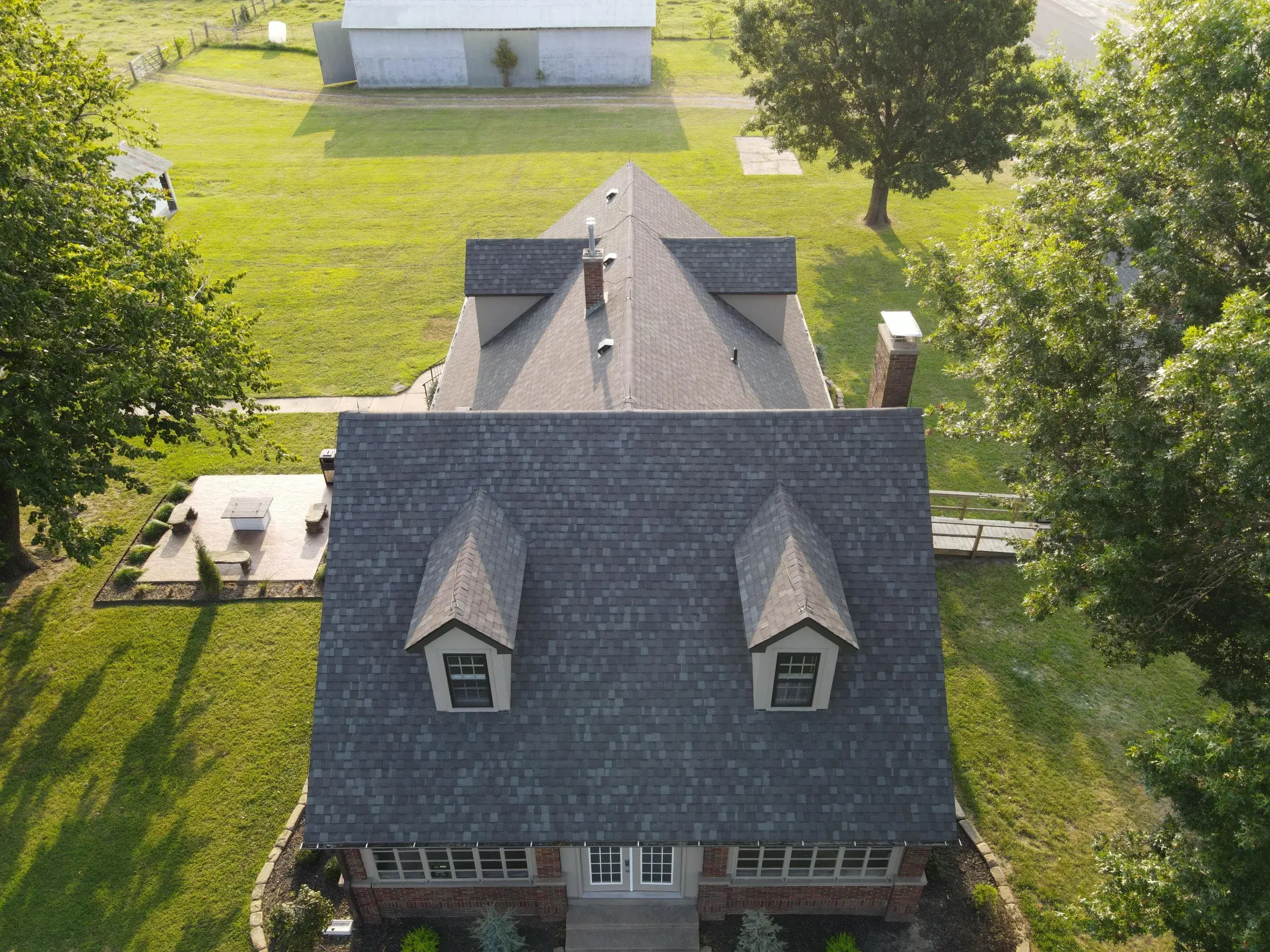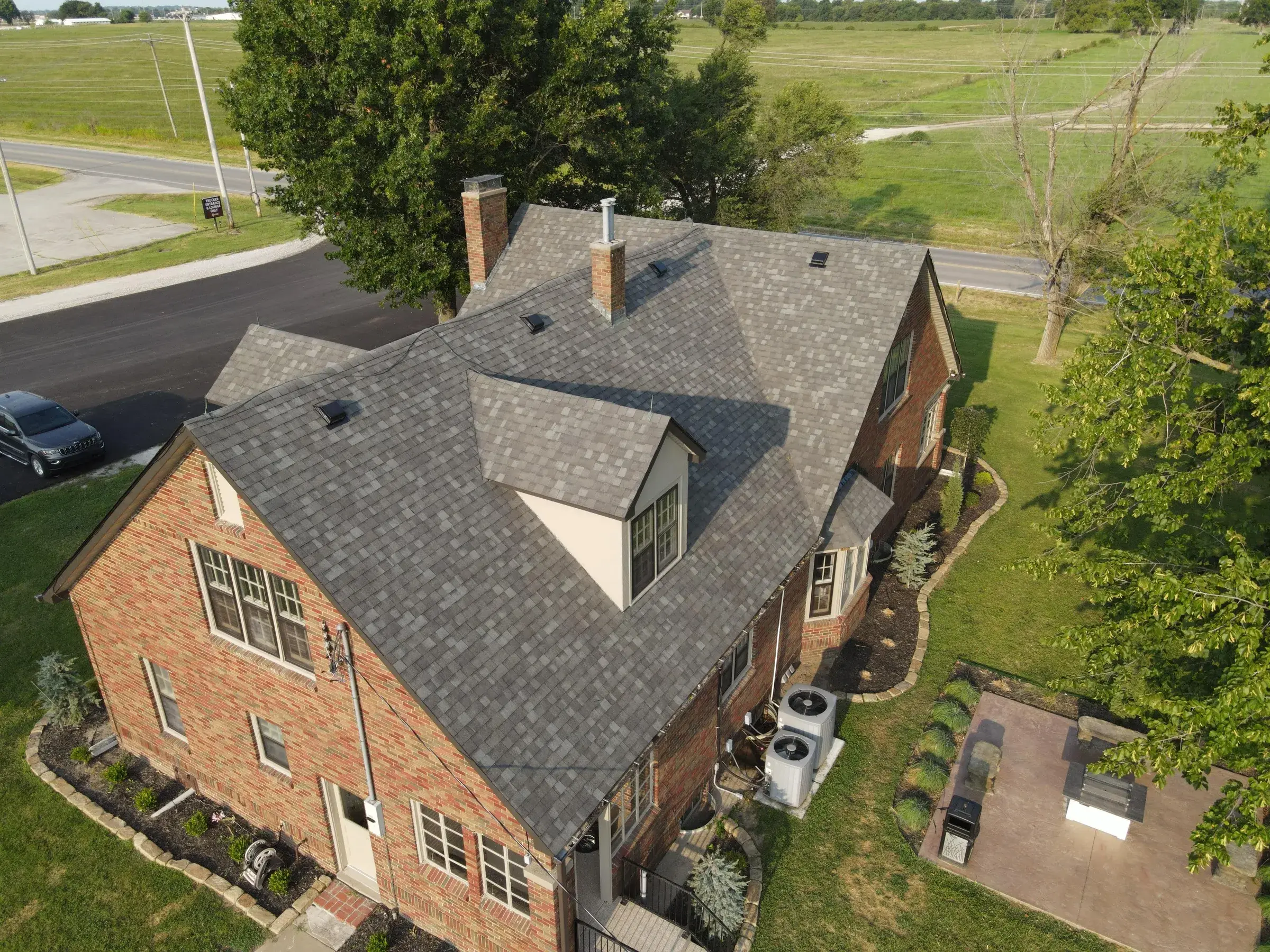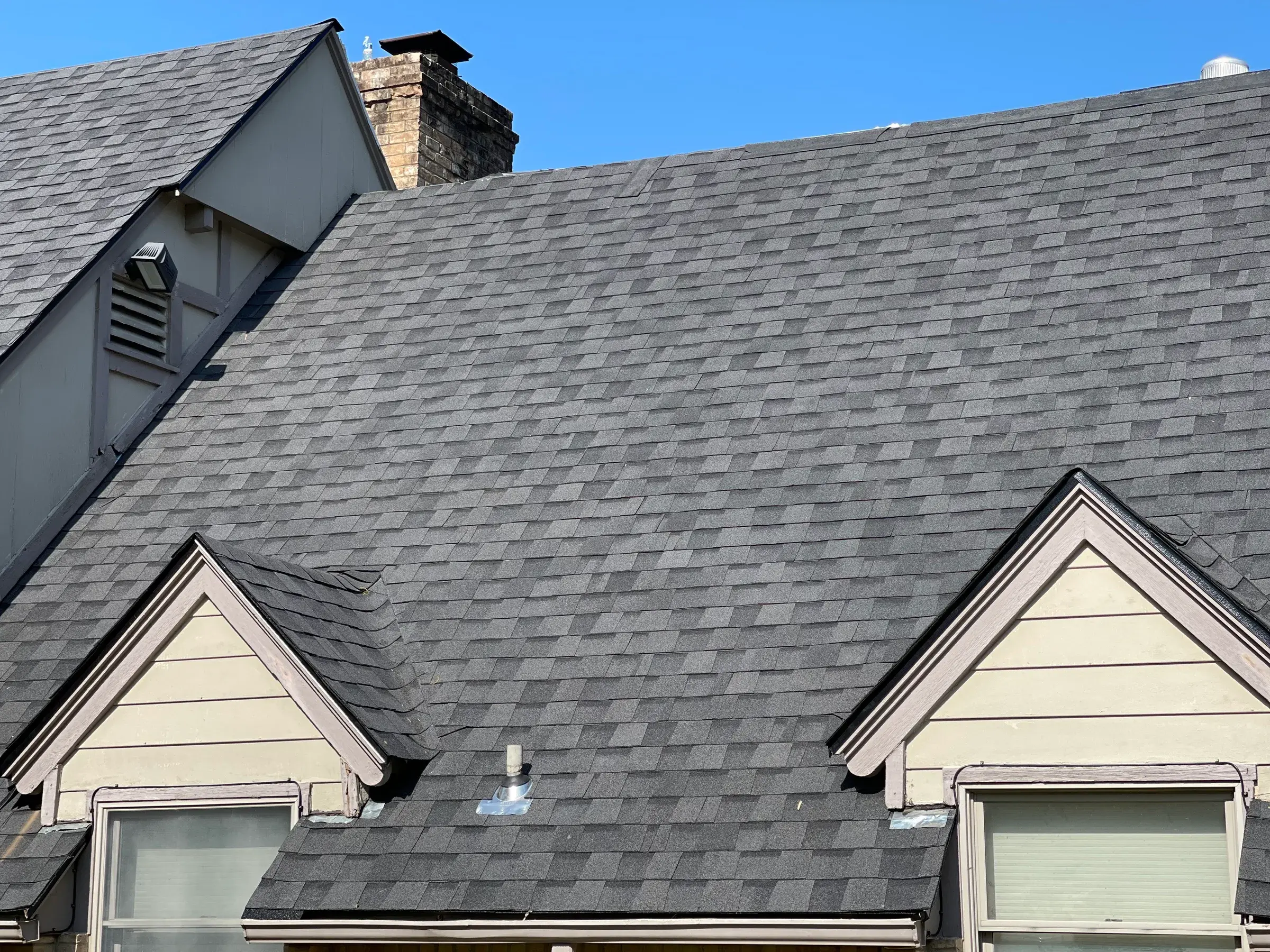
Expected service life varies by material — architectural asphalt shingles typically outlast three-tab, and metal typically outlasts both. But published figures assume good ventilation, correct installation, and no hail. In northeast Oklahoma, hail impact, attic heat, and freeze-thaw cycling routinely shorten real-world life, so age alone never settles it — condition does.
Why "How Long Does a Roof Last" Has No Single Answer
The number most people have in their head came off a manufacturer's product sheet. That sheet describes a roof installed exactly to specification, breathing properly through a balanced attic, on a house that never got hit by anything. It is a real number. It just describes a laboratory more than it describes Ottawa County.
Three things move the real number, and only one of them is the material. The second is installation — nail placement, starter course, flashing details. The third is what the sky does to it. In northeast Oklahoma the sky does quite a lot.
So age is where you start, not where you finish. A 14-year-old roof with two bruised slopes and a superheated attic can be closer to done than a 22-year-old roof on a shaded, well-vented house west of town. Age tells you what to look for. Condition tells you what you have.
Expected Service Life by Material: Three-Tab, Architectural, Metal, Wood, Tile
Here is the honest version of the table everyone wants. These are typical expected ranges drawn from manufacturer product literature and the National Roofing Contractors Association's general guidance on roof system service life. They are expectations, not entitlements.
| Material | Typical expected service life | What shortens it in northeast Oklahoma | Source basis |
|---|---|---|---|
| Three-tab asphalt shingle | About 15–20 years | A single-layer mat has the least material between hail and the fiberglass. Heat and UV drive it faster than architectural. | Manufacturer product literature; NRCA service-life guidance |
| Architectural (laminated) asphalt shingle | About 20–30 years | Same stressors, but the laminated double mat absorbs impact better and holds granules longer. | Manufacturer product literature; NRCA |
| Standing-seam metal (concealed fastener) | About 40–50 years or more | Panel coating chalks under UV. Hail dents it, usually cosmetically before it ever leaks. | Manufacturer product literature; NRCA |
| Exposed-fastener metal panel (screw-down) | About 20–40 years | The neoprene washers on the exposed screws dry out, and thermal cycling walks the screws loose. Re-screwing is maintenance, not failure. | Manufacturer product literature; NRCA |
| Wood shake or shingle | About 20–30 years | Shade and tree debris hold moisture, and hail splits weathered shakes along the grain. | NRCA service-life guidance |
| Concrete or clay tile | 50+ years for the tile itself | Uncommon here for good reason: heavy, and hail cracks it. The underlayment beneath fails decades before the tile does. | NRCA service-life guidance |
| Second layer over an existing roof | Shorter than the same shingle on a clean deck | Trapped heat, no deck inspection, and hail damage you cannot diagnose without tearing into two layers. | Manufacturer application instructions |
Two rows deserve a note. Tile and wood are both rare on houses around Miami, and neither is rare by accident — tile is a structural weight problem on framing that was never designed for it, and wood does poorly in a hail market. Metal earns its number only when the fasteners are maintained. A screw-down panel roof that nobody has touched in 25 years is not a 40-year roof. It is a 40-year panel with 25-year-old washers.
The Gap Between Rated Life and Real Life
The gap is climate. Here is the load a roof in the Miami area actually carries, using the Oklahoma Climatological Survey's 1991–2020 normals. The National Weather Service forecast office in Tulsa is the office covering Ottawa County if you want to follow the severe-weather side of it yourself.
| Measure | Normal for the Miami area | Why a roof cares |
|---|---|---|
| Days per year at or above 90°F | 57 | Two months' worth of days where the shingle surface runs far hotter than the air and the asphalt softens. |
| Days per year at or above 100°F | 5 | Peak softening. Foot traffic on these days can scuff granules off permanently. |
| August normal daily high | 91.5°F | The hottest sustained stretch, and the one that loads the attic hardest. |
| Nights per year at or below 32°F | 89 | Roughly one night in four. Each one is a potential freeze-thaw cycle at the eaves. |
| Share of possible sunshine, annual | About 62% | UV is what breaks down the asphalt binder that holds granules on. |
| Days per year with hail larger than 0.75 inch | 4 to 5 | The single biggest reason real life falls short of rated life here. |
| Record high / record low | 116°F (Miami, 1954) / −28°F (2011) | The full range the same piece of material has to survive without splitting. |
Look at those last two rows together. That is a 144-degree spread across the recorded extremes, on a material that expands and contracts with every degree of it. Nothing in the published service life assumes that.
Regional Stressor 1: Hail Impact and Accelerated Aging
Four to five days a year with hail over three-quarters of an inch, per the Oklahoma Climatological Survey. That is the only hail statistic worth trusting, and it is enough to make the point: a 20-year roof here is asked to take dozens of hail days across its life.
The damage people expect is a hole. The damage that actually shortens roofs is a bruise. Research by the Insurance Institute for Business & Home Safety on hail impact and asphalt shingle aging describes the mechanism plainly — an impact can fracture the fiberglass mat beneath the surface and loosen the granule bed above it without breaking through. From the ground the roof looks fine. What has happened is that the shingle's clock got moved forward.
What a hail bruise actually looks like
Press a thumb on it. A bruise is a soft, slightly depressed spot, usually round, often with the granules knocked off in a rough circle and the black asphalt showing through. It feels like a dent in a piece of drywall — it gives. Ordinary weathering does not give. It also has no pattern; bruises land randomly across a slope, while manufacturing defects tend to repeat in a line.
The follow-on is granule loss, and granules are not decoration. They are the sunscreen for the asphalt underneath. Strip them and UV starts working on the binder directly, which is why a bruised slope can go from "looks fine" to visibly aged in a handful of summers. If you are finding grit in the gutters, we wrote about [what shingle granule loss actually means](/blog/shingle-granule-loss-what-it-means) separately.
One caution on the insurance side, because it comes up every time hail does: whether hail damage is covered is your insurer's decision under your policy, not a roofer's to make or promise. What we can do is document what is on the roof with a photo report and give you a written estimate for the work we would perform, and meet your adjuster on site if you ask us to. Anyone offering more certainty than that is selling something.
Regional Stressor 2: Attic Heat and Poor Ventilation
This is the stressor nobody sees, and it is the one that most reliably costs a roof years. Fifty-seven days a year above 90°F, five above 100°F, and about 62% possible sunshine — that heat has to leave the attic, and if it cannot, it cooks the shingle from the back.
The U.S. Department of Energy and ENERGY STAR guidance on attic ventilation makes the same point from the energy side: a sealed, unvented, under-insulated attic runs dramatically hotter than the outside air. The roof is what is sitting on top of that.
How attic heat ages a shingle from underneath
- Sun loads the shingle surface. On a 91°F August afternoon the surface temperature runs far above the air temperature — dark roofs worst.
- Heat conducts through the shingle and the decking into the attic air below.
- With balanced ventilation, that hot air rises out the ridge while cooler air is drawn in at the soffits. The attic stays near outdoor temperature and the cycle ends here.
- With blocked soffits, no intake, or ridge vent that was never cut open, the hot air has nowhere to go. It stacks up against the underside of the deck.
- Now the shingle is being heated from both sides at once. The asphalt binder softens, volatile oils bake off faster, and the mat loses flexibility.
- Overnight it all contracts again. Repeat across 57 days a year and the shingle becomes brittle years ahead of schedule — it cracks, curls at the edges, and releases granules.
- The visible tell is a roof that looks decades older than its paperwork, usually worst on the south and west slopes.
The fix is rarely exotic. It is usually intake — soffit vents that got painted shut or buried under blown insulation, so the ridge vent has nothing to pull. A ridge vent with no intake is a decoration. If your upstairs is unbearable in August and your shingles are curling early, those two facts are the same fact, and [attic ventilation](/services/roof-ventilation-repair) is where to look first.
Regional Stressor 3: Freeze-Thaw and Ice at the Eaves
Eighty-nine nights a year at or below freezing, per the Oklahoma Climatological Survey. That is roughly one night in four, and northeast Oklahoma specializes in the worst version of it: the freeze that thaws by lunchtime and refreezes after dark.
Water that has worked into a hairline crack — in a shingle, in old flashing, in a sealant bead — expands roughly nine percent when it freezes. It levers the crack wider. It thaws, seeps deeper, and does it again the next night. Ninety of those a year is a slow prying machine, and it is why small defects here do not stay small the way they might in a milder state.
At the eaves it takes a specific form. The roof over a warm attic melts snow from below. The meltwater runs down to the overhang, which is over open air and is cold, and refreezes there into a ridge. The next melt backs up behind that ridge and sits — and shingles shed water, they do not hold it back. Water standing on a slope will find the nail line and get under. Then it is in the decking, not on it. A 2011 record low of −28°F is a reminder of what this climate is capable of at the extreme end.
If your eaves ice up every winter, that is usually an insulation and ventilation problem wearing a roofing costume. The ice is the symptom. Attic heat is the cause.
Regional Stressor 4: Wind Uplift on Exposed Rural Lots
Ottawa County is two different places, and this is where it starts to matter. The east side is Ozark Plains — rockier, wooded, rolling. The west side is Neosho Lowlands: flat prairie and farmland. Open ground means open wind fetch, with nothing to slow the wind down before it reaches your roof.
Shingles are rated for wind resistance under ASTM D7158 and ASTM D3161, and those ratings assume the shingle is installed the way the test assumed — correct nail count, nails in the nailing strip, not high, not overdriven, and a properly sealed starter course at the rake and eave. Miss the nailing strip and the rating on the wrapper stops describing your roof. That is not a materials problem. That is an installation problem, and it shows up as missing tabs after the first real wind event.
The other thing wind does is subtler than tearing tabs off. Repeated uplift flexes the shingle against the seal strip and breaks the thermal bond a little at a time. The shingle stays on the roof and stops being sealed to its neighbor. That roof is still a roof right up until the day it is not.
Worth noting for this county specifically: about 12.2% of Ottawa County's 13,701 housing units are mobile or manufactured homes, per the Census Bureau's ACS. Those roofs — usually low-slope metal or membrane over a light structure — are wind-vulnerable in a different way than a framed house, and their edge and fastener details deserve their own look.
How to Find Out How Old Your Roof Actually Is
Most homeowners are guessing, and most guesses run young. Work this list top to bottom — the first three are the most reliable, and the rest are for when the paperwork is gone.
How to date your roof
- Check with the City of Miami for a permit record. Miami requires a permit for new roofs and re-shingles, so a permitted job leaves a dated paper trail. This is the single best source if the work was done inside city limits.
- Pull your closing documents. The seller's disclosure usually asks the age of the roof, and an appraisal or inspection report from your purchase will often state a roof age or a remaining-life estimate.
- Call the previous owner if you can reach them. Failing that, a long-time neighbor often remembers which year the street got re-roofed — hail tends to re-roof a whole block at once.
- Read the shingle style. Flat, uniform tabs in a repeating rectangular pattern is three-tab, which points older. Thick, staggered, dimensional shadow lines is architectural, which points newer. It is a rough date, not a precise one.
- Get into the attic with a flashlight. Look for chalk dates, crayon or marker notes on the rafters, and the manufacture stamps on the underside of the sheathing — if the decking was replaced with the roof, that stamp dates the job.
- Look for leftover material. Bundle wrappers, a spare unopened bundle in the garage, or a scrap of underlayment in the attic almost always carry a printed date code.
- Check the rake edge and any roof penetration for a second layer. Two shingle thicknesses at the gable edge means somebody roofed over. If so, the top layer's age is not the deck's age.
- Look through old insurance paperwork for a prior claim. A claim year is usually a re-roof year.
- If none of that works, have someone lift a shingle. The exposed nail line, the seal-strip condition, and the underlayment underneath tell an experienced eye more than the surface does.
Estimating Remaining Life: What to Look For, Slope by Slope
Do not grade the roof. Grade each slope. Roofs do not fail evenly, and averaging them hides the slope that is actually driving your decision.
Take it one direction at a time
The south and west slopes take the most sun and the most heat, so they age first — expect them to look a few years older than the north side of the same roof. The north slope gets the least sun, dries the slowest, and in the wooded eastern part of the county grows moss and holds tree debris. Different failure, same roof. Whichever slope faced the last serious hail carries the bruising, and that is often a slope you cannot see from the driveway.
What to grade on each one
Granule coverage first — bare black patches, or grit piling in the gutter below that slope. Then shingle geometry: are the edges curling up, are the corners lifting, are there cracks running across the tab? Then the seal: a shingle you can lift by hand in cool weather is not sealed. Then flashing, which is where most roofs actually leak — the step flashing, meaning the L-shaped metal that ties a roof slope into a wall, plus the pipe boots. Rubber pipe boots split from UV long before the shingles are finished, and a $30 boot ruins a ceiling.
Then get off the roof and look at the decking from the attic. Daylight, dark staining, sagging between rafters, or nails that have backed out and are standing proud are all deck-level problems, and deck problems are not repairs — they are a replacement conversation. We laid out the tells in more detail in [signs your roof is nearing the end](/blog/signs-your-roof-is-nearing-the-end), and the [repair versus replacement question](/blog/roof-repair-vs-replacement-oklahoma) turns almost entirely on how many slopes are involved and whether the deck is sound.
The rule of thumb worth keeping: isolated damage on one slope of an otherwise healthy roof is a repair. Widespread granule loss and brittleness across multiple slopes is age, and age does not get repaired.
Why Two Identical Roofs on the Same Street Age Differently
Same builder, same year, same shingle, same street. One is fine at 22. One is finished at 15. This is the most common question we get, and the answers are almost always the same short list.
- Ventilation. One attic breathes and one does not. This is the biggest single differentiator, and it is invisible from the curb.
- Trees. A shaded roof runs cooler and ages slower on the sun side — and holds moisture and debris on the north side. Being in the wooded east half of the county near the Ozark Plains cuts both ways.
- Orientation. A house turned ninety degrees from its neighbor exposes a different slope to the afternoon sun and to the prevailing wind.
- Hail geometry. Hail comes in on a slant, driven by wind. Two houses a hundred feet apart can take meaningfully different impacts on meaningfully different slopes.
- Installation. Nail placement, starter courses, and flashing details were set on one afternoon fifteen years ago by whichever crew drew that house. You cannot see it and it may be the whole story.
- Exposure. West of Miami, in the Neosho Lowlands, roofs sit in open wind with no windbreak. Out toward [Commerce](/locations/commerce-ok), about five miles north, and across the flat ground, that fetch is real.
None of this is knowable from the sidewalk, which is the actual answer to "how long does a roof last." It lasts as long as its worst variable allows, and you find out which variable that is by looking.
One last thing on impact-resistant shingles, since it always follows this conversation. Class 4 impact-rated products are tested to a standard and they do hold up better to hail than standard shingles. Oklahoma does not mandate an insurance discount for them, and any specific number you have been quoted did not come from state law. Ask your own insurer directly whether they offer one and what they require to grant it.
If you have worked through the dating checklist and you still cannot tell what you have, that is exactly what an inspection is for. Our [roof inspections](/services/roof-inspections) are free, we document what is up there with a photo report so you can see it yourself, and if it turns out you need a [replacement](/services/roof-replacement) we pull the City of Miami permit as part of the job. We work out of [Miami](/locations/miami-ok) across northeast Oklahoma and into Kansas, Missouri, and Arkansas. Call (209) 758-8550 and we will come look at it.
Questions people ask about this
My roof is 18 years old but it looks fine from the ground. Do I need to replace it?
Not necessarily, and the view from the ground is the least reliable evidence you have. Hail bruising and early granule loss are largely invisible from the driveway, and the slopes that age first — south and west — are often the ones you cannot see from the street. At 18 years, an architectural shingle roof is inside its typical expected range but worth grading slope by slope. Check the attic for heat and deck staining while you are at it; if the attic is not breathing, the roof is older than its paperwork says.
How can I tell whether my roof has two layers of shingles?
Look at the rake edge — the sloped gable edge of the roof — or at any roof penetration like a pipe or chimney. Two distinct shingle thicknesses stacked at the edge means somebody roofed over an existing layer. A permit record from the City of Miami will often confirm it. It matters because Oklahoma amended IRC R908.3.1.1 to require tear-off rather than shingle-over in defined conditions, and because a second layer traps heat, hides the decking, and makes hail damage very hard to diagnose without opening the roof up.
Will a Class 4 impact-resistant shingle actually last longer in northeast Oklahoma?
It holds up better to hail impact than a standard shingle, which matters in a market that averages four to five days a year with hail larger than 0.75 inch according to the Oklahoma Climatological Survey. But it does not make a roof hail-proof, and it does nothing for the other three stressors — attic heat, freeze-thaw, and wind uplift. On the insurance question: Oklahoma does not require insurers to give a discount for impact-rated shingles, so ask your own insurer whether they offer one and what documentation they need.
Does a metal roof really last twice as long as shingles?
Standing-seam metal typically outlasts asphalt by a wide margin, but the number assumes maintenance. Exposed-fastener panel roofs — the screw-down kind — depend on neoprene washers that dry out and screws that walk loose under thermal cycling, and this climate cycles hard between a recorded 116°F and −28°F. Re-screwing is normal maintenance, not failure. A screw-down roof nobody has touched in 25 years is not performing like a 40-year roof.
Why do my neighbor's shingles look newer than mine when we have the same roof?
Usually ventilation. One attic breathes out the ridge with proper soffit intake and stays near outdoor temperature; the other stacks heat against the underside of the deck and cooks the shingle from both sides across the 57 days a year above 90°F. After that it is orientation, tree cover, the angle hail came in at, and the installation crew that happened to draw your house fifteen years ago. None of it is visible from the curb, which is why age alone never settles the question.