The Roofing Blog
No sales pitch. Just the questions homeowners around Ottawa County actually ask, answered by people who work on these roofs.
- Storm Damage & Insurance Claims
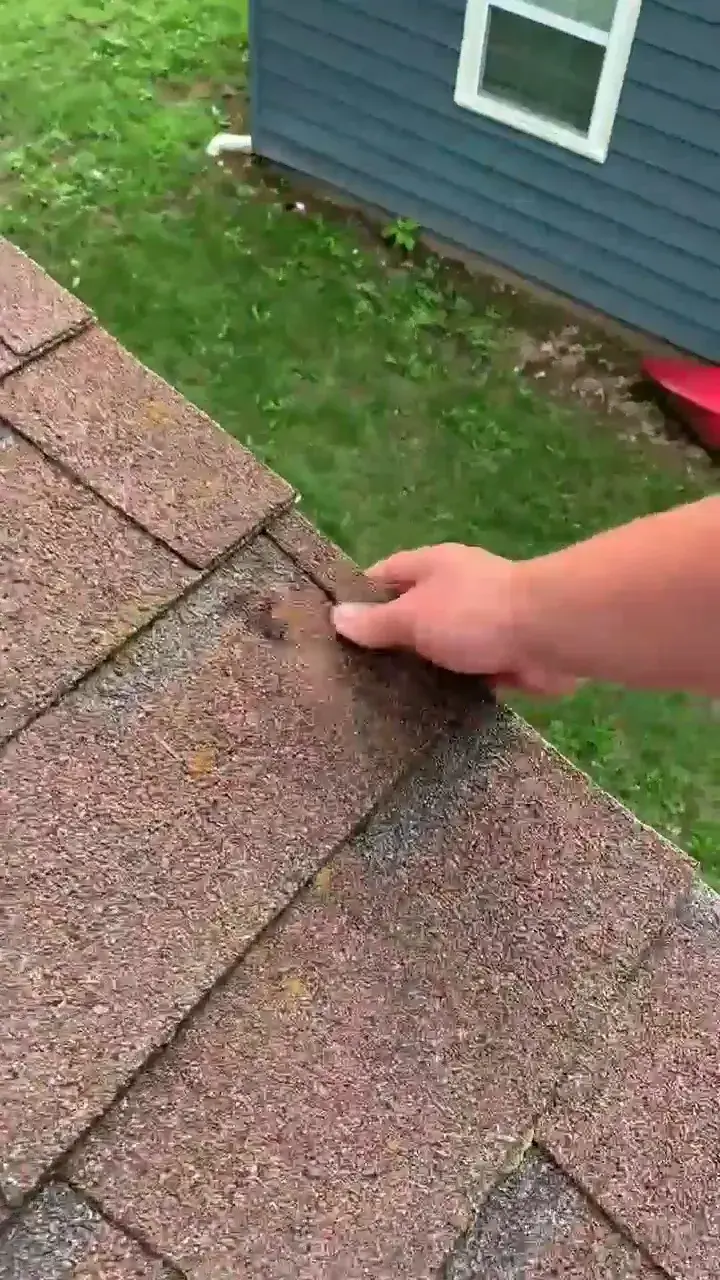
How to Identify Hail Damage on a Roof From the Ground
Hail damage rarely looks like a hole. It looks like bruising, granule loss, and dents in soft metal. Here is what to look for from the ground, what a bruise really is, and why 'my roof looks fine' is not a reliable conclusion.
Read more - Storm Damage & Insurance Claims
Wind Damage to a Roof: What It Looks Like and Why It Is Often Missed
Wind damage is not just missing shingles. The more common failure is a broken adhesive seal and a creased shingle that still looks attached — damage that only shows itself in the next rain.
Read more - Storm Damage & Insurance Claims
What to Do in the First 72 Hours After a Storm Damages Your Roof
The order matters. Safety, then stopping water, then documentation, then the claim — and knowing which of those you should never do yourself.
Read more - Storm Damage & Insurance Claims
Emergency Roof Tarping: When It Helps, When It Hurts, and What It Costs You
A tarp is not a repair — it is a clock. Done right it stops the loss from growing and preserves your evidence. Done wrong it adds fastener holes to a roof you were about to claim.
Read more - Storm Damage & Insurance Claims
The Oklahoma Roof Insurance Claim Process, Step by Step
A roof claim is a sequence of documents and decisions, not a single yes or no. Here is the whole path — first notice of loss, inspection, scope, payment, supplement, depreciation release — and where Oklahoma law sets the rules.
Read more - Storm Damage & Insurance Claims
Meeting the Insurance Adjuster About Your Roof: How to Prepare
The adjuster inspection is where the scope of your claim gets written. Preparation is not persuasion — it is having the property, the documents, and the questions ready.
Read more - Storm Damage & Insurance Claims
How to Photograph Roof Storm Damage So the Documentation Holds Up
Twenty close-ups of shingles with no context prove nothing. Good documentation is ordered, dated, wide-then-tight, and paired with a written log.
Read more - Storm Damage & Insurance Claims
Oklahoma's Roofing Deductible Law: What Contractors Cannot Offer You
If a roofer offers to 'take care of' your deductible, Oklahoma law has something to say about it. Here is the statute, what it prohibits, and why the offer signals more than a discount.
Read more - Storm Damage & Insurance Claims
Storm Chasers in Northeast Oklahoma: How to Tell Them From a Real Roofer
After hail, the knocks start. Some of those crews will be gone before your first winter. Here is how to verify who is standing on your porch — and the Oklahoma protections that already exist.
Read more - Storm Damage & Insurance Claims
Does Homeowners Insurance Cover Hail Damage to a Roof?
Most Oklahoma homeowners policies cover hail. The real question is how they cover it — and roof age schedules, cosmetic exclusions, and separate wind/hail deductibles are where the answer actually gets decided.
Read more - Storm Damage & Insurance Claims
What Insurance Adjusters Actually Look For on a Damaged Roof
An adjuster is answering three questions: what caused this, is the damage functional, and how much of the roof is affected. Here is how each one gets answered on the roof.
Read more - Storm Damage & Insurance Claims
Your Roof Claim Was Denied in Oklahoma: What You Can Actually Do
A denial is a document with a stated reason. The reason determines your options — and one of those options is a cancellation right Oklahoma law gives you the moment the claim is denied.
Read more - Storm Damage & Insurance Claims
ACV vs. RCV on a Roof Claim: Why Your First Check Is Smaller Than the Estimate
Your estimate said one number and your check said another. The gap is depreciation — and whether you ever see it depends on which settlement basis your policy uses for the roof.
Read more - Storm Damage & Insurance Claims
Hail Damage vs. Wear and Tear: Why Claims Get Called Cosmetic
Insurance covers sudden events, not aging. But a 17-year-old roof that took hail has both — and the whole claim turns on separating them.
Read more - Storm Damage & Insurance Claims
Hail and Wind in Ottawa County: What NE Oklahoma Homeowners Should Plan For
Northeast Oklahoma sits where severe storm season is a fact of the calendar. Rather than quote numbers at you, this article shows you how to pull the official record for your own address and county.
Read more - Repair, Replacement & Process
Roof Repair or Replacement? How to Decide, Step by Step
Repair and replacement are not opposites — they are two answers to different questions. This guide walks the five variables that actually decide it: roof age against expected service life, how much of the roof surface is affected, whether the deck is sound, whether matching shingles still exist, and cost per remaining year of service.
Read more - Repair, Replacement & Process
What Drives Roof Replacement Cost in Oklahoma
Nobody can quote your roof from a search result, but everyone can understand what the number is made of. This breaks a replacement estimate into its real cost drivers — roof size in squares, pitch, existing layers, deck repair, penetrations and flashing, ventilation, tear-off disposal — and shows how to compare two bids without getting fooled by a lower headline price.
Read more - Repair, Replacement & Process
How Long a Roof Lasts in Northeast Oklahoma
Manufacturer service-life figures assume a roof that is properly ventilated, correctly installed, and never hit by hail. Northeast Oklahoma is not that place. This article gives expected service life by material, explains the four regional stressors that shorten it, and shows how to estimate what your roof has left.
Read more - Repair, Replacement & Process
What Happens During a Roof Inspection, Start to Finish
A roof inspection is not a guy squinting at your house from the driveway. This walks the whole sequence — ground-level exterior review, roof surface by slope, penetrations and flashing, gutters and drainage, attic from underneath — and shows what a genuine written findings report contains versus what a sales visit produces.
Read more - Repair, Replacement & Process
Questions to Ask a Roofing Contractor in Oklahoma
Oklahoma has a specific legal framework for roofing contractors, and most vetting checklists online ignore it entirely. This gives you the questions that actually have legal teeth here: registration verification with the Construction Industries Board, insurance thresholds, written-contract requirements, your right to cancel, and the deductible statute.
Read more - Repair, Replacement & Process
Roof Leak: How Urgent Is It, Really?
Not every leak is an emergency, and not every 'small' leak is small. This is a triage guide: the signs that mean stop reading and act now, the ones that mean schedule this week, and the ones you can watch. Plus the damage-limitation steps that are genuinely worth doing yourself.
Read more - Repair, Replacement & Process
Partial Roof Replacement: When One Slope Is Enough
Partial replacement is real and sometimes correct — but it carries three problems people underestimate: you cannot match weathered shingles, the tie-in seam becomes a permanent detail to maintain, and the cost per square is higher than a full roof. Here's when it still makes sense anyway.
Read more - Repair, Replacement & Process
Roof Overlay vs. Tear-Off: What the Second Layer Costs You
An overlay is cheaper because it skips the two things that cost money: removal and disposal. It also skips the one thing that matters most — seeing the deck. This lays out the honest trade: what an overlay saves, what it hides, what it weighs, and when it is simply the wrong answer.
Read more - Repair, Replacement & Process
How to Prepare Your Home for Roof Replacement Day
Tear-off is a controlled demolition happening directly above your ceiling. Vibration travels, debris falls, and the attic rains dust. This is the full preparation checklist — inside, attic, exterior, vehicles, pets, and neighbors — plus what to expect hour by hour on the day itself.
Read more - Repair, Replacement & Process
The Roof Replacement Process, Step by Step
Nine stages sit between 'I think I need a roof' and a finished one. This walks each — inspection, written estimate, contract, permitting, material delivery, tear-off, deck repair, dry-in, installation, cleanup, walkthrough — and names the specific thing that most commonly goes wrong at each stage so you can watch for it.
Read more - Repair, Replacement & Process
Roof Decking Damage: The Signs You Can See From Inside
Decking is the plywood or board layer under everything else, and it is the one part of your roof nobody can see until the shingles come off. That's why it's the line item that changes your final invoice. Here's how to spot trouble from the attic, and how a fair decking allowance is written.
Read more - Repair, Replacement & Process
Granules in the Gutter: What Shingle Granule Loss Means
Granules are not decoration. They are the shingle's UV shield, and once they're gone the asphalt underneath starts cooking. But not all granule loss is bad news: new roofs shed loose granules by design. This explains the four causes and how each one looks different from the others.
Read more - Repair, Replacement & Process
Roof Flashing: The Metal That Causes Most Leaks
Shingles rarely leak in the middle of a slope. Leaks start where the roof stops being a roof — at chimneys, walls, valleys, vents, and skylights. Those transitions are handled by flashing, and this explains each type, how it fails, and why caulk is a symptom of a problem rather than a fix.
Read more - Repair, Replacement & Process
Signs a Roof Is Nearing the End of Its Life
Roofs do not fail suddenly; they announce it for years. This is a self-assessment you can do from the ground, the attic, and your own paperwork — ten signs an asphalt roof is running out of life, ranked by how strongly each one actually predicts replacement.
Read more - Repair, Replacement & Process
Roofing Permits and Approvals in Miami, Oklahoma
Permit rules for roofing are set locally, which is exactly why every generic article online is useless to you. This covers how permitting works for residential roofing in Miami and Ottawa County, who is responsible for pulling it, why the contractor should, and what unpermitted work does to a future home sale.
Read more - Repair, Replacement & Process
What Drives the Cost of a Roof Repair
Repair pricing confuses people because it barely relates to material. Three shingles cost almost nothing; getting a crew, a ladder, and safety gear to your roof costs what it costs. This explains minimum call-outs, why diagnosis is the real work, and how to judge whether a repair is worth the money.
Read more - Materials & Systems
The Anatomy of a Roof System: Every Component, Explained
A roof is not a pile of shingles. It is a layered system where decking, underlayment, flashing, ventilation, and the outer covering each do one job — and where the cheapest component usually decides how long the whole assembly lasts. This guide walks the stack from rafter to ridge.
Read more - Materials & Systems
Class 4 Impact-Resistant Shingles: What the Rating Actually Measures
Class 4 is the top rating in UL 2218 — a laboratory test where a two-inch steel ball is dropped twice on the same spot without cracking the mat. It is a meaningful durability signal in a hail-exposed market like northeast Oklahoma, but it is a lab result, not a promise about a specific storm.
Read more - Materials & Systems
Asphalt Shingle Types and Oklahoma Heat: 3-Tab, Architectural, and Reflective
Heat does not usually destroy a shingle outright — it accelerates everything else. Thermal cycling, UV exposure, and an overheated attic together drive volatile loss, granule shedding, and curling. Here is how the common shingle grades differ and which product specs are worth paying attention to in an Oklahoma summer.
Read more - Materials & Systems
Metal Roof vs. Asphalt Shingles: An Honest Comparison
Metal and asphalt are not competing on the same axis. Asphalt wins on installed cost and repairability; metal wins on service life and wind performance; hail treats them differently in ways that surprise people. This comparison sticks to specifications and trade-offs rather than declaring a winner.
Read more - Materials & Systems
Standing Seam vs. Exposed-Fastener Metal Roofing: How the Panels Differ
Once you've chosen metal, the real decision is how the panel attaches. Standing seam hides its fasteners and lets panels move with temperature; exposed-fastener panels screw through the face and rely on thousands of rubber washers. That single difference drives cost, lifespan, and maintenance.
Read more - Materials & Systems
TPO vs. EPDM vs. Modified Bitumen: Choosing a Low-Slope Membrane
Low-slope membranes fail at seams and details far more often than in the field. TPO seams are heat-welded, EPDM seams are adhesive-taped, and modified bitumen is torched or self-adhered in plies. Understanding that one difference explains most of the cost, performance, and repair gap between them.
Read more - Materials & Systems
Commercial Flat Roof Warning Signs: What to Look For Before a Leak
Low-slope roofs almost never fail without warning; they fail after months of visible symptoms nobody escalated. Ponding water, blisters, ridging, open seams, and failed drain sumps each point to a different underlying cause. This is a reference for reading those symptoms before the ceiling tiles stain.
Read more - Materials & Systems
Drip Edge: The Cheapest Roof Component That Prevents the Most Rot
Drip edge is a bent strip of metal at the roof's edges that costs a fraction of a percent of the job and prevents a category of rot that costs thousands. It is code-required on most new residential roofs, it is frequently omitted or reused, and it is easy to check from the ground.
Read more - Materials & Systems
Roofing Underlayment: Synthetic vs. Felt, and Why It Isn't Optional
Underlayment is the secondary water barrier between your deck and your shingles — the layer that matters on the day wind lifts a shingle or ice backs water up a valley. Felt and synthetic sheets do the same job with very different tear strength, weight, and exposure tolerance.
Read more - Materials & Systems
Ice-and-Water Shield: Where It Belongs on a Northeast Oklahoma Roof
Ice-and-water shield is a self-adhered membrane that seals around fasteners and blocks water that has stopped running downhill. Northeast Oklahoma isn't Minnesota, but it does get winter precipitation and freeze-thaw cycling — which makes the eave, valley, and penetration question a real one rather than an automatic yes or no.
Read more - Materials & Systems
Attic Ventilation: Why Intake and Exhaust Have to Balance
Adding more exhaust vents to a hot attic is the most common ventilation mistake there is. Without matching intake at the soffits, extra exhaust just pulls conditioned air out of your house. Ventilation is a balanced airflow path, and the math behind it is genuinely simple.
Read more - Materials & Systems
Ridge Vent vs. Turbine vs. Power Vent: Comparing Exhaust Options
Ridge vents, turbines, box vents, and powered fans all move air out of an attic — but they do it by different physics, at different NFA per unit, with different failure modes. The right choice depends on your ridge length, your intake, and how much maintenance you want to own.
Read more - Materials & Systems
Roof Flashing Types: Where Roofs Actually Leak
Most roof leaks are not shingle failures. They happen where the roof plane is interrupted — walls, chimneys, valleys, vent pipes — and the flashing at those interruptions is what actually keeps the water out. Knowing the flashing vocabulary makes every quote and every diagnosis easier to read.
Read more - Materials & Systems
Skylights: Types, Flashing, and Why Old Ones Leak
A skylight that drips is not always leaking — condensation and seal failure look identical from a couch. And when a skylight genuinely leaks, the cause is usually the flashing or the curb, not the glass. Here's how the types differ and how to tell what you're actually dealing with.
Read more - Materials & Systems
Gutter Sizing, Downspouts, and Guards: Getting Water Away From the House
Overflowing gutters are usually a capacity or a downspout problem, not a cleaning problem. Gutter sizing is a real calculation driven by drainage area, roof pitch, and local rainfall intensity — and the most common fix isn't a bigger gutter, it's another downspout.
Read more - Materials & Systems
Roof Decking and Fasteners: OSB, Plywood, and What Holds the Roof On
Decking is the layer nobody sees and everybody argues about on quote day. It is also where the 'as needed, at additional cost' line lives — the single most common source of change-order surprise on a roof replacement. Here's how decking and fasteners are actually specified.
Read more - Maintenance & Local Guides
Spring Roof Maintenance Checklist for Northeast Oklahoma Homes
Northeast Oklahoma's severe weather season ramps up in spring. This checklist walks through what to look at, what it means, and which items are worth doing from the ground versus handing to a roofer.
Read more - Maintenance & Local Guides
Fall Roof Maintenance Checklist: Getting a NE Oklahoma Roof Ready for Winter
Fall maintenance in northeast Oklahoma is really about water management and timing. Here is the sequence — leaf drop, gutters, attic, sealant — and why finishing before the first hard freeze matters.
Read more - Maintenance & Local Guides
How Often Should an Oklahoma Roof Be Inspected — and What Does an Inspection Cover?
Once a year, plus after any significant weather. This guide explains the cadence, what a real inspection covers from ridge to attic, and how to tell a genuine inspection from a sales visit.
Read more - Maintenance & Local Guides
How Often Should You Clean Gutters in Northeast Oklahoma?
Twice a year is the baseline in Ottawa County, but tree cover changes everything. Here's how to set your own schedule and what overflowing gutters actually damage.
Read more - Maintenance & Local Guides
Do Gutter Guards Actually Eliminate Gutter Cleaning?
Guards are a maintenance-reduction tool, not a maintenance-elimination one. Here's what each guard type actually stops, what still gets through, and when guards make sense.
Read more - Maintenance & Local Guides
Winter Roof Prep and Ice Dams in Northeast Oklahoma
Icicles along the eave are an attic problem showing up outside. Here's how ice dams actually form on NE Oklahoma roofs, what prevents them, and what makes them worse.
Read more - Maintenance & Local Guides
Summer Heat and Attic Ventilation: What Oklahoma Sun Does to a Roof
An under-ventilated attic bakes shingles from underneath and drives up cooling bills. Here's how balanced ventilation is supposed to work and how to check whether yours does.
Read more - Maintenance & Local Guides
Trees, Limbs, and Roof Debris: Managing Tree Cover Over a NE Oklahoma Roof
Overhanging limbs abrade shingles, feed gutter clogs, and bridge wildlife onto your soffits — and in an ice event they become the main risk. Here's how to manage tree cover sensibly.
Read more - Maintenance & Local Guides
Roof Safety for Homeowners: What You Can Check Yourself and When to Stay Off
You can learn most of what you need to know about your roof without leaving the ground. Here's the safe version of a homeowner inspection — and the conditions that should keep you off entirely.
Read more - Maintenance & Local Guides
Local Roofer vs. Storm Chaser: How to Tell the Difference in Northeast Oklahoma
After a hail event, out-of-area crews arrive fast. Here's how to verify who you're talking to using Oklahoma's public roofing registration lookup — and what state law actually requires them to tell you.
Read more - Maintenance & Local Guides
Attic Moisture in Miami, OK: Humidity, Low-Lying Lots, and What a Roof Can Actually Do
Miami sits on the Neosho River, and humidity is a fact of life here. This guide separates what a roof can fix from what it can't — and explains the attic symptoms homeowners misread as roof leaks.
Read more - Maintenance & Local Guides
Grand Lake Roofing Guide: What Lake Homes Around Grove, Afton, and Ketchum Deal With
Lake houses have a roofing profile all their own: wind coming off open water, oaks overhead, additions with tricky flashing, and long unoccupied stretches where a small leak becomes a big one.
Read more - Maintenance & Local Guides
Commerce, OK Roof Guide: Older Housing Stock on the Route 66 Corridor
Commerce's housing stock is older than the codes that govern roofs today. This guide covers what that means in practice — ventilation, flashing, and why the attic tells you more than the shingles.
Read more - Maintenance & Local Guides
Quapaw, OK Roof Guide: Dust, Debris, and Older Homes in the Three-State Corner
Quapaw sits in Oklahoma's three-state corner with older housing stock and plenty of open, windblown ground. This guide covers gutter and intake-vent maintenance, storm-season documentation, and what to check first.
Read more - Maintenance & Local Guides
Fairland, OK Roof Guide: Homes, Barns, and the Outbuildings Everyone Forgets
Rural Fairland properties usually have more than one roof. The house gets attention; the barn, shop, and detached garage get ignored until they leak. Here's the maintenance both need.
Read more - Maintenance & Local Guides
Vinita, OK Roof Guide: Craig County Homes on the Route 66 Corridor
Vinita is a short drive from Miami in Craig County, with the same NE Oklahoma weather and the same aging housing pattern. Here's what to prioritize and how to vet who you hire.
Read more
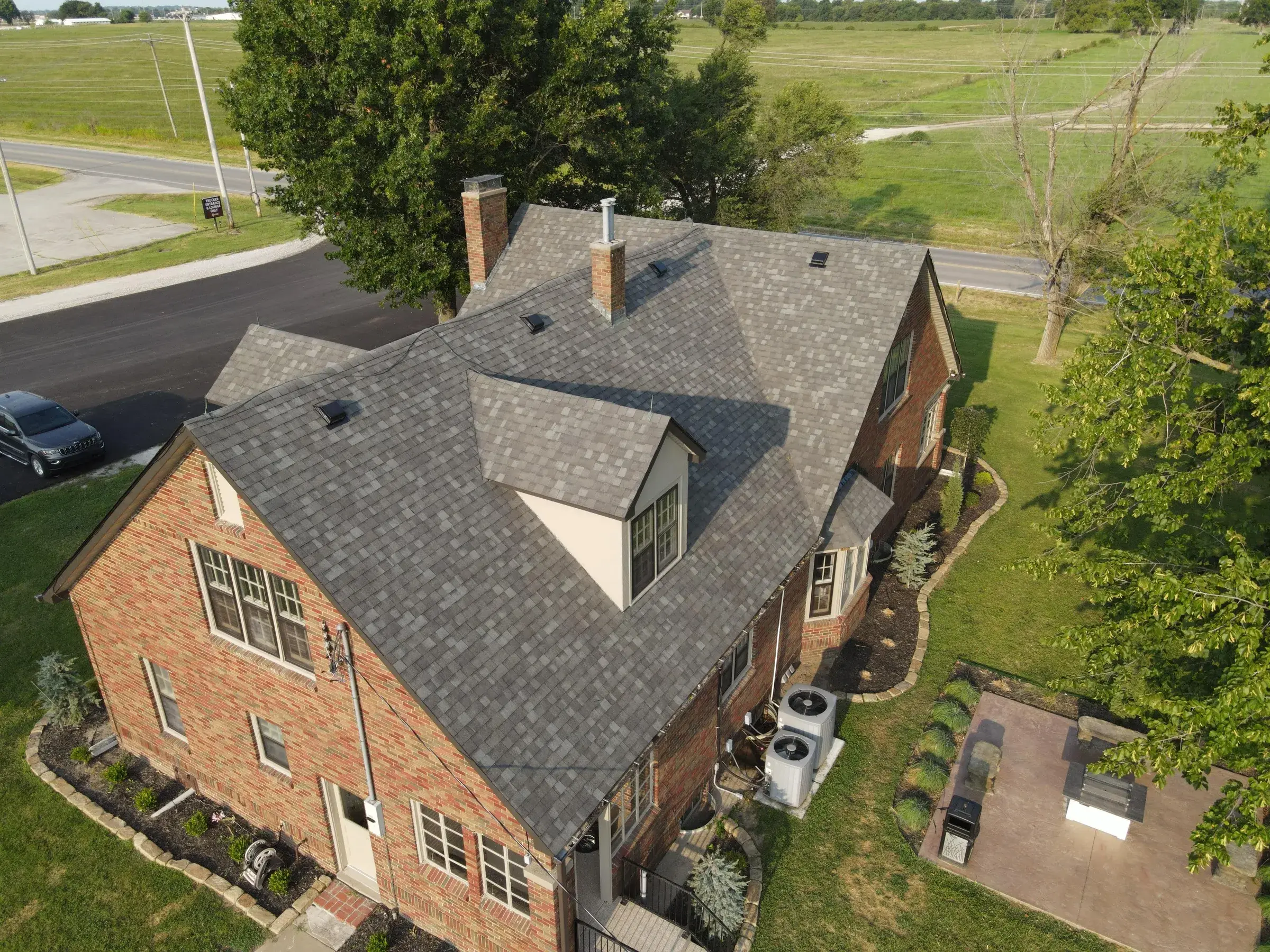
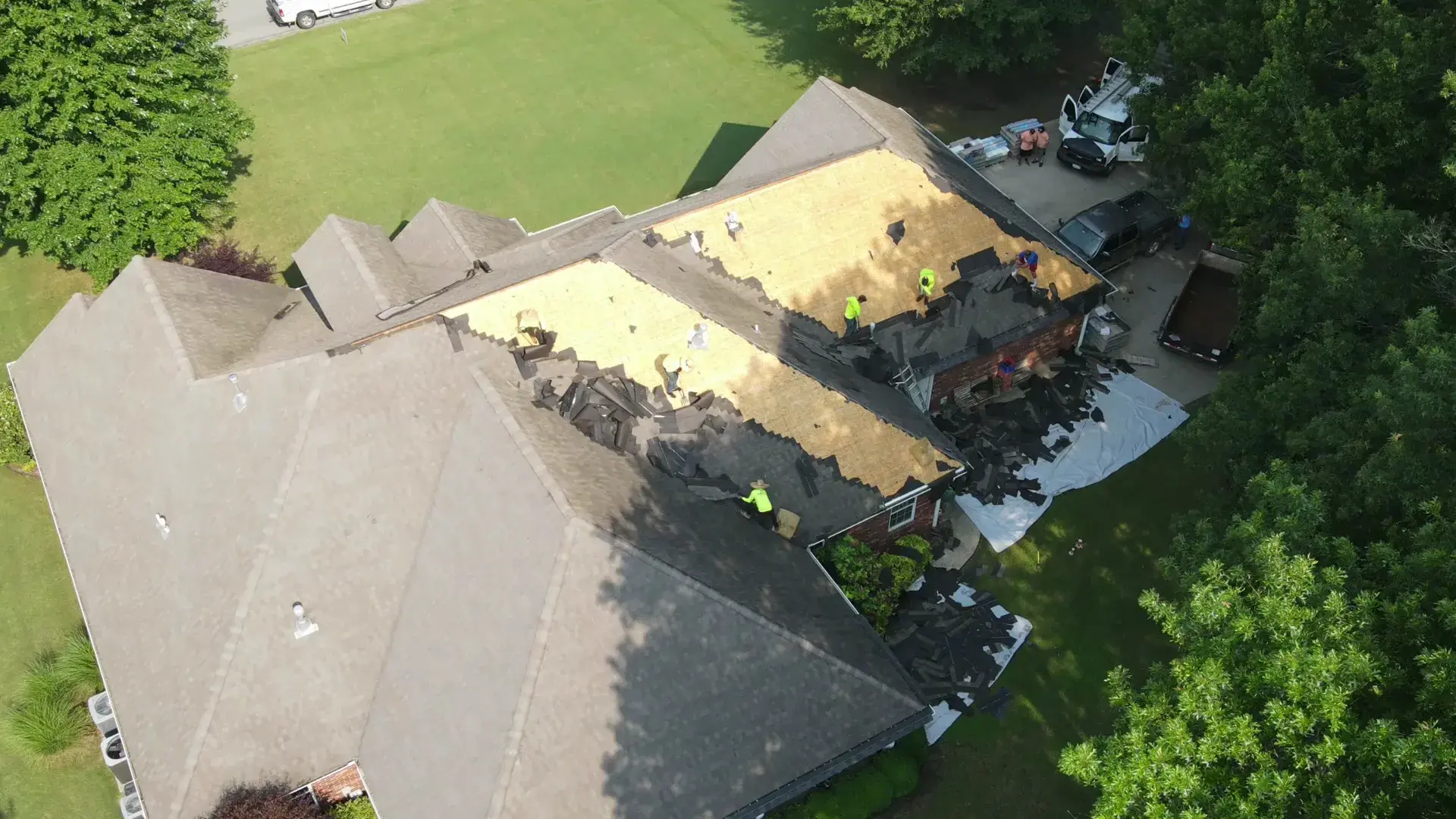
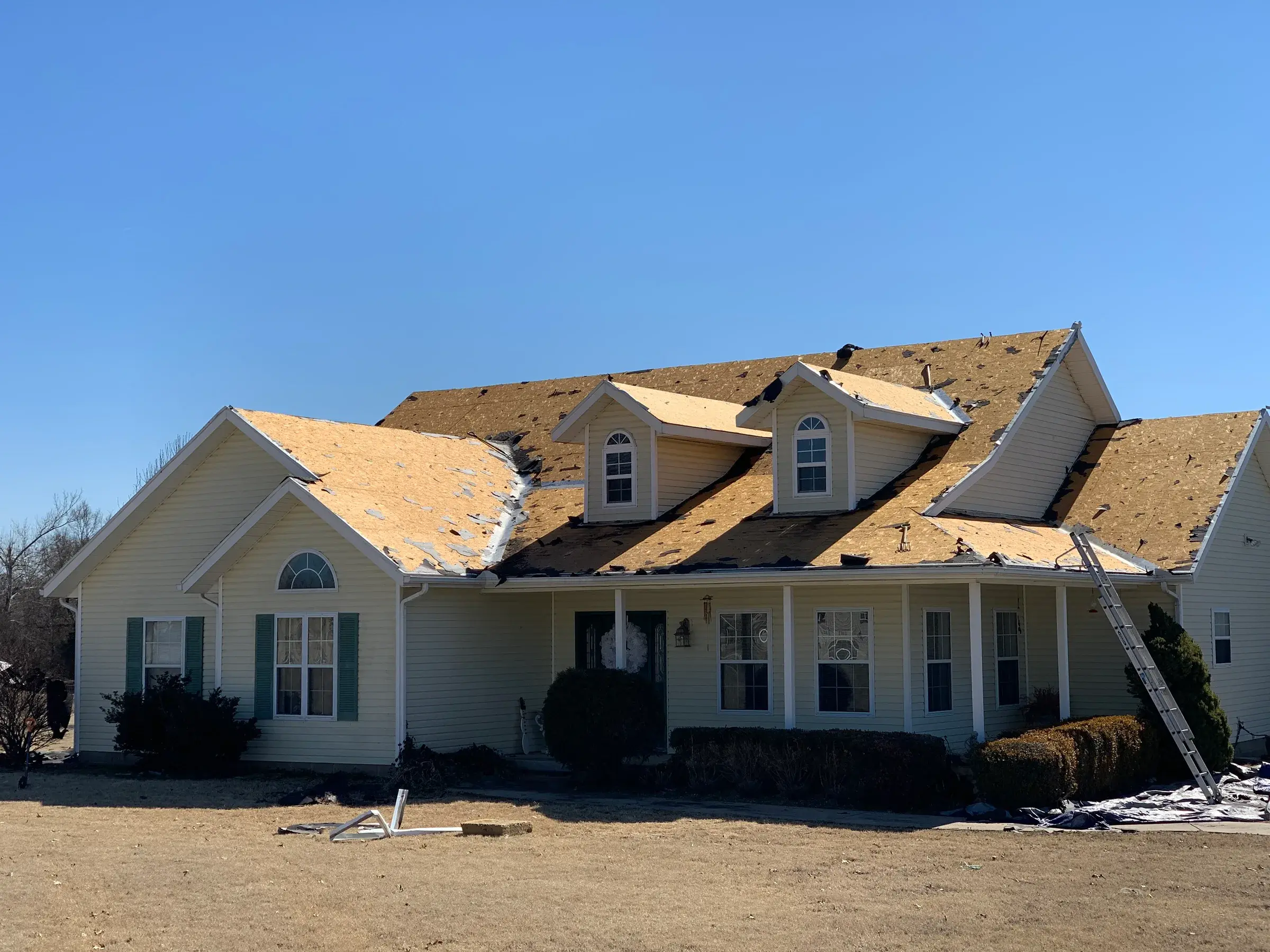
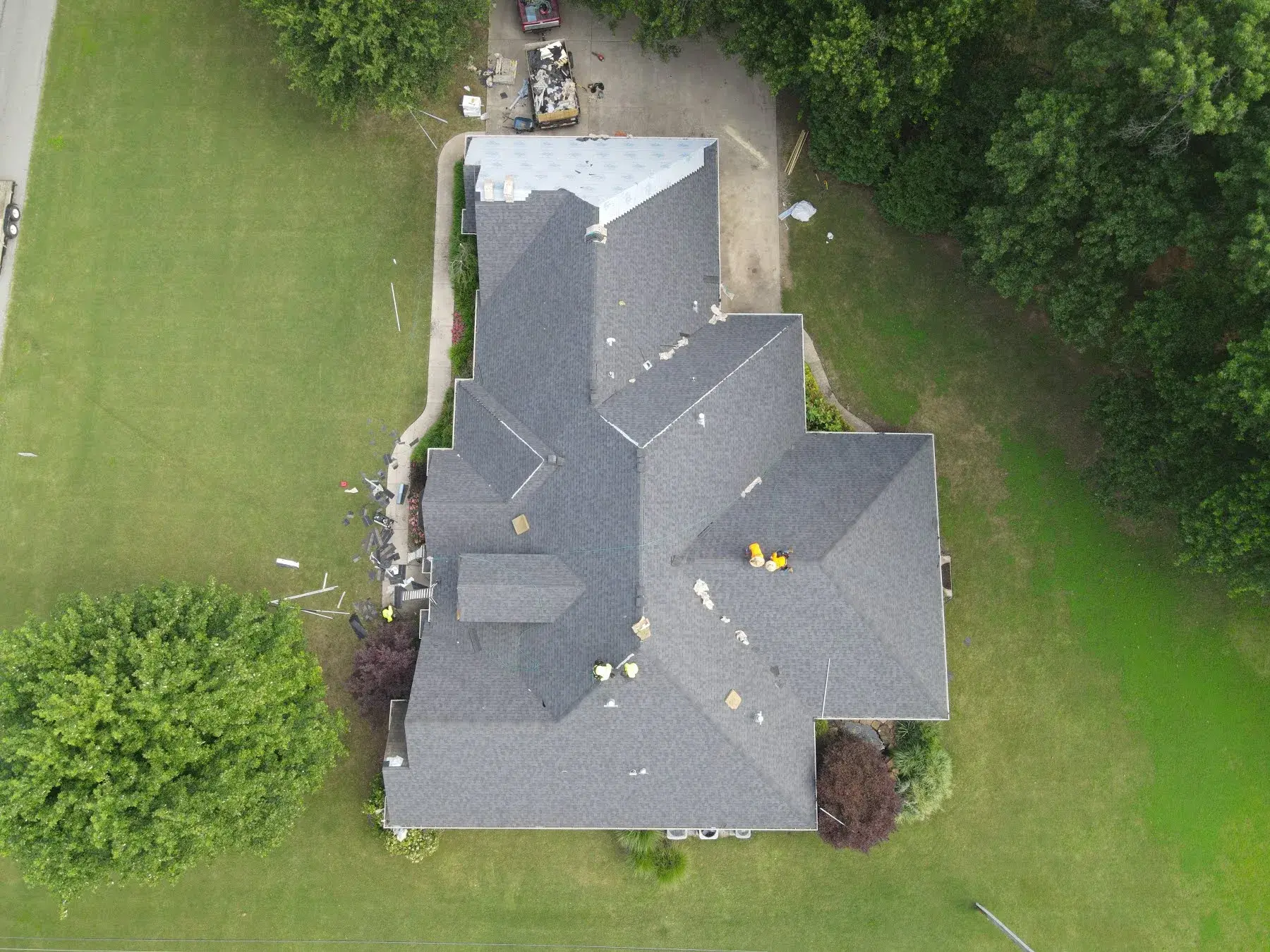
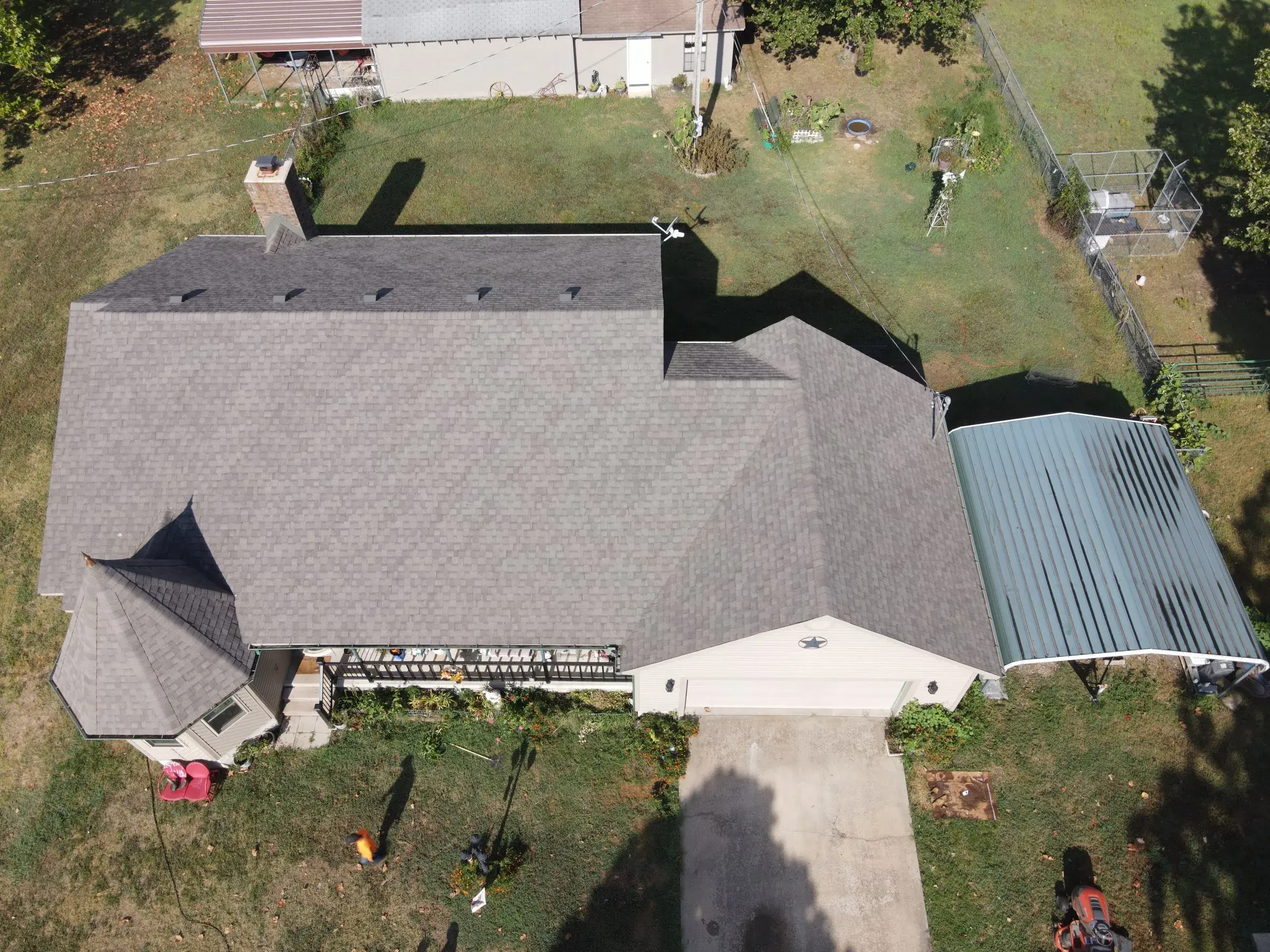


Storm Damage & Insurance Claims
Hail, wind, and what actually happens when you file a roof claim in Oklahoma — including the things contractors are not allowed to do for you.
- Storm Damage & Insurance Claims
How to Identify Hail Damage on a Roof From the Ground
Hail damage rarely looks like a hole. It looks like bruising, granule loss, and dents in soft metal. Here is what to look for from the ground, what a bruise really is, and why 'my roof looks fine' is not a reliable conclusion.
Read more - Storm Damage & Insurance Claims
Wind Damage to a Roof: What It Looks Like and Why It Is Often Missed
Wind damage is not just missing shingles. The more common failure is a broken adhesive seal and a creased shingle that still looks attached — damage that only shows itself in the next rain.
Read more - Storm Damage & Insurance Claims
What to Do in the First 72 Hours After a Storm Damages Your Roof
The order matters. Safety, then stopping water, then documentation, then the claim — and knowing which of those you should never do yourself.
Read more
Repair, Replacement & Process
How to tell a repairable roof from a finished one, what replacement really costs, and what happens on the day.
- Repair, Replacement & Process
Roof Repair or Replacement? How to Decide, Step by Step
Repair and replacement are not opposites — they are two answers to different questions. This guide walks the five variables that actually decide it: roof age against expected service life, how much of the roof surface is affected, whether the deck is sound, whether matching shingles still exist, and cost per remaining year of service.
Read more - Repair, Replacement & Process
What Drives Roof Replacement Cost in Oklahoma
Nobody can quote your roof from a search result, but everyone can understand what the number is made of. This breaks a replacement estimate into its real cost drivers — roof size in squares, pitch, existing layers, deck repair, penetrations and flashing, ventilation, tear-off disposal — and shows how to compare two bids without getting fooled by a lower headline price.
Read more - Repair, Replacement & Process
How Long a Roof Lasts in Northeast Oklahoma
Manufacturer service-life figures assume a roof that is properly ventilated, correctly installed, and never hit by hail. Northeast Oklahoma is not that place. This article gives expected service life by material, explains the four regional stressors that shorten it, and shows how to estimate what your roof has left.
Read more
Materials & Systems
Shingles, metal, membranes, ventilation, flashing and gutters — what each one does and how it fails in Northeast Oklahoma.
- Materials & Systems
The Anatomy of a Roof System: Every Component, Explained
A roof is not a pile of shingles. It is a layered system where decking, underlayment, flashing, ventilation, and the outer covering each do one job — and where the cheapest component usually decides how long the whole assembly lasts. This guide walks the stack from rafter to ridge.
Read more - Materials & Systems
Class 4 Impact-Resistant Shingles: What the Rating Actually Measures
Class 4 is the top rating in UL 2218 — a laboratory test where a two-inch steel ball is dropped twice on the same spot without cracking the mat. It is a meaningful durability signal in a hail-exposed market like northeast Oklahoma, but it is a lab result, not a promise about a specific storm.
Read more - Materials & Systems
Asphalt Shingle Types and Oklahoma Heat: 3-Tab, Architectural, and Reflective
Heat does not usually destroy a shingle outright — it accelerates everything else. Thermal cycling, UV exposure, and an overheated attic together drive volatile loss, granule shedding, and curling. Here is how the common shingle grades differ and which product specs are worth paying attention to in an Oklahoma summer.
Read more
Maintenance & Local Guides
Seasonal upkeep for an Oklahoma roof, and guides written for specific towns around Ottawa County and Grand Lake.
- Maintenance & Local Guides
Spring Roof Maintenance Checklist for Northeast Oklahoma Homes
Northeast Oklahoma's severe weather season ramps up in spring. This checklist walks through what to look at, what it means, and which items are worth doing from the ground versus handing to a roofer.
Read more - Maintenance & Local Guides
Fall Roof Maintenance Checklist: Getting a NE Oklahoma Roof Ready for Winter
Fall maintenance in northeast Oklahoma is really about water management and timing. Here is the sequence — leaf drop, gutters, attic, sealant — and why finishing before the first hard freeze matters.
Read more - Maintenance & Local Guides
How Often Should an Oklahoma Roof Be Inspected — and What Does an Inspection Cover?
Once a year, plus after any significant weather. This guide explains the cadence, what a real inspection covers from ridge to attic, and how to tell a genuine inspection from a sales visit.
Read more
Protect Your Property with a Free Roof Inspection
Tell us what you're seeing. We'll arrange an inspection, explain the findings, and provide clear next steps without pressure.
- • A real look at the roof, not a sales visit
- • Photos of whatever we find, and what it means
- • A written quote if you want one — and an honest “you don’t need us yet” if that’s the answer