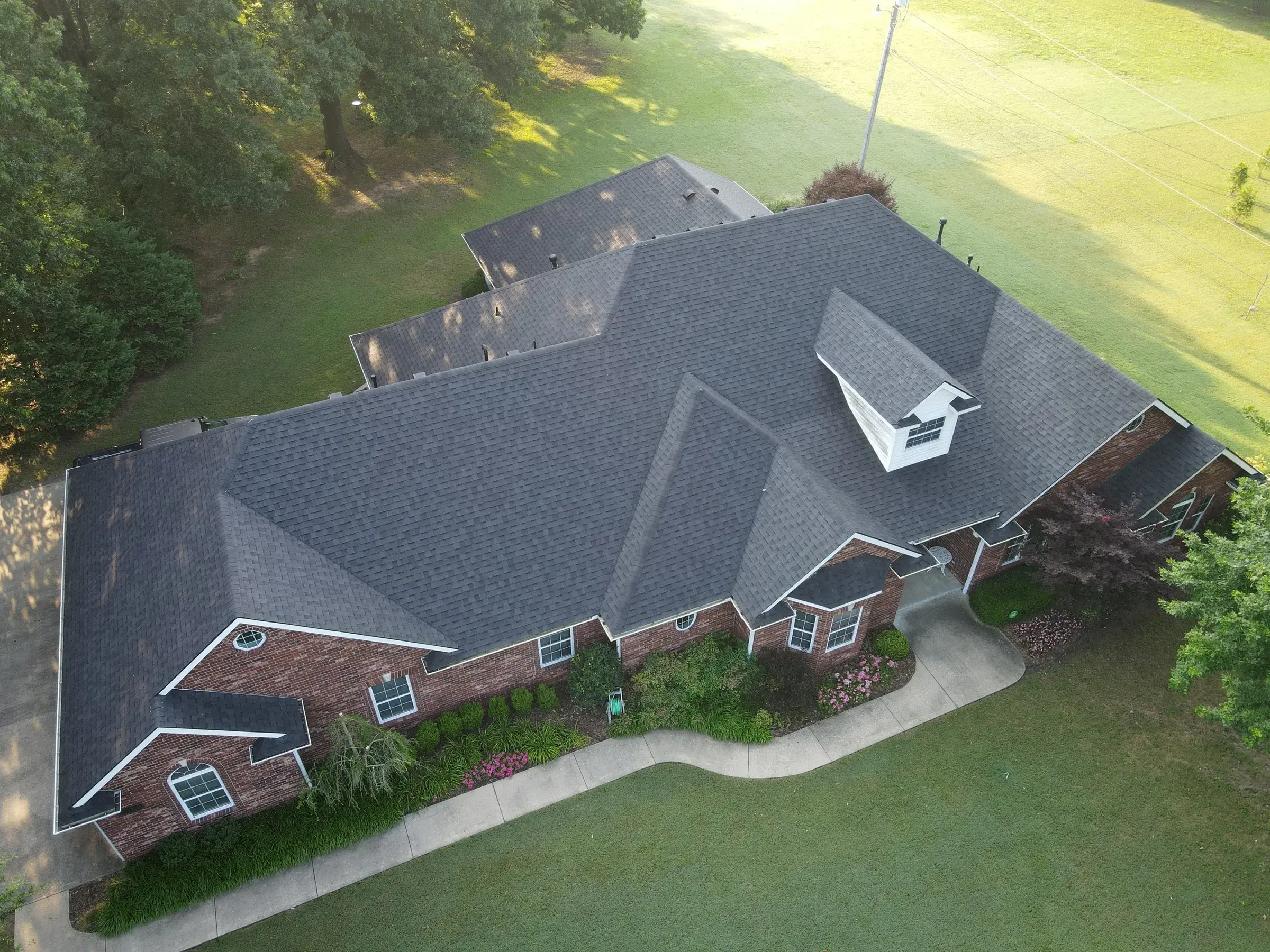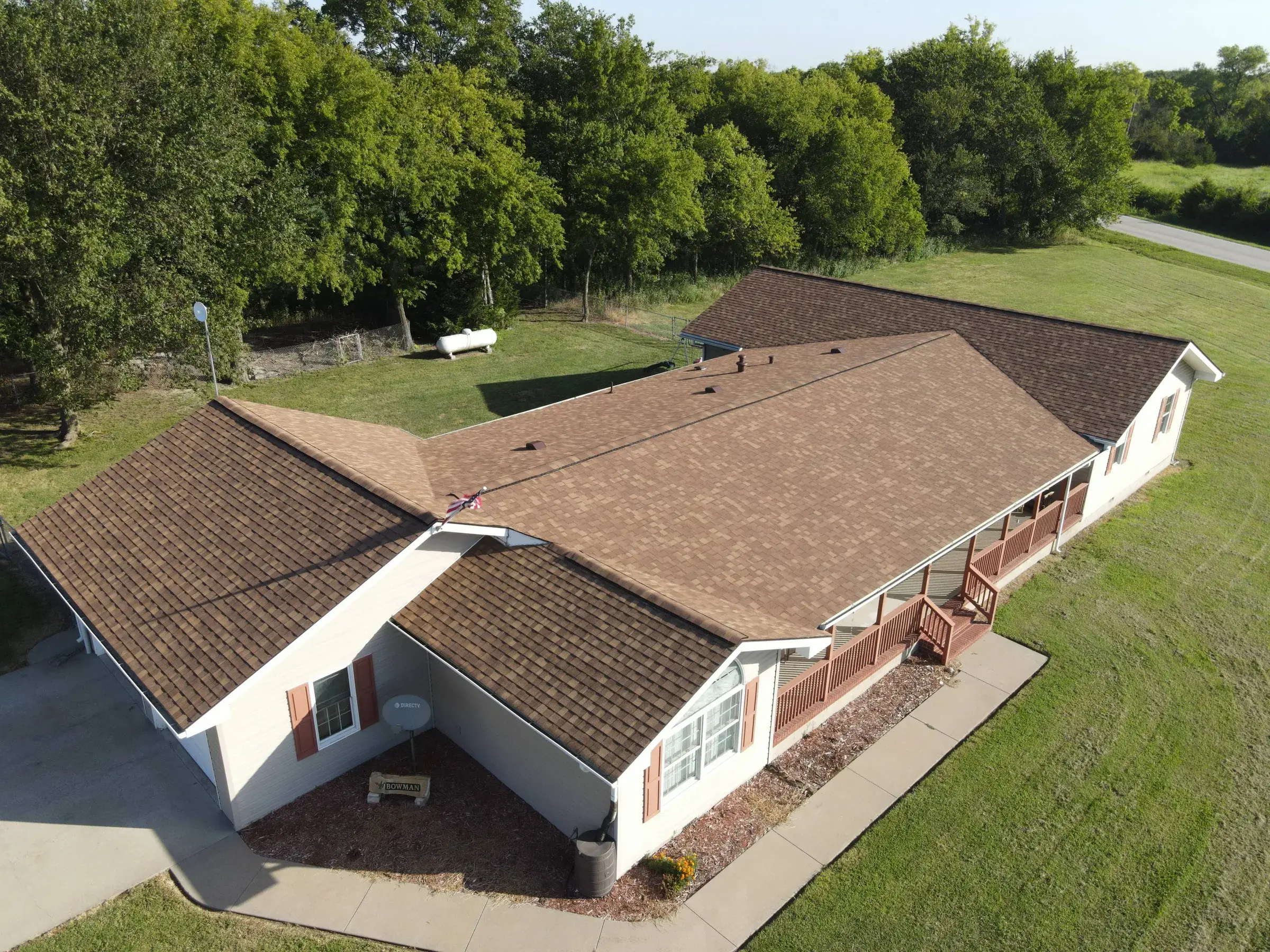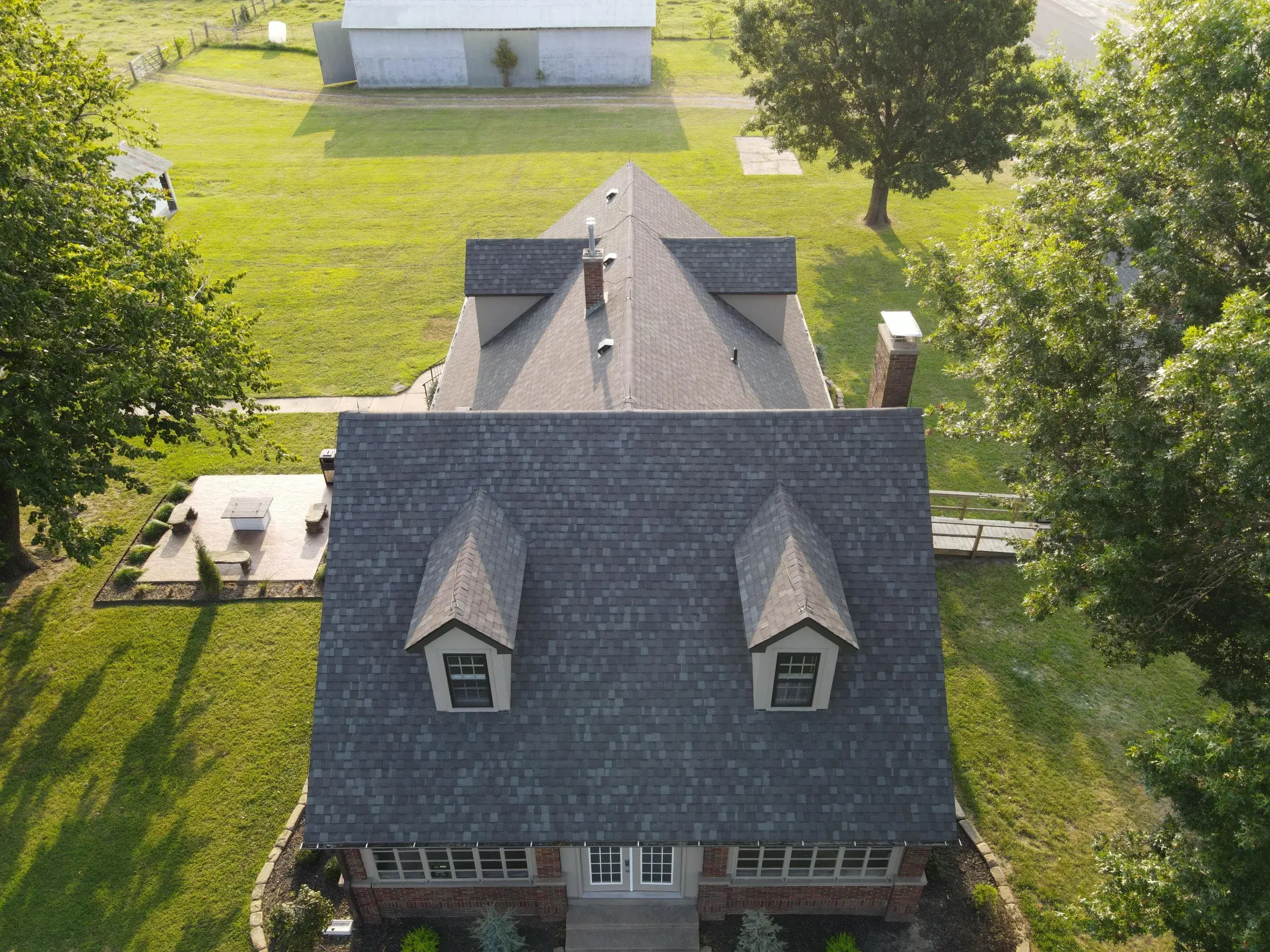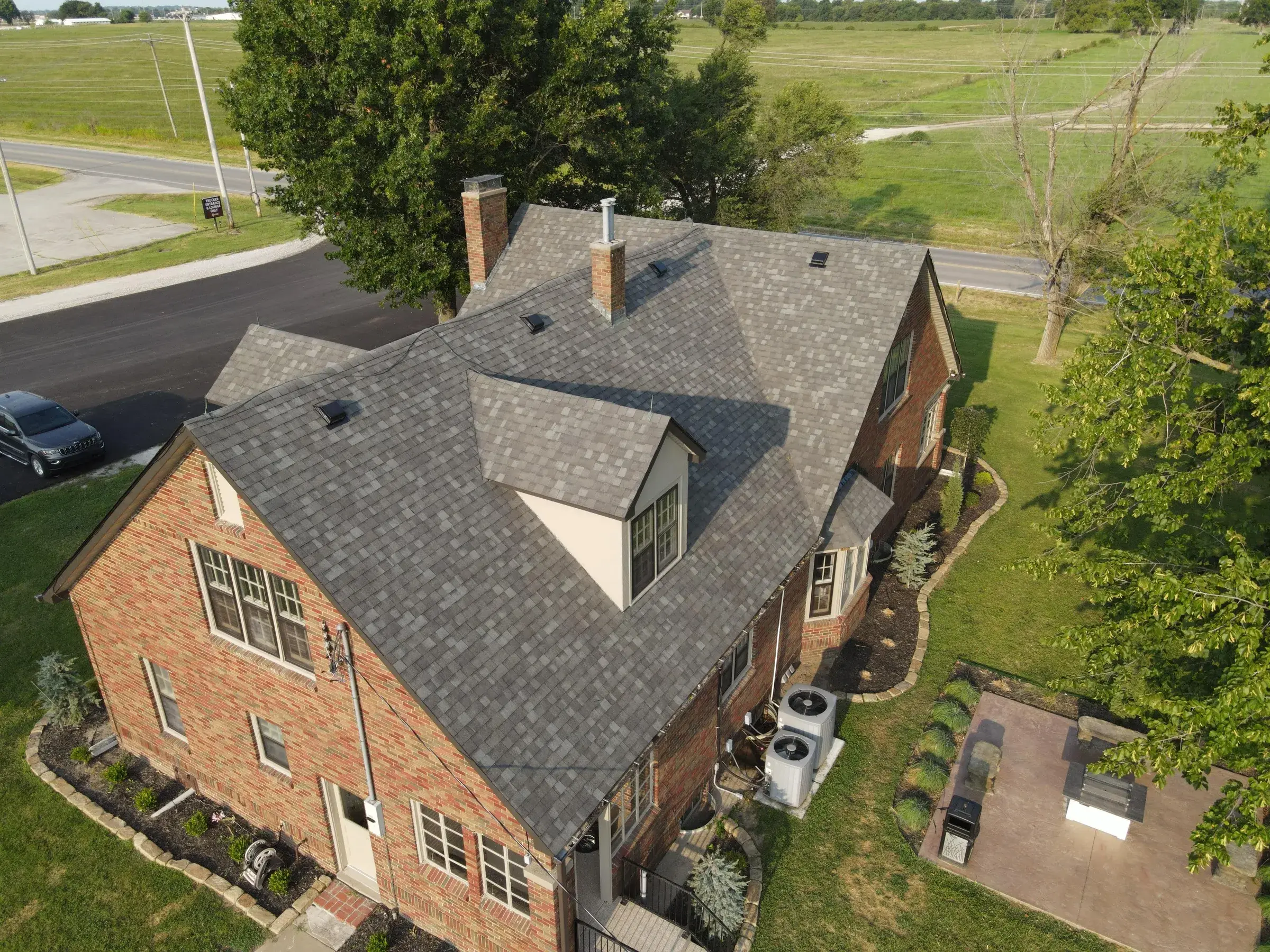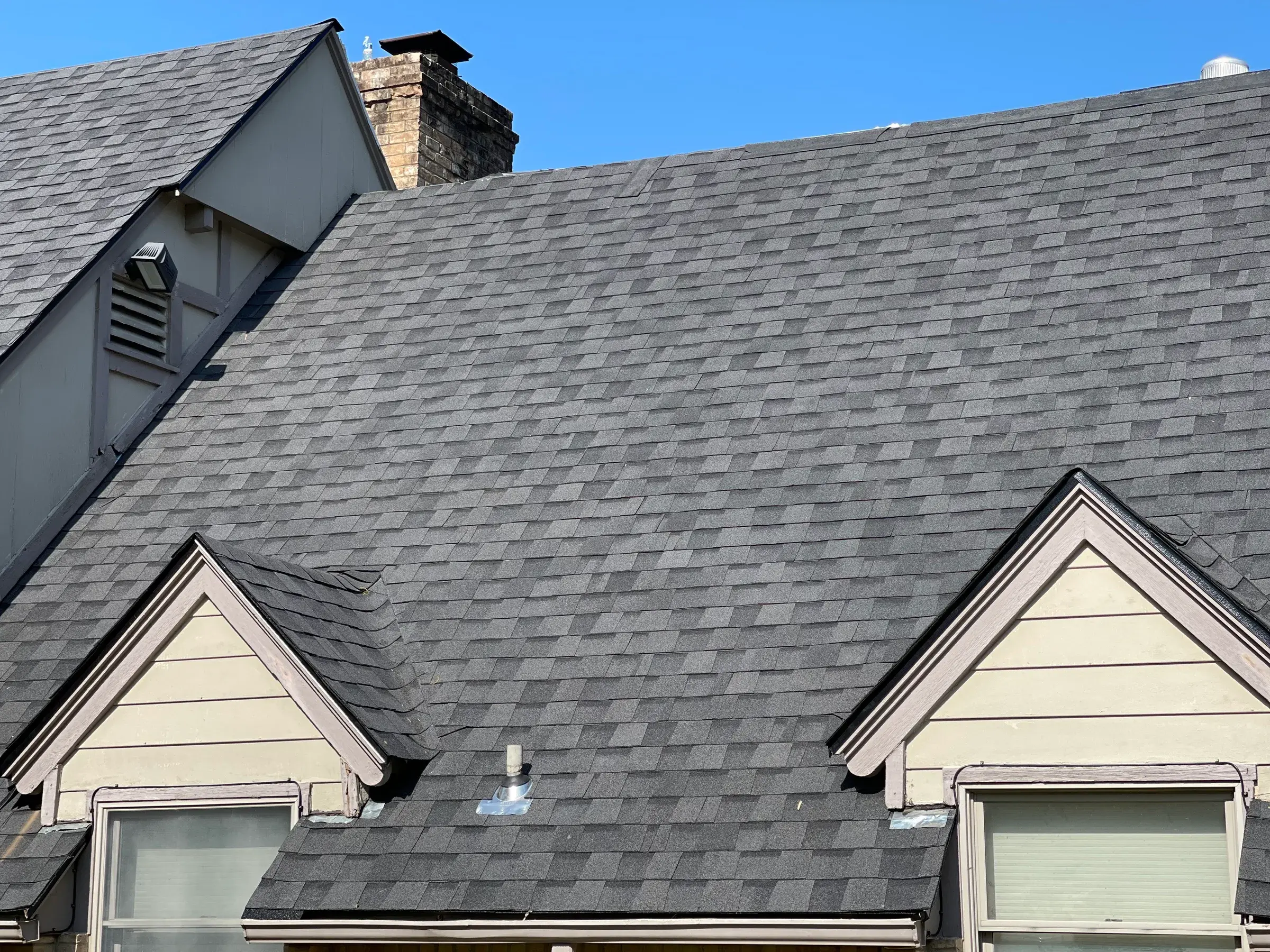
Vinita is roughly 30 miles southwest of Miami in Craig County, on the Route 66 corridor. Its older neighborhoods carry the familiar NE Oklahoma pattern: aging shingle roofs, minimal attic ventilation, and gutters undersized for heavy spring rain. Confirm any contractor working there holds a current Oklahoma roofing registration and can show a real service address.
Vinita in context: Craig County, Route 66, and the drive from Miami
Vinita sits southwest of Miami, on the historic Route 66 corridor, and it is the one detail people get wrong most often: Vinita is in Craig County, not Ottawa County. Same corner of the state, same weather, different courthouse and different city hall.
That county line does not change what falls out of the sky. It does change who you file paperwork with. The City of Miami requires a permit for a new roof and for a re-shingle, and we pull it as part of the job there. Vinita runs its own permitting, so before any work starts, call the City of Vinita and ask what they require for a residential re-roof. Any contractor who shrugs at that question is telling you something.
The Oklahoma Historical Society traces the 1926 Route 66 alignment across this corner of Oklahoma, and Vinita's Will Rogers Archway over the turnpike is the landmark most people picture when they think of the town. It matters here for one practical reason: the corridor is why out-of-state crews find these towns so easily after a storm. More on that below.
There is also a geography split worth knowing. In Ottawa County, the land east of Miami is Ozark Plains — rockier, wooded, rolling — while the west is the flat Neosho Lowlands. Vinita sits out toward the open, prairie end of that pattern. Fewer overhanging trees dropping limbs on the roof, but more unobstructed wind running across it. Open ground means wind gets a longer run at your ridge and your rake edges.
The weather profile: the same NE Oklahoma hail and wind exposure
Nobody in this part of Oklahoma is roofing against rain alone. The design problem is hail, wind, sun, and freeze-thaw, in that order.
For the Miami area, the Oklahoma Climatological Survey's 1991–2020 normals put it at 4 to 5 days a year with hail larger than 0.75 inch. That is the only hail frequency figure worth quoting, and it is the one we quote. For Craig County specifically, the place to look is the NOAA Storm Prediction Center's severe weather climatology and NWS Tulsa's local records — both publish county-level hail and wind data free, and both are more honest than any roofer's estimate. We are not going to invent a Craig County number to make a point.
The rest of the load is steadier and does more cumulative damage than most homeowners expect. The Climatological Survey's Miami-area normals show 57 days a year above 90°F, 5 above 100°F, an August daily high normal of 91.5°F, and roughly 62% annual sunshine. That is a heavy ultraviolet and thermal load on asphalt. Then the other direction: 89 nights a year below freezing. Every one of those is a freeze-thaw cycle working on any moisture that got into a nail hole, a lap, or a split in old sealant.
Vinita is close enough to Miami that you should plan for the same profile. Hail cracks and bruises. Sun bakes the oils out. Freeze-thaw pries open whatever the first two loosened.
Older neighborhoods and what that means for shingles, decking, and flashing
Vinita's core neighborhoods are old, and age changes the job. Next door in Ottawa County, the Census Bureau's American Community Survey puts detached single-family homes at 76.7% of the housing stock and mobile or manufactured homes at 12.2%. Craig County's own housing-age and structure breakdown is in the same ACS tables, and it is worth ten minutes of your time before you assume your street is like the next one over.
What we actually find under an old roof here
Plank decking. A lot of pre-war and mid-century homes in this region are sheathed with 1x6 or 1x8 boards laid with gaps, not with modern sheet panels. Shingle nails need solid wood to hold. When a nail lands in a gap, that shingle is holding on with three fasteners instead of four, and it is the first one wind takes. You cannot see this from the driveway. You see it the moment the old shingles come off.
Multiple layers. Older homes often carry a second layer that was shingled straight over the first. That hides the decking condition completely and adds weight the rafters were not sized for.
Tired flashing. Step flashing — the L-shaped metal pieces that tie a roof plane into a vertical wall, one piece per shingle course — is usually original when everything else has been replaced twice. Same with chimney counterflashing and valley metal. A crew that reuses old step flashing to save an hour is building a leak into a new roof. Ask specifically whether flashing is being replaced or reused, and get the answer in writing.
None of this is visible from the ground, which is the whole argument for a real look before you buy anything. Our [roof inspection](/services/roof-inspections) is a walk of the roof and the attic with photos, and if you want the general timing question answered, we've written separately about [how often an Oklahoma roof should be inspected](/blog/how-often-should-a-roof-be-inspected-oklahoma).
Attic ventilation in homes built before it was standard
This is the most under-diagnosed problem on old roofs in northeast Oklahoma, and it is the one that quietly cuts years off a new one.
The attic ventilation section of the International Residential Code — R806, carried into Oklahoma's current residential code — sets the baseline: 1 square foot of net free ventilating area for every 150 square feet of attic floor. That drops to 1 in 300 when the venting is balanced, with at least 40% and not more than 50% of it in the upper portion of the attic. "Net free area" is the actual open hole after you subtract the screen and the louvers, and it is printed on the vent's spec sheet. It is always smaller than the vent looks.
Houses built before that was routine often have almost nothing: a couple of gable louvers, no soffit intake, and a roof that runs hot. Two failure patterns show up constantly.
First, exhaust without intake. Somebody adds a ridge vent, nobody opens the soffits, and the ridge has nowhere to pull from — so it pulls conditioned air out of the house through ceiling gaps, or it pulls from the nearest other roof vent instead of from the eave. Second, mixing systems. A ridge vent plus box vents plus a powered fan on the same attic short-circuits: the ridge becomes an intake for the fan and the far end of the attic never moves air at all.
The consequences are seasonal and both bad. In summer, with 57 days above 90°F and that 62% sunshine load, deck temperatures climb and the shingle above cooks from underneath. In winter, across those 89 freezing nights, warm moist house air hits cold decking, condenses, and you get rusted nail tips, dark staining, and eventually delaminated sheathing. If your ceiling has stains that aren't under a penetration, look at intake before you look for a leak. Fixing the balance is usually a [ventilation repair](/services/roof-ventilation-repair), not a new roof.
Gutters and heavy spring rain: sizing, pitch, and downspout capacity
Spring here delivers rain in short, violent bursts. A gutter sized for a gentle all-day soak overflows in the first ten minutes of a thunderstorm, dumps at the eave, and rots the fascia it was screwed to. The builder default — 5-inch K-style with 2x3 downspouts — is often the wrong answer on a steep or large roof.
Step one: adjust for pitch
SMACNA's residential gutter sizing method doesn't use your roof's square footage. It uses the horizontal footprint, then multiplies it up for pitch, because a steep roof catches wind-driven rain across a bigger effective face. The multipliers:
| Roof pitch | Multiply the footprint by | A 1,600 sq ft footprint becomes |
|---|---|---|
| Flat to 3/12 | 1.00 | 1,600 sq ft |
| 4/12 to 5/12 | 1.05 | 1,680 sq ft |
| 6/12 to 8/12 | 1.10 | 1,760 sq ft |
| 9/12 to 11/12 | 1.20 | 1,920 sq ft |
| 12/12 and steeper | 1.30 | 2,080 sq ft |
Step two: divide by downspout, not by house
What matters is the adjusted area draining to each individual downspout — not the whole roof. A 2,000 sq ft roof with one downspout is a waterfall. The same roof with four is fine. The table below is the working rule of thumb we use for the high-intensity rain this region gets; SMACNA's published tables do it precisely by plugging in a design rainfall intensity for your location, and NOAA's rainfall frequency data is where that intensity number comes from.
| Adjusted area draining to ONE downspout | Gutter | Downspout | Outlet area |
|---|---|---|---|
| Up to ~600 sq ft | 5-inch K-style | 2x3 | 6 sq in |
| ~600–1,000 sq ft | 5-inch K-style | 3x4 | 12 sq in |
| ~1,000–1,400 sq ft | 6-inch K-style | 3x4 | 12 sq in |
| Over ~1,400 sq ft | 6-inch K-style | Two 3x4 outlets | 24 sq in |
The single cheapest upgrade on that list is 2x3 to 3x4. Do the arithmetic: 2x3 is 6 square inches of outlet, 3x4 is 12. You double the throat for the price of a different downspout, and you roughly halve how often it clogs on a leaf. On the wooded east side of this region that alone solves most overflow complaints.
Two more things. Slope the gutter about 1/16 inch per foot toward the outlet — a long straight run should crown in the middle and fall both directions rather than trying to carry 40 feet one way. And keep the gutters clear, because a correctly sized gutter full of shingle grit and oak leaves is a wrongly sized gutter. If you'd rather not be on a ladder in November, that's what [gutter cleaning](/services/gutter-cleaning) is for.
Storm season prep: a short, repeatable routine
You do not need to do much. You need to do the same small things on a schedule. Here is the year, keyed to this climate rather than a generic one.
| When | Do this | Why here specifically |
|---|---|---|
| February–March | Clear gutters and downspouts; check that extensions still push water away from the foundation | Ahead of the spring rain bursts, before the first real load test |
| March–April | Walk the perimeter after each hail or high-wind day; photograph anything from the ground | 4–5 hail days a year larger than 0.75 inch means the odds are annual, not rare |
| April–May | Check attic intake at the eaves for insulation blocking the soffit vents | Blocked intake is what turns summer heat into shortened shingle life |
| June | Look at flashing at chimneys, walls, and skylights; check sealant at pipe boots | Pipe boot rubber is usually the first thing UV kills |
| July–August | Feel the attic on a hot afternoon; if it's stifling with no airflow, get ventilation checked | 57 days above 90°F, 5 above 100°F, and about 62% sunshine |
| September–October | Clear gutters again after leaf drop; trim limbs back off the roof plane | Debris in the gutter freezes into a plug when the first hard nights arrive |
| November | Have the roof and attic inspected before the freeze cycle starts | 89 nights a year below 32°F — freeze-thaw finds every gap made this year |
| Any time | After a hail or wind event: photograph, date the photos, then call for an inspection | Documentation you took yourself is always worth more than memory |
Why out-of-town crews target towns like Vinita after a hail event
This is not a slur on anybody in particular. It's a pattern, and it's a corridor pattern. Route 66 and the turnpike make these towns easy to reach and easy to leave. A hail day drops on Craig County and within 48 hours there are trucks with out-of-state plates and magnetic door signs going street to street.
Some of them do fine work. The problem is the ones who don't, because in three months the phone number is dead and there is nobody in the state to call. The tells are consistent: pressure to sign today, a contract that is really an authorization form, no local address you can drive to, and money talk that runs ahead of anybody having looked at your decking.
We've written a fuller breakdown of the [difference between a local roofer and a storm chaser in northeast Oklahoma](/blog/local-roofer-vs-storm-chaser-northeast-oklahoma) if you want the long version.
Verifying a roofer's Oklahoma registration in two minutes
Here is the part almost no roofer in this market will tell you, and it is the single most useful thing on this page.
Oklahoma does not license roofers. It registers them, under the Roofing Contractor Registration Act (59 O.S. §§1151.1–1151.30), administered by the Construction Industries Board. That distinction matters, because "licensed and bonded" is a phrase you'll hear constantly in this market and it is not how Oklahoma works. Neither Kansas nor Arkansas issues a roofing licence either, Missouri has no state roofing licence at all, and none of these states requires a surety bond for it. Anyone using that phrase is either careless or counting on you not knowing.
To register in Oklahoma, a residential roofing contractor has to carry general liability insurance of at least $500,000. That requirement is real and it's checkable. And the CIB publishes a free public lookup that anybody can use from a phone in the driveway while the salesman is still standing there.
CIB registration lookup: do this before you sign anything
- Go to verifyroofing.cib.ok.gov on your phone — it's the Oklahoma Construction Industries Board's own public tool, free, no account needed.
- Ask the contractor for their Oklahoma roofing registration number. Every contractor advertising roofing work in Oklahoma is required to carry it in their advertising — ask us for ours too.
- Search by that number, or by the company name if they won't give you a number.
- Confirm the result comes back ACTIVE — not expired, not pending, not 'no record found.'
- Check that the name on the result matches the name on the contract and on the truck — not a similar name, the same name.
- Confirm they have a real service address in the state that you could drive to. A PO box and a cell number is not a business you can find in March.
If a company can't produce a number, or the number comes back with no record, you have your answer and it took two minutes. Our office is at 111 S Main St in Miami — one office, and you're welcome to come to it. You can see our [Miami service area](/locations/miami-ok) or [what we cover around Vinita](/locations/vinita-ok); we work across Oklahoma, Kansas, Missouri and Arkansas, so contact us to confirm we serve your address.
Getting comparable estimates: what to ask every bidder
Most homeowners collect three bids and then discover they can't compare them, because each one describes a different job. The fix is to force every bidder onto the same scope sheet. Hand them this list. The good ones will not mind.
| Ask this | What a good answer looks like | Red flag |
|---|---|---|
| Tear-off or overlay? | Full tear-off to the deck, stated in writing, with the Oklahoma R908.3.1.1 condition addressed | "We'll go right over it, saves you money" with no code reference |
| Decking allowance | A per-sheet or per-board price for replacement, and a stated number included in the base bid | Silence — then a change order on day two after the roof is open |
| Is flashing replaced or reused? | New step flashing, new valley metal, new pipe boots, itemized | "We'll reseal it," or no line item at all |
| Ventilation | Intake and exhaust calculated against R806, with net free area taken from the vent's spec sheet | A number of vents with no attic-floor calculation behind it |
| Underlayment placement | Named product, stated coverage, valleys and penetrations addressed | "Standard felt" with no coverage described |
| Permit | They name the jurisdiction and say who pulls it | "You don't need one for a re-roof" |
| Cleanup | Magnetic sweep of the yard and drive, dumpster placement, debris hauled, stated timeline | Not mentioned |
| Written contract | A real contract with scope, price, and materials — before any money changes hands | An 'authorization to inspect' form they want signed on the doorstep |
| Registration | A CIB number you can verify at verifyroofing.cib.ok.gov, plus a local address | "Licensed and bonded" with no number |
One note on that written contract line: Oklahoma's Roofing Contractor Registration Act requires roofing work to be performed under a written contract, and failing to provide one is grounds for action against a contractor's registration under 59 O.S. §1151.7(12) and §1151.21. It is not a formality and it is not a favor a roofer does you. If someone wants to start work on a handshake and a door-knock signature, that alone is disqualifying.
Do not skip the ventilation row. It is the one nobody asks about, and it's why two identical-looking [new roof installations](/services/new-roof-installation) can have very different lifespans on the same street.
If you want a free inspection and a written estimate you can hold up against the others, [get in touch](/contact) and we'll come look at it — and confirm your address is in our area while we're at it.
Questions people ask about this
Is Vinita in Ottawa County like Miami?
No. Vinita is in Craig County, southwest of Miami along the Route 66 corridor. The weather profile is effectively the same northeast Oklahoma hail, wind, sun and freeze-thaw mix, but the permitting authority is different. The City of Miami requires a permit for new roofs and re-shingles; check with the City of Vinita for what they require before any work starts on a home there.
How do I check whether a roofer is legitimate in Oklahoma?
Oklahoma registers roofing contractors rather than licensing them, through the Construction Industries Board under 59 O.S. §§1151.1–1151.30. Use the CIB's free public tool at verifyroofing.cib.ok.gov and search by the contractor's registration number or company name. Confirm the registration comes back active and that the name matches the contract. Registration for residential work requires general liability insurance of at least $500,000, so an active record tells you something real.
A contractor offered to cover my deductible. Is that allowed?
No. Under 59 O.S. §1151.30, it is unlawful in Oklahoma for a contractor to advertise or promise to pay any part of an insurance deductible, directly or indirectly. The same law bans offering an insured anything of value for a service, which covers yard-sign discounts, referral payments and incentives for reviews on insurance jobs. It was amended effective November 1, 2025. Treat the offer as a reason to stop the conversation.
Why does a bigger downspout matter more than a bigger gutter?
Because the outlet is usually the bottleneck. A 2x3 downspout gives you 6 square inches of throat; a 3x4 gives you 12 — double, for a small price difference. It also clogs far less readily on leaves and shingle grit. SMACNA's residential sizing method works off the roof footprint adjusted for pitch, then divides by the number of downspouts, so adding outlets or enlarging them is often the fix rather than replacing the whole gutter run.
My old house has almost no attic vents. Is that a code violation I have to fix?
An existing older home isn't retroactively required to meet current code just because it exists. But the attic ventilation section of the IRC, R806, sets the baseline a new roof gets built to: 1 square foot of net free ventilating area per 150 square feet of attic floor, dropping to 1 in 300 when the venting is balanced with 40–50% in the upper portion. If you're re-roofing anyway, that's the moment to correct intake at the soffits. It costs little then, and it's often the difference between a roof that reaches its expected life and one that doesn't.