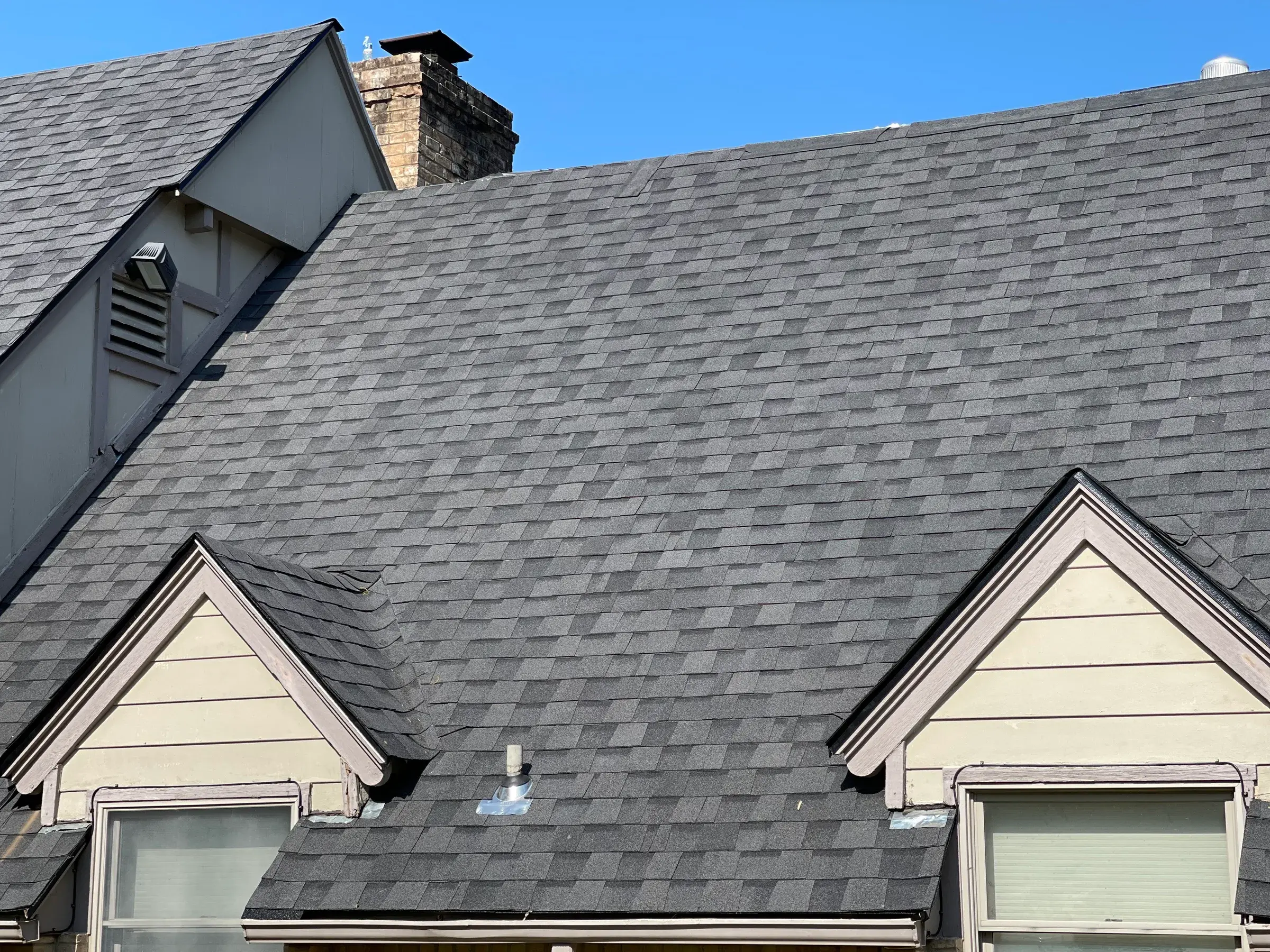
Residential Roofing in Miami, Oklahoma
Miami's housing stock is old. Mining-era homes downtown, post-war ranches, farmhouses west toward the Neosho bottoms, lake-country builds east. Each of them fails differently. This is the hub for everything we do on houses, organized by what your home is rather than by what we'd like to sell.
If you own a house in Miami or anywhere in Ottawa County, this is the hub for everything we do on residential roofs — repairs, replacements, inspections, storm work. It is laid out by the kind of house you own, because a 1920s home near the old townsite, a post-war ranch and a farmhouse out on the prairie fail in completely different places.
Roofing the Homes Miami Actually Has
Miami was platted in 1891 as a planned town, then filled in fast when the lead and zinc mines were running. The population peaked at 14,237 in 1980 and has drifted down to roughly 13,000 since. That history is written on the rooftops. Almost nothing here is a new house on a new slab — Ottawa County has about 13,701 housing units, 76.7% of them detached single-family and 12.2% mobile or manufactured, and most of the framing under those roofs was nailed together decades ago.
The weather treats all of them the same. Miami averages 57 days a year above 90 degrees and five above 100, then 89 nights below freezing. That is 89 freeze-thaw cycles working every joint, nail and sealant on your roof, plus about 62% annual sunshine cooking the asphalt in between. Hail larger than three-quarters of an inch falls on 4 to 5 days in an average year.
But those houses do not fail the same way. A 1920s two-story downtown, a 1965 ranch, a farmhouse out toward the Neosho bottoms and a lake place east of town have almost nothing in common except the sky above them. So this page is organized by what your house is, not by what we would like to sell you.
Mining-Era and Pre-War Homes: Steep Pitch, Complex Framing, Old Decking
The oldest housing stock near the original townsite tends to be steep — 8:12 and up — with hips, dormers, and roof planes that meet at odd angles. Steep is good news for shedding water and bad news for labor. Everything takes longer and everything needs staging.
Underneath, you usually find plank decking: 1x6 or 1x8 boards laid with gaps between them, not the sheet goods a modern roof expects. Modern shingle nails need something solid to bite. When boards have shrunk, split at the nail line, or been cut up by a century of chimney and vent work, the honest fix is to sheet over the planks before shingles go on. That is a real material and labor line item, and any estimate that pretends otherwise is guessing.
What we look for on a pre-war roof
- How many roofs are stacked up there — two is common, three is not rare, and layer count changes both the tear-off cost and the dumpster count
- Plank decking condition: gaps wider than the shingle can span, splits, and old cut-nail holes
- Brick chimneys where the flashing was mortared straight into the joint instead of properly counterflashed — freeze-thaw pulls that mortar apart
- Ventilation that was never designed at all, because in 1925 nobody was designing it
- Valley metal that has been patched with roof cement enough times to have become its own roof
Post-War Ranches and 1960s-80s Builds: Where They Leak
Ranches are the easy ones — long, simple, walkable planes, usually 4:12 or 5:12. The field of the roof on a ranch rarely fails first. The details do.
The single most common leak we find on this vintage is the pipe boot: the rubber collar that seals around your plumbing vent. It is EPDM rubber sitting in direct sun on a south or west slope, and under 62% annual sunshine and 57 days above 90 it hardens, then cracks in a ring right at the pipe. It is a small part with a shorter life than the shingles around it, and it will quietly wet your ceiling for a year before you see a stain.
Second on the list are the additions. Carports, patio covers and enclosed porches got tacked onto a lot of these homes, and they were often built at a slope too shallow for asphalt shingles. Shingle manufacturers set a minimum pitch — roughly a two-inch rise per foot, and only with doubled underlayment — and below that the material is simply wrong for the job no matter how well it is nailed. If your leak is over the back porch and nowhere else, that is usually why.
Third: ventilation that does not actually move. Plenty of these houses have gable vents or a turbine but no real soffit intake, so nothing flows. Some have a ridge vent and a turbine both, which lets the ridge pull air from the turbine instead of from the eave and short-circuits the whole system. Hot, wet attic air in July and a cold deck in January is how you get sheathing that looks rained on when the roof never leaked at all.
Farmhouses and Rural Properties in the Neosho Lowlands
West of Miami the land flattens out into the Neosho Lowlands — prairie and farmland with very little standing between your house and the wind. Roofs out there take a different beating than roofs behind a windbreak in town.
Wind failure almost always starts at an edge. The rake, the eave, the ridge cap. If the starter course was skipped or the ridge cap was nailed short, wind gets a fingernail under a shingle and the rest is just time. On an exposed property we pay particular attention to whether the edges were built as edges or just as more field.
Rural properties also come with outbuildings, and outbuildings around here are usually exposed-fastener metal. Those screws seal with a neoprene washer, and 57 days above 90 followed by 89 nights below freezing is exactly the thermal cycle that dries a washer out and walks a screw loose. A metal barn roof that is "leaking" is very often a metal barn roof that needs its fasteners gone through, not replaced. We will tell you that rather than quote you a new one.
Homes in the Ozark Foothills East of Miami: Trees, Shade, Debris
Head east and Ottawa County changes character — rockier, wooded, rolling Ozark Plains running toward Grand Lake o' the Cherokees and its 1,366 miles of shoreline. Trees are the whole story here.
- Shaded north slopes stay damp and grow algae and moss. Moss is not cosmetic — it holds water against the shingle and lifts the edges as it thickens
- Valleys pack with leaves and needles, and a packed valley is a dam. Water backs up, finds the nail line, and gets under the shingle from below
- Overhanging limbs abrade granules off the shingle every time it blows, wearing a bald stripe where the branch sweeps
- Gutters full of leaf mash keep the fascia and the first few inches of decking permanently wet
Roughly 13% of the county's housing sits vacant much of the year — a lot of that is lake property. An unwatched roof is a different risk profile than a lived-in one: nobody sees the stain in February, so the leak is measured in seasons rather than days, and what should have been a boot replacement becomes decking, insulation and drywall. If you own a place out here that you visit on weekends, an inspection between seasons is cheap insurance against exactly that.
Rentals, Duplexes and NEO-Adjacent Housing
About 67.5% of homes in Ottawa County are owner-occupied, which means roughly a third are not. A good share of the older housing near downtown and around the NEO A&M area has been split into rentals and duplexes over the years, and split-up houses collect roof problems: added bathrooms mean added vent penetrations, added units mean added HVAC, and every penetration is a future leak.
We work on rentals exactly the way we work on owner-occupied homes — photos of what we found, a written estimate, and a straight repair-or-replace opinion. If you hold several units, we would rather inspect them all at once so you can plan capital across a few years than get called out one emergency at a time. With a median home value of $123,300 in this county, a roof is a serious fraction of the asset. It deserves a schedule, not a scramble.
Every Residential Service We Offer
Whatever your house turns out to be, the work falls into a handful of buckets:
- Roof repair — boots, flashing, valleys, wind-lifted shingles, isolated decking
- Roof replacement — full tear-off, deck inspection and repair, new underlayment and shingles
- Roof inspections — free, with a photo report you keep whether or not you hire us
- Storm damage roof repair — including emergency tarping to stop the bleeding
- Asphalt shingle roofing — including the awkward problem of matching a discontinued shingle on a partial repair
- Roof maintenance — sealant, boots, fastener checks and debris clearing before they become claims
- Ventilation and attic airflow corrections, which are frequently the actual fix
- Gutters, fascia and the edge details that decide how long the rest lasts
One note on repairs to older roofs: shingle lines get discontinued. If your roof is fifteen or twenty years old, the exact shingle on it may no longer be made, and a repair patch will not blend perfectly. We will tell you that before the work, not after. Sometimes the right call is a repair that does not match, and sometimes it is a slope replaced to a clean break line. That is a conversation, not a rule.
How We Work With Homeowners: Inspection, Estimate, Decision
- You call. The inspection is free and so is the quote. No deposit to look.
- We get on the roof where it is safe to, and into the attic where there is access. Details first — flashing, boots, valleys, edges — then the field, then ventilation.
- You get a photo report of what we actually found, including the parts that are fine. Photos, not adjectives.
- You get a written estimate for the work we would perform, itemized enough that you can compare it to somebody else's honestly.
- If the work goes ahead, we pull the City of Miami permit and do the tear-off the current Oklahoma residential code calls for.
- You decide. There is no next step we take without you saying so.
If the damage looks storm-related, here is what that means in practice. We document the damage with a photo report and give you a written estimate for the work we would perform. We can meet your adjuster on the roof if you want us there, and we will help you understand how the process generally works. What we cannot do is act on your behalf with your insurer — in Oklahoma that is public adjusting and it requires a license we do not hold. Your insurance company decides what is covered. We just make sure the evidence in front of them is good.
We are family-owned, based at 111 S Main St in Miami — the historic Route 66 alignment through town — and we work across Oklahoma, Kansas, Missouri and Arkansas from this one office. Commerce, North Miami, Quapaw, Wyandotte, the lake communities and everything in between. Treat every homeowner like family, and no job too big or too small: that is the whole philosophy, and it is short on purpose.
Residential Roofing questions
My house is nearly a hundred years old. Is roofing it different?
Yes, in ways that matter to the price. Older Miami homes often have plank decking rather than sheet decking, steeper and more complex framing, and two or three roofs stacked on top of each other. Plank decking can need sheeting over before modern shingles go on, and that's a real line item, not an upsell.
What's the most common residential roof problem you see in Miami?
Detail failures — flashing, boots, valleys — well before the field of the roof wears out. Northeast Oklahoma cycles hard between summer heat and winter freeze, and it's the joints and penetrations that move, open, and let water in first.
Do you work on rental properties and duplexes?
Yes. Rentals get treated the same way as owner-occupied homes: an inspection with photos, a written estimate, and an honest repair-or-replace opinion. If you own several units we can inspect them together so you can plan capital instead of reacting to leaks.
How do I know whether my roof is actually the source of the water stain?
You often can't from inside. Water travels along decking and rafters and shows up several feet from where it entered, and plenty of 'roof leaks' turn out to be condensation from bad attic ventilation or an HVAC issue. That's why the inspection looks at the attic, not just the shingles.
Do you do work outside Miami?
Yes — Ottawa County and the surrounding area, including Commerce, Fairland, Afton, Quapaw and the Grand Lake communities. Ottawa County sits in the corner where Oklahoma, Kansas and Missouri meet, and the business is registered to work in Oklahoma, Kansas, Missouri and Arkansas.
What's the first step?
A free inspection. We look at the roof, the attic where accessible, and the details, then give you photos of what we found and a written estimate for what we recommend. What you do with it is your call.
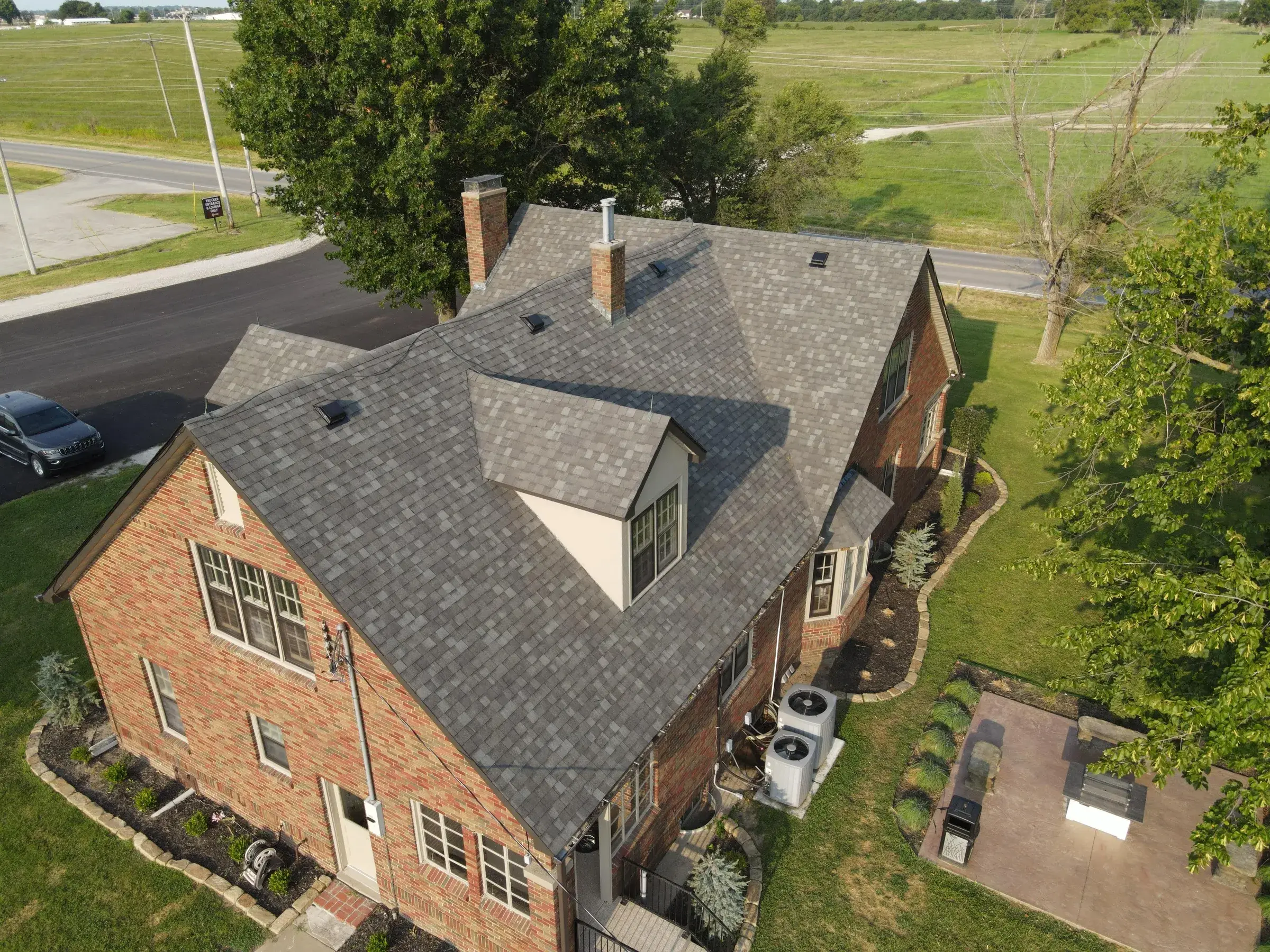
Protect Your Property with a Free Roof Inspection
Tell us what you're seeing. We'll arrange an inspection, explain the findings, and provide clear next steps without pressure.
- • A real look at the roof, not a sales visit
- • Photos of whatever we find, and what it means
- • A written quote if you want one — and an honest “you don’t need us yet” if that’s the answer