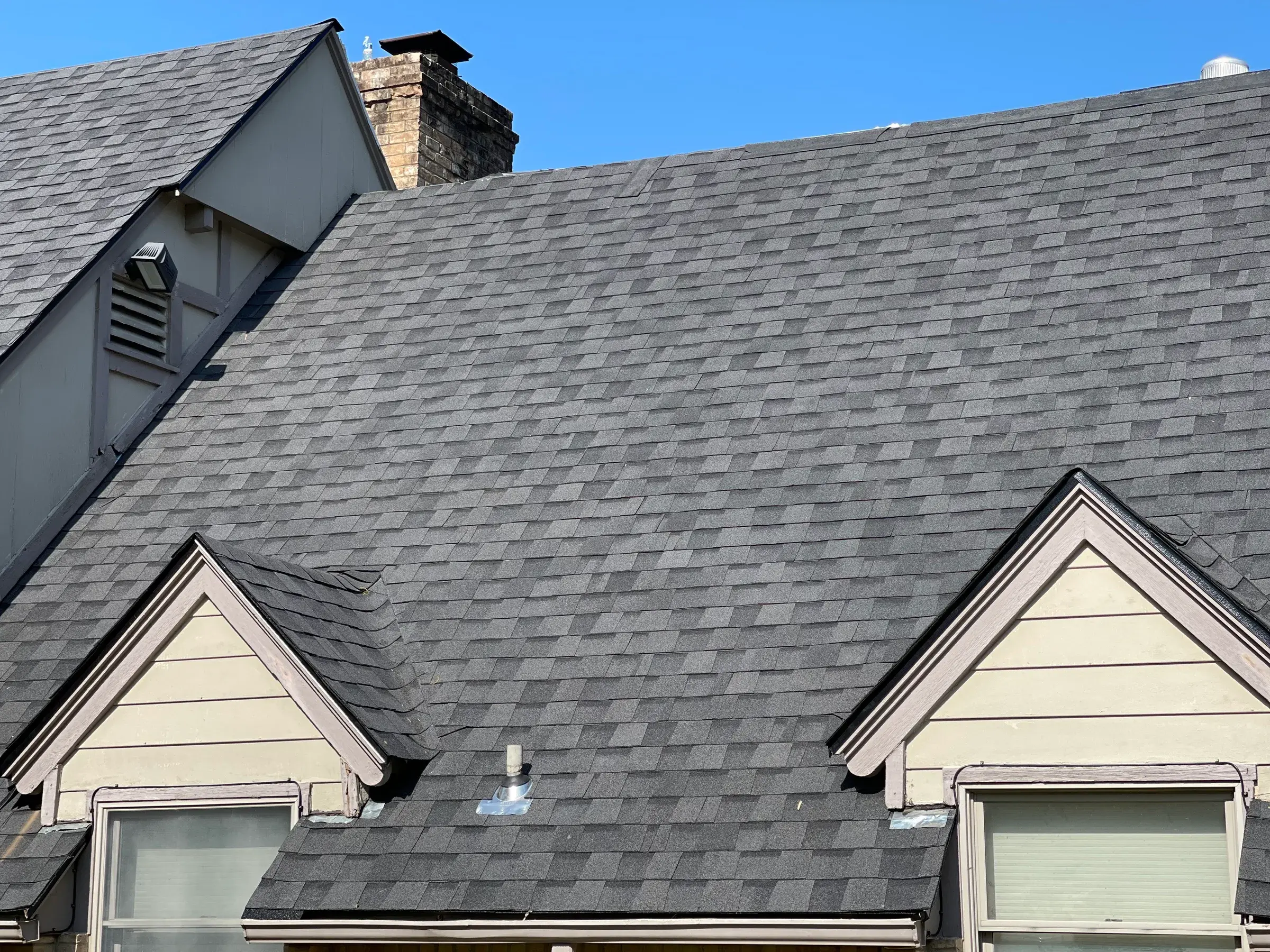
Impact-Resistant Class 4 Shingles in Miami, OK
Class 4 is the most oversold product in Oklahoma roofing and also one of the most genuinely worthwhile. It is not hail-proof and nobody should tell you it is. It is a shingle that survives an impact that would fracture a standard one — and in this state, that's a real proposition worth understanding properly.
If you've already been hailed on once, you're not asking whether it's coming back. You're asking what to put down this time. This page explains what a UL 2218 Class 4 rating actually measures, where it stops helping, and how the upgrade holds up on a Northeast Oklahoma roof that sees 4 to 5 hail days a year — including the parts nobody selling it wants to mention.
What UL 2218 Class 4 Actually Tests (a Steel Ball, Not a Storm)
UL 2218 is a laboratory impact test. A steel ball is dropped onto a shingle that's been fastened to a deck the way it would be on your house, and the shingle is then examined for cracking — including on the underside, where a fracture can hide. The rating comes from the ball's size. Class 1 uses a ball about an inch and a quarter across. Class 4, the top rating, uses a two-inch steel ball dropped from roughly twenty feet, twice in the same spot. If the mat — the reinforcing layer inside the shingle — doesn't fracture, it passes.
Now read that back and notice what it isn't. Steel is harder and denser than hail. The ball falls straight down onto a flat sample. It's the same size every time. Real hail is irregular, sometimes waterlogged and soft, sometimes layered like an onion, and out here it arrives sideways on a 60-mph outflow. The test is a repeatable benchmark for comparing shingles against each other. It was never a simulation of an Oklahoma storm, and nobody involved in writing it claimed otherwise.
Class 4 Is Impact-Resistant, Not Hail-Proof
The failure we're actually trying to prevent is called bruising. A stone hits, the granules stay put, the surface looks fine from the ground — but the mat underneath has fractured. You find it by pressing a thumb into the spot: it gives, soft, like the bruise on a piece of fruit. That fracture is the injury that matters. Months later it opens into a split, and water starts finding the deck. A Class 4 shingle raises the impact energy it takes to bruise the mat. It does not raise it to infinity.
It also only protects the thing it covers. Class 4 does nothing for:
- Gutters and downspouts — thin aluminum dents at hail sizes far below what hurts a roof
- Ridge vents, turbines, and the soft flashing collars around plumbing stacks
- Siding, window screens, and the fins on your A/C condenser
- Skylight glass and the metal cladding around it
- Hip-and-ridge caps and starter strip, if those accessories aren't rated the same as the field shingle — ask about that specifically, because the rating stops wherever the rated product stops
How Impact-Resistant Shingles Are Built: SBS-Modified vs. Mesh-Backed
Two engineering routes get to the same rating, and they behave differently on your roof.
SBS-modified (rubberized) asphalt
SBS stands for styrene-butadiene-styrene — a rubber polymer blended into the asphalt itself. The shingle deforms under an impact and springs back instead of shattering. The reason that matters here is temperature. Miami averages 89 nights a year below freezing. Straight asphalt stiffens as it gets cold, and a stiff shingle cracks where a flexible one dents. A hailstorm on a 33-degree March morning — which is a normal thing in Ottawa County — is a harder test than the same stone in July. SBS is the answer to that specific problem.
Mesh-backed
The other approach laminates a reinforcing scrim — a woven mesh — to the back of the mat. The mesh holds the mat together so an impact that would fracture it can't propagate into a split. It works, and it passes the same test. Its long-term performance leans on the bond between mesh and mat staying intact. SBS leans on the polymer staying in the asphalt through the UV load, and Miami gets roughly 62% of possible annual sunshine, 57 days a year above 90°F, and an August daily high that normals out at 91.5°F. Both routes are legitimate. They just age along different paths, and you should know which one is on your quote.
Why This Upgrade Makes Sense in Northeast Oklahoma Specifically
Ottawa County sees 4 to 5 days a year with hail larger than three-quarters of an inch. That is the only hail statistic on this page, because it's the only one we can source, and it's enough. Four or five swings a year at the same roof, every year, for the twenty-odd years you're asking that roof to work.
Where you sit in the county changes the shape of the problem. West of Miami, the Neosho Lowlands are flat open prairie — nothing slows the wind, so hail comes in at an angle and concentrates on west and south slopes. East, toward the Ozark Plains, it's rolling and wooded: more cover from the stones, more limbs coming down on the roof instead. Class 4 helps in both, but the west-side homeowner is buying protection against angled impact on two slopes, and the test that produced the rating was a vertical drop. Keep that in the back of your mind.
The Insurance Premium Question — and Why We Won't Promise You Anything
Many Oklahoma carriers offer a premium credit for an impact-resistant roof. Some don't. Oklahoma does not require any insurer to offer one — there's no law making it automatic, whatever you've been told at a door. We can't quote you a percentage, a dollar figure, or an outcome, and we won't. Your carrier sets that, and only your carrier knows it.
Call your agent before you decide. Ask these four things:
- Do you offer a credit for a UL 2218 Class 4 roof, and is it applied to the full premium or only the wind-and-hail portion?
- What documentation do you need — a product data sheet, the manufacturer's certificate, photos of the bundle wrapper showing the rating?
- Does accepting the credit attach a cosmetic damage exclusion to my policy?
- Does anything else on my policy change — deductible structure, roof settlement basis?
If a roofer hands you a savings number, they invented it. And under Oklahoma law we can't offer you anything of value toward a deductible, so there's no version of this where the math gets sweetened at our end. The only real number comes from your agent.
Class 4 and Cosmetic Damage: What You'll Still See After Hail
A stone big enough will still knock granules loose, still leave a mark, still scuff the surface — on a roof whose mat came through perfectly intact. That's not a defect. That's the product doing its job: the mat survived, which is the whole point. The roof is not going to look untouched, and a Class 4 shingle that lost some granules in a storm is generally still a working roof.
Question four above matters more than people expect. Some policies attach a cosmetic damage exclusion when you take the impact-resistant credit. If yours does, a dented-but-functional roof is no longer a covered loss — which is arguably the correct trade, but you should make it knowingly rather than find out afterward. Read the endorsement before you sign it.
If you do get hit, what we do is straightforward: we inspect, we document the damage with a photo report, and we give you a written estimate for the work we would perform. If you want us on site when your adjuster comes out, ask and we'll be there. Your insurer decides coverage. That's their call, not ours.
The Cost Delta and How to Think About It
You won't find a price or a percentage on this page. Every roof is a different pitch, deck, and access problem, and a number published in advance is a guess dressed up as information. Call us and we'll look at yours. The inspection and the quote are free.
What we can help with is the frame. Class 4 is a bet on how long you'll own the house. Median home value in Ottawa County is $123,300, and a roof is a meaningful share of that — so the question isn't really 'can I afford the upgrade,' it's 'how many hailstorms do I own?' Selling in two years: probably not worth it, and the credit won't have time to matter. Staying twenty: you're looking at eighty to a hundred hail days over the life of that roof, and the cost of a claim isn't just the deductible, it's the disruption, the tarping, the whole thing again.
One local wrinkle. About 13% of Ottawa County's 13,701 housing units sit vacant, a lot of them second homes around Grand Lake. If you're not in the house when the storm passes, nobody's up there finding the bruise, and the leak announces itself on your next visit. Absentee owners have a stronger case for materials that fail slowly and forgivingly than owners who are home to catch it.
Class 4 vs. Metal: Two Different Answers to the Same Storm
Metal outlasts shingles by a wide margin and sheds weather beautifully. It also dents, and the dents are permanent and visible. A standing seam panel with hail dimples across the south elevation sheds water exactly as well as it did the day before — and announces that storm to everyone who drives by, for the next forty years. Some people don't care. Some care a great deal.
A Class 4 shingle sits far closer to a standard shingle in cost and hides its scars. It won't run as long as a metal roof. Neither product is 'the hail answer.' They're two different bets: metal is buying longevity and accepting cosmetic scarring; Class 4 is buying resistance and appearance at a shorter service life.
We install both. We'll walk your roof, tell you which slopes actually take the hits, and if we think a standard architectural shingle is the right call for your house and your horizon, we'll tell you that too. Treating you like a neighbor means being straight about a product we'd like to sell you.
Impact-Resistant (Class 4) Shingle Roofing questions
Are Class 4 shingles hail-proof?
No, and anyone who says so is selling. Class 4 is a UL 2218 rating: a two-inch steel ball is dropped on the shingle twice in the same spot from about twenty feet, and it passes if the mat doesn't fracture. That's a controlled test, not an Oklahoma storm — real hail comes in different sizes, densities and angles, driven by wind. Class 4 shingles resist damage far better than standard ones. They do not become invincible.
Will Class 4 shingles lower my insurance premium?
Many Oklahoma carriers do offer a premium credit for an impact-resistant roof, and some don't. We can't promise you a discount, quote a percentage, or tell you what your carrier will do — that's between you and them. Call your agent before you decide, ask specifically about a UL 2218 Class 4 credit, and ask what documentation they need. If a roofer quotes you a savings number, they made it up.
Is the upgrade worth the extra cost?
It's a bet on how long you'll own the house and how much hail you expect. In this part of Oklahoma the hail exposure is real, and the calculation usually comes down to the premium credit if your carrier offers one, plus the value of not going through a claim and a replacement. If you're selling in two years, probably not. If this is your house, it's a serious conversation.
How are impact-resistant shingles actually different?
Two main approaches. Some use SBS-modified (rubberized) asphalt, so the shingle stays flexible and absorbs an impact rather than shattering — these stay more resilient in cold weather too, which matters in a January freeze. Others use a reinforcing mesh or backing bonded to the mat. Both can achieve Class 4; they behave differently and age differently.
Will my Class 4 roof still show hail damage?
It can — cosmetically. A stone big enough may still knock granules loose or leave a mark even where the mat doesn't fracture, and Class 4 does nothing for your gutters, vents, siding or A/C fins. Some policies also specifically exclude cosmetic damage on impact-resistant roofs, which is another thing worth reading before you buy. The point of Class 4 is the mat surviving, not the roof looking untouched.
Class 4 shingles or a metal roof?
Different trade-offs. Metal generally outlives shingles by a wide margin and sheds weather beautifully, but it dents from hail and the dents are permanent and visible. A Class 4 shingle is closer in cost to a standard roof and doesn't announce every hailstorm on your elevation. Neither one is 'the hail answer' — they're two different bets.
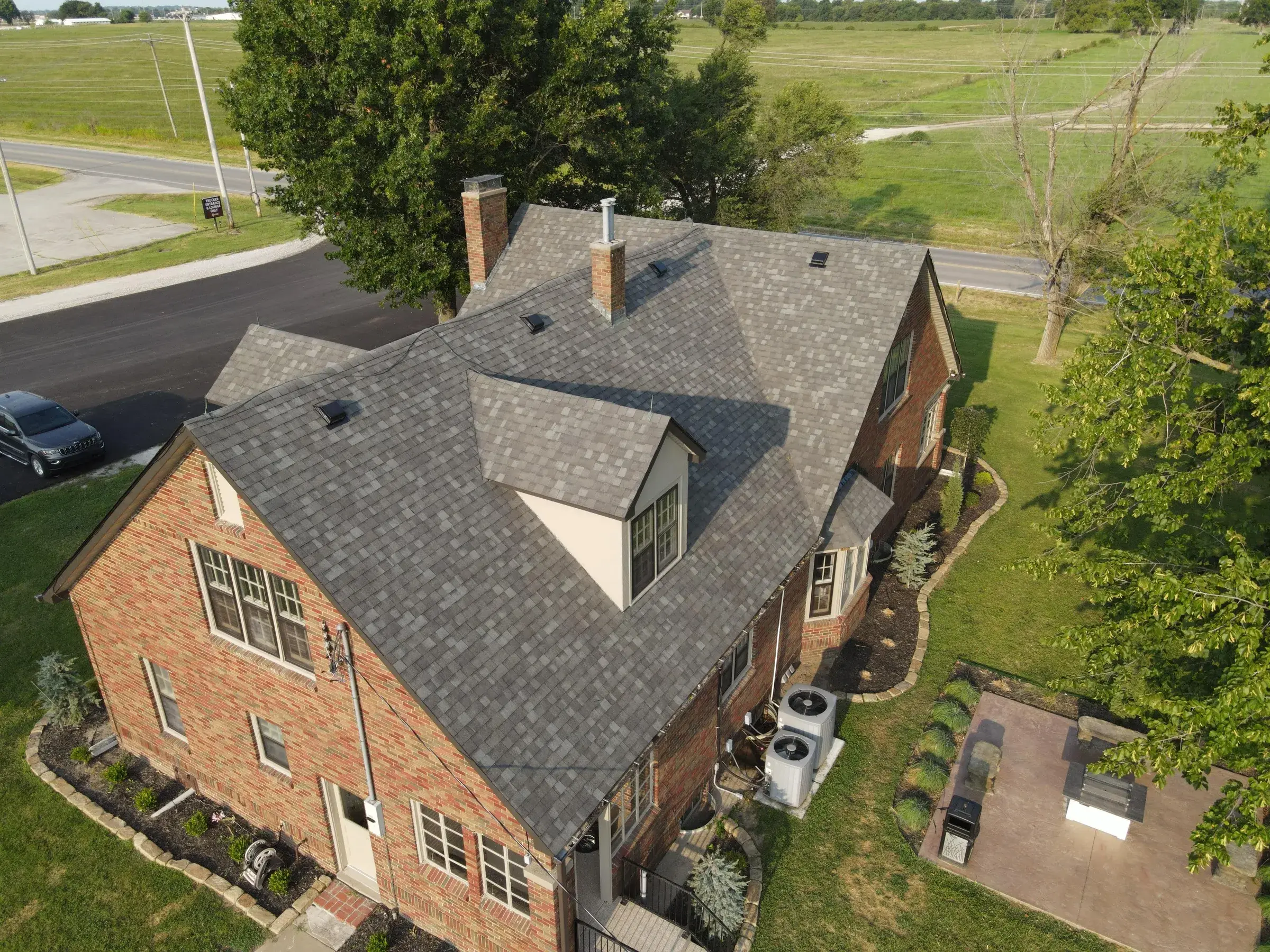
Protect Your Property with a Free Roof Inspection
Tell us what you're seeing. We'll arrange an inspection, explain the findings, and provide clear next steps without pressure.
- • A real look at the roof, not a sales visit
- • Photos of whatever we find, and what it means
- • A written quote if you want one — and an honest “you don’t need us yet” if that’s the answer