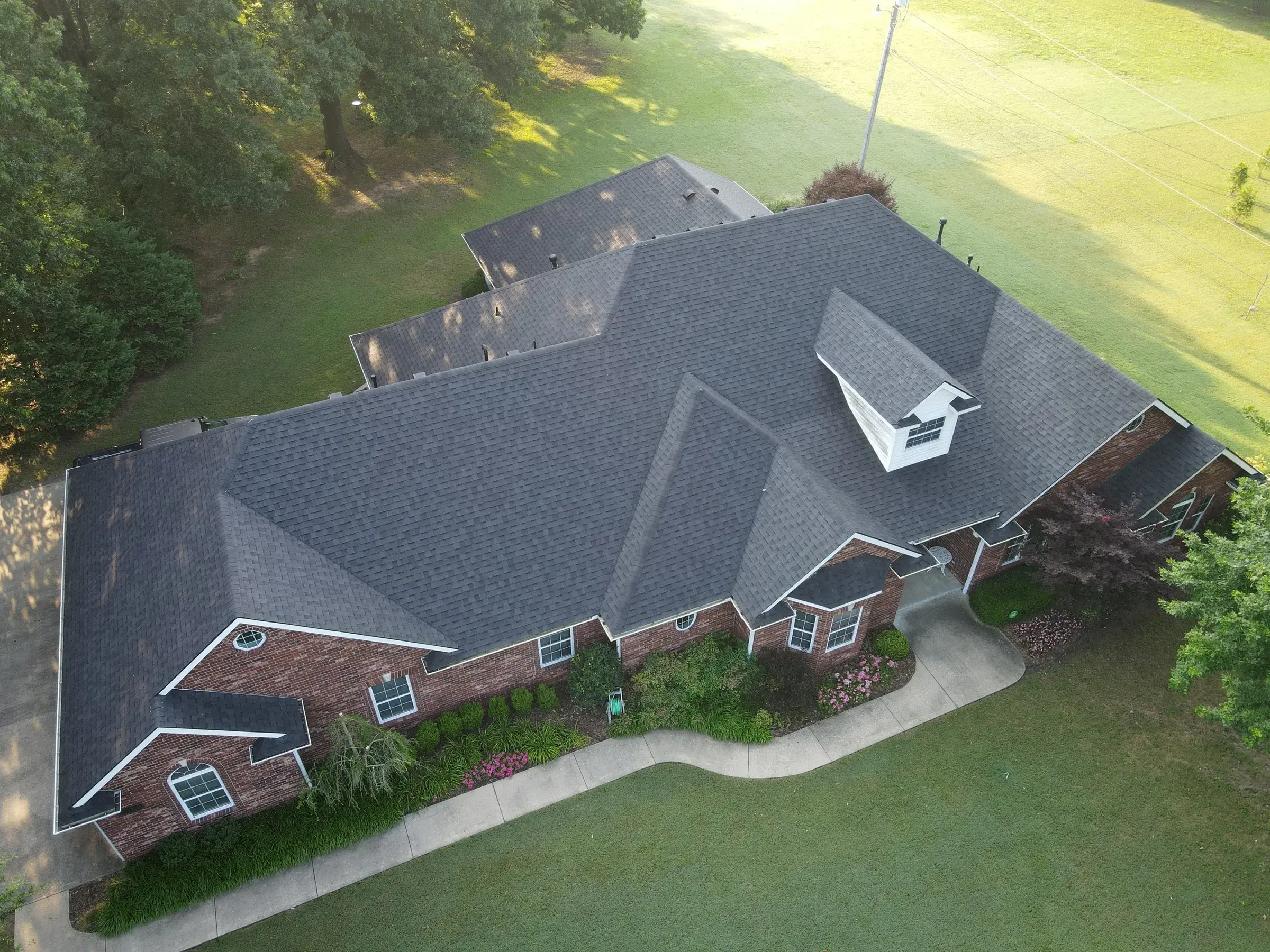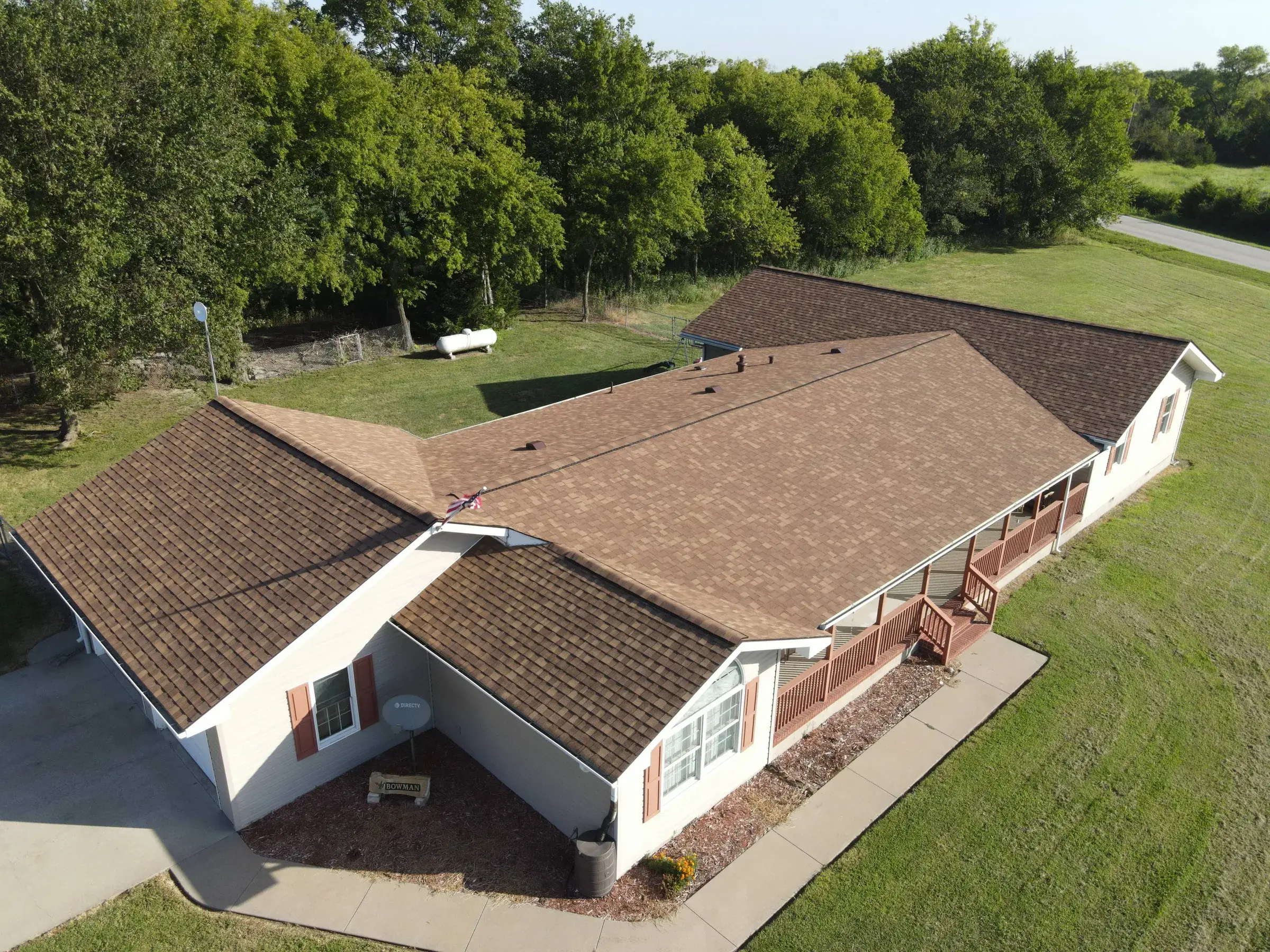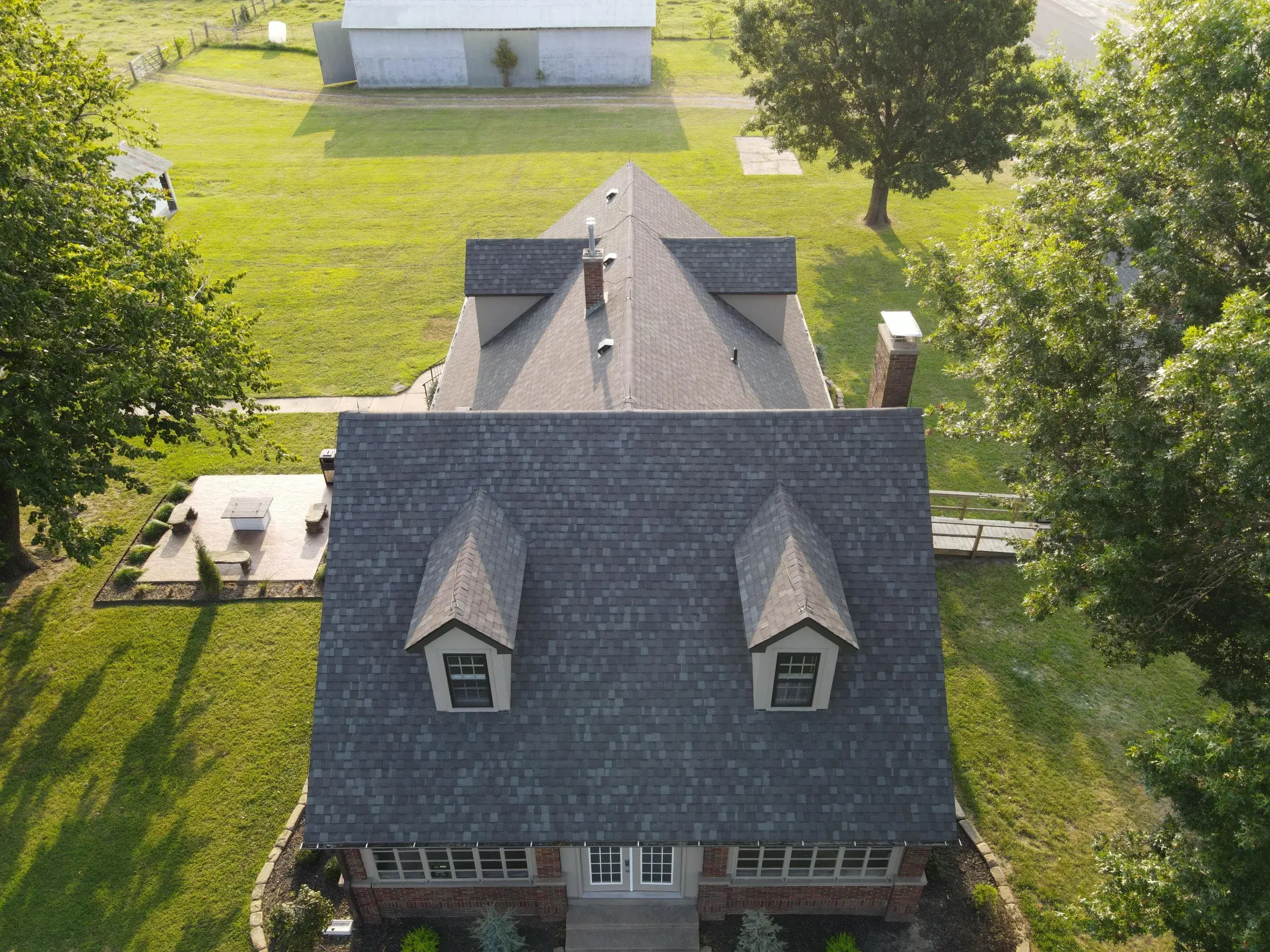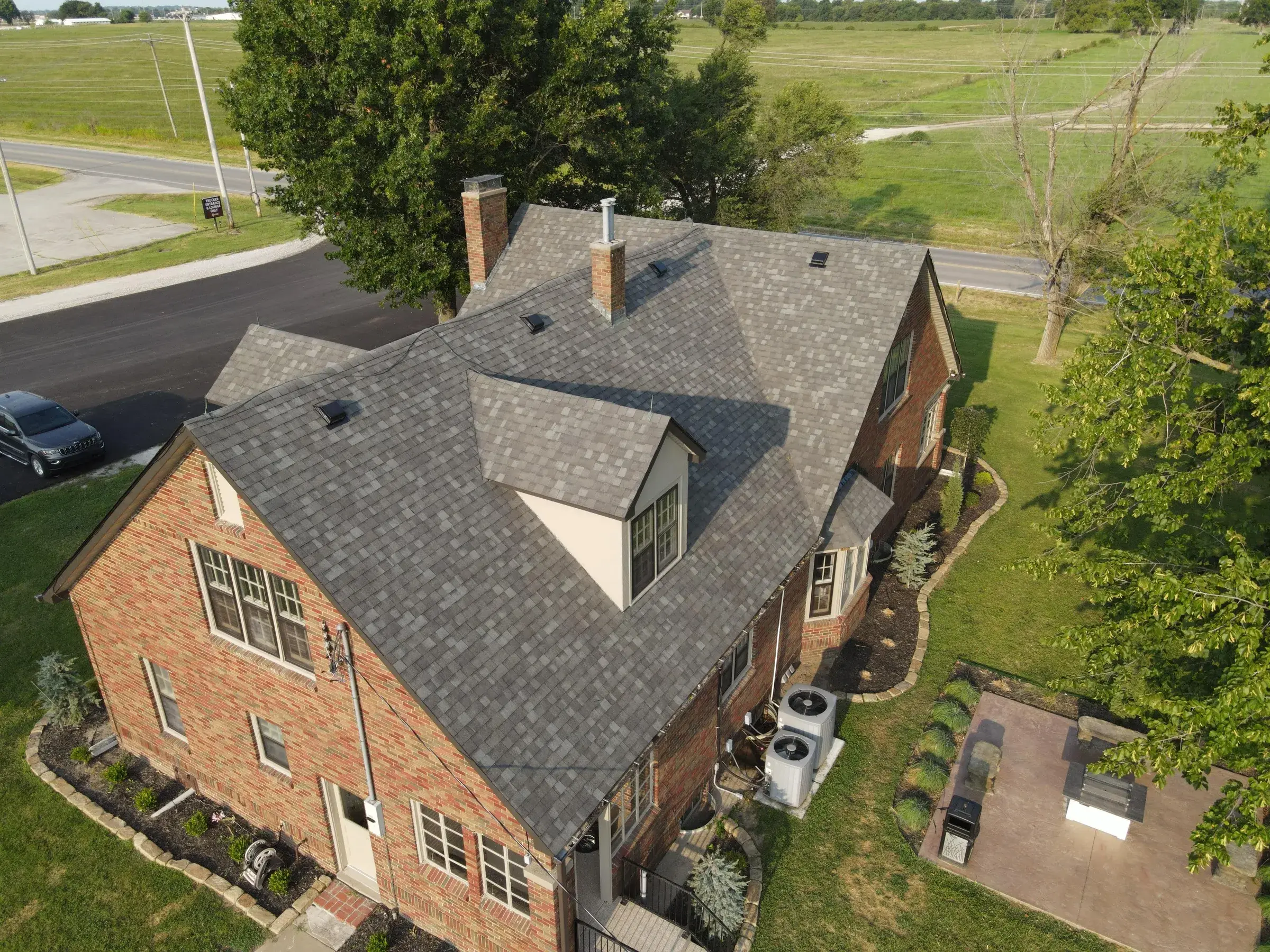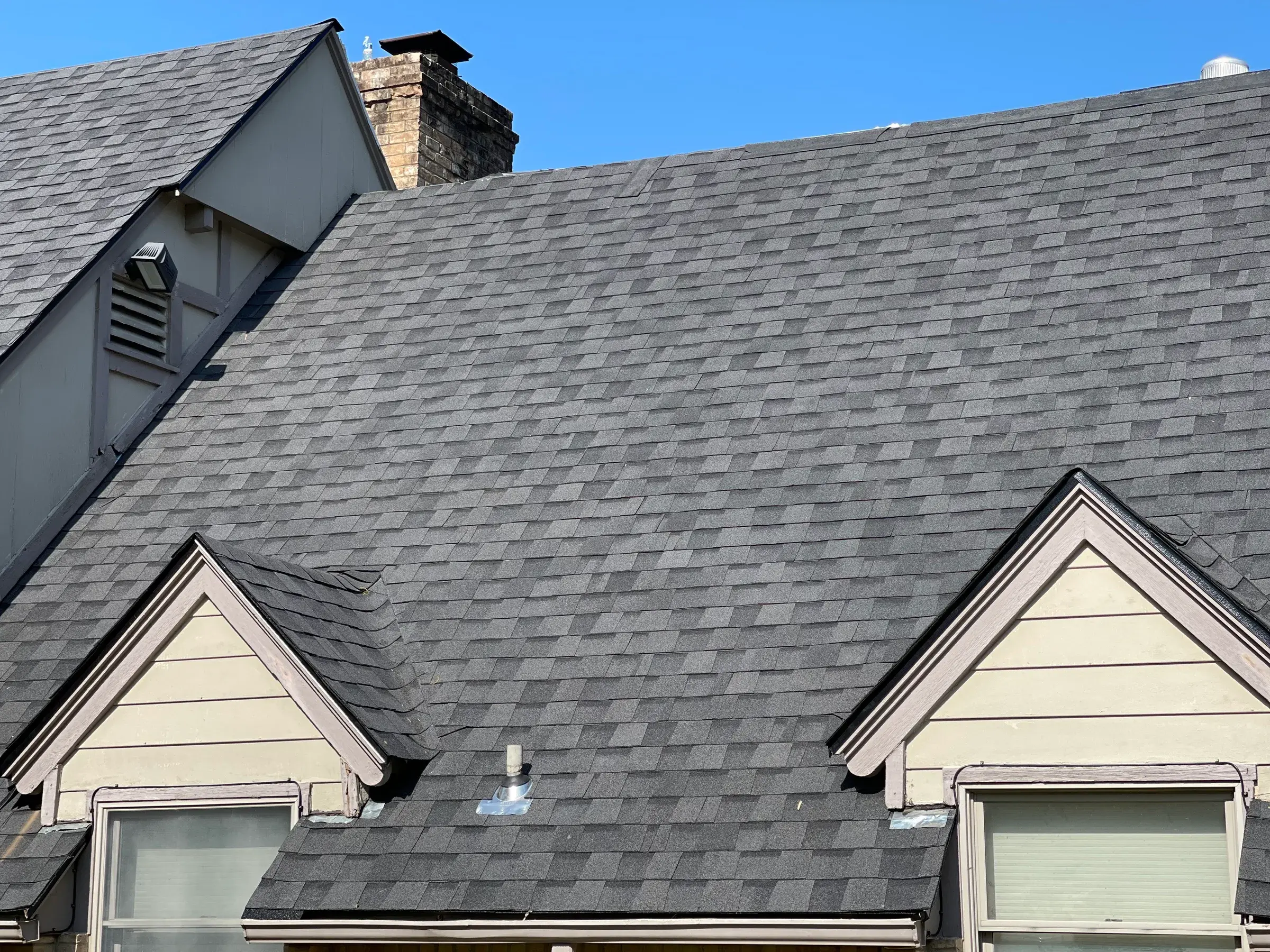
Shoot wide before tight: an establishing photo of the elevation, then the slope, then the damage close-up with something in frame for scale. Keep originals unedited with timestamps intact, and pair every photo with a written log entry noting date, location, and what it shows. Photograph interior and collateral damage too, not just the roof.
Why photo documentation fails: no context, no date, no sequence
Most homeowner photo files fail for the same three reasons, and none of them have anything to do with camera quality.
The first is context. Forty close-ups of grey shingle, all shot from two feet away, all looking roughly identical. Someone reviewing that file cannot tell which slope any of them came from, or whether photos 12 and 31 are two different bruises or the same bruise shot twice. A photo that can't be placed on the house is a photo that can't be counted.
The second is date. Phone photos carry a timestamp, but only if the file is left alone. Screenshot a photo, or push it through an app that recompresses it, and that information is usually gone. Now the picture shows damage but says nothing about when the damage appeared, which is the entire question in a storm claim.
The third is sequence. Pictures taken in scattered order across three weekends, dumped into a camera roll alongside 900 other images. Nobody is going to reconstruct that for you.
Fix those three things and your file does the one job it has: it lets a person who was not standing in your yard understand what happened, where, and when. It is worth saying plainly that no photo file guarantees anything. Your insurer decides coverage under the terms of your policy. What good documentation changes is the basis of that decision — evidence rather than recollection.
The wide-to-tight rule: establishing shots before close-ups
Film crews call it an establishing shot. Shoot the whole thing first, then work inward. Every damaged area should end up with the same four-photo sequence, taken in this order:
- The full elevation from the ground — the entire side of the house, roof to foundation, far enough back that the corners are in frame. One per side of the house, four minimum.
- The slope or section — half the roof plane, with a fixed landmark in frame (the chimney, a vent, the ridge line, the gable end) so the shot can be located later.
- The damage area in context — roughly six to ten feet back, showing the damage plus enough surrounding material to see that the rest of the surface looks different.
- The close-up with scale — tight on the single point of damage, with something in frame that gives size.
Shoot the four in that order and you never have to explain the last one. It explains itself, because the three photos before it walked the viewer down from the street to the shingle. Do it for every distinct area: each slope with damage, each gutter run, each vent, each interior stain.
One more habit worth building. Shoot the undamaged slopes too. A north slope with no bruising is evidence about the south slope that does have it — it shows the pattern came from one direction on one day, rather than from twenty years of weather. People skip this because it feels like documenting nothing. It isn't.
What to include in frame for scale and location reference
A hail bruise photographed with no reference object could be a quarter across or a dinner plate across. Nobody can tell. Put something in the frame.
For scale
A coin, a tape measure, or a ruler laid beside the mark. A U.S. quarter is a good default because it is a hair under an inch — the U.S. Mint lists the diameter at 0.955 inch. That matters here specifically, because the only sourced hail figure for this area is measured in inches: the Oklahoma Climatological Survey's 1991–2020 normals give this part of Oklahoma four to five days a year with hail larger than 0.75 inch. Size is the language the record is written in, so photograph in that language.
A tape measure pulled out and held flat beside the damage is better still, because it shows both size and that a measurement was actually taken rather than estimated.
For location
The close-up needs a way back to the wide shot. Chalk works — circle the mark with chalk or a lumber crayon, then shoot it. Chalk is standard practice, it washes off, and it means the same bruise can be found again by someone else on a different day. What you should not do is anything that alters the surface. No permanent marker, no scraping at granules to make a bruise look deeper, no lifting tabs to widen a crease. Altering damage is a different thing from documenting it, and it can wreck the credibility of an otherwise honest file.
Then say where you are in words. "South slope, third course above the gutter, six feet east of the chimney" costs you five seconds and makes the photo permanently locatable.
Metadata, timestamps, and why you should not edit or crop originals
Every photo your phone takes carries EXIF data — a hidden block of information stored inside the image file recording the date, the time, the camera, and, if you have it switched on, the GPS coordinates. That block is the difference between a photo and a dated record.
It is also fragile. Here is what strips or damages it:
- Screenshotting a photo instead of sending the file. A screenshot is a brand-new image dated today, with none of the original's information.
- Sending through messaging apps that compress images by default. Send the full-resolution original, or share by AirDrop, cable, or a cloud link to the file itself.
- Cropping, rotating, filtering, brightening, or marking up the original. Some apps preserve the data, some don't — you won't know which until it matters.
- Printing and rescanning. The record becomes the scan's date.
The rule is simple: originals are read-only. Copy the whole set into a folder, never touch it again, and do all your cropping, arrows and circles on duplicates. If someone later asks whether a photo was altered, you can hand over the untouched original and the question ends there. Turn location services on for your camera before you start shooting, too. A GPS-tagged photo answers "is this even your house?" without a word from you.
Documenting the things people forget: soft metals, screens, siding, decking, interior
This is where most homeowner files are thinnest, and it is the part that often carries the most weight. Hail does not politely restrict itself to the roof.
Soft metals are your best witness
A bruise on an asphalt shingle can be genuinely subtle — you feel it before you see it. A dent in thin aluminum is not subtle at all. Gutters, downspouts, drip edge, valley metal, roof vent caps, turbine vents, gutter aprons, the fins on your AC condenser, the garage door, the mailbox: all of these dent visibly and all of them dent on the same day the roof took the hit. Photograph them wide-to-tight, same as the roof. Downspouts are especially useful because they hang vertically and catch wind-driven hail from a specific direction, which tells you which way the storm was moving.
Window screens, siding, and the ground
Torn or punched screens, spatter marks on painted siding, chipped fascia, a dented grill lid, shredded patio furniture, stripped leaves piled against the foundation. Also photograph granules washed out at the bottom of the downspouts — a pile of them in the splash pan after a storm is real information.
Inside and in the attic
Ceiling stains, with the date visible in the file and a note of whether the stain was there last month. Damp insulation. Daylight showing through the decking from inside the attic. Water tracking down a rafter. Interior photos matter because they establish that the roof stopped doing its job, and they are the ones that decay fastest — a stain dries and fades, and then you are describing something that no longer photographs.
Where you live in Ottawa County changes what you're looking at
The county splits in a way that shows up in roof damage. East of Miami you are into the Ozark Plains — rockier, wooded, rolling — so the collateral evidence is often limb strikes, bark and leaf litter mashed into the shingles, and shaded slopes that hold moisture. West is the Neosho Lowlands: flat prairie, open fetch, nothing to slow the wind before it reaches your ridge, so the story is more often lifted tabs, creased shingles and torn ridge cap. Photograph what your side of the county actually produces. If a limb hit the roof, photograph the limb where it landed before anybody moves it. That is a hard photo to re-create later.
Photo shot list by area
- Elevations: all four sides of the house from the ground, whole structure in frame, roof to foundation
- Address: the house number and the street, so the file is anchored to the property
- Each roof slope: half-plane shots from the ground with a landmark (chimney, vent, ridge, gable) in frame
- Damaged slopes: context shot at six to ten feet, then a close-up with a coin or tape for scale
- Undamaged slopes: shot the same way, to establish the directional pattern
- Ridge and hip: cap shingles, from the ground, zoomed
- Penetrations: pipe boots, vents, turbine vents, skylights, satellite mounts, chimney flashing
- Valleys: the metal or the woven shingle, full length plus close-up
- Gutters and downspouts: whole run wide, then every dent close, plus the inside of the trough for granule accumulation
- Drip edge, gutter apron, fascia and soffit
- Soft metals: AC condenser fins, roof vent caps, garage door, mailbox, metal outbuildings
- Window screens, storm doors, and any spatter marks on painted siding
- Ground evidence: granule piles at downspout outlets, fallen limbs where they landed, hail on the ground if it is still there
- Interior: every ceiling and wall stain, dated, with a wide shot of the room first
- Attic: decking underside, daylight through the deck, wet insulation, water tracks on rafters
- Any emergency work: the damage before the tarp goes on, and the tarp in place afterward
Building a written damage log alongside the photos
Photos without a log are a pile. A log turns the pile into a document. It takes about twenty minutes and it is the single highest-value thing in this article.
One row per damage point. The photo reference column is the hinge — it is what lets a reader jump from a line of text to the exact image, and back again.
| Date / time | Location on property | What it shows | Measurement | Photo file refs |
|---|---|---|---|---|
| [date] 9:14 a.m. | South slope, 3rd course above gutter, 6 ft east of chimney | Circular bruise, granules displaced, mat soft to touch | ~1 in across (quarter in frame) | IMG_4412–4415 |
| [date] 9:31 a.m. | North downspout, front elevation, lower 4 ft | Dents on street-facing side of downspout only | 5 dents, 0.5–1 in | IMG_4420–4423 |
| [date] 9:48 a.m. | West gable, window screen, upstairs bedroom | Screen mesh punched through in two places | 2 holes, ~1 in | IMG_4431–4432 |
| [date] 10:05 a.m. | Living room ceiling, NE corner near wall | Brown ring stain, damp to touch; not present prior | ~14 in across | IMG_4440–4442 |
| [date] 10:20 a.m. | Attic, above living room NE corner | Water track on rafter, wet insulation below | — | IMG_4450–4453 |
| [date] 2:40 p.m. | South slope, full plane | Emergency tarp installed over damaged area | Approx. 20 x 20 ft tarp | IMG_4471–4474 |
The dates above are placeholders on purpose. Use your own, and use the real ones — the day you shot the photo, not the day of the storm, unless they happen to be the same. If a stain was already there before the storm, write that in the log. A file that volunteers an inconvenient fact reads as honest, and it is the honest files that get taken at face value.
| Weak | Strong | Why it matters |
|---|---|---|
| 30 close-ups of shingle, no wide shots | Four-photo sequence per damage point, wide to tight | The close-up can be located on the actual house |
| Nothing in frame for size | Coin or tape measure beside every mark | Damage size is the unit the weather record uses |
| Screenshots and app-compressed copies | Original files, untouched, EXIF intact | The date lives inside the file, not in your memory |
| Roof only | Roof plus soft metals, screens, siding, interior, attic | Dented metal corroborates a bruise you can barely see |
| "Sometime in the spring" | A specific date, checked against the NOAA record | A guessed date is the easiest thing to disprove |
| Photos with no writing | A dated log with a photo reference column | A reader can move between text and image in seconds |
| Damage cleaned up before shooting | Damage photographed as found, then mitigated | Cleanup destroys the evidence you're relying on |
| Everything in the camera roll | One folder, dated filenames, an index page | The file can be handed over as a file |
Receipts, invoices, and the mitigation paper trail
Property policies generally expect you to take reasonable steps to prevent further damage after a loss. That means tarping, covering, moving what's underneath, getting water out. It does not mean repairing — a permanent repair made before anyone has seen the damage removes the evidence.
So the order is: photograph, then mitigate, then photograph the mitigation. If water is pouring into your living room and you have to act first, take thirty seconds of video on the way to the bucket. Bad footage of real damage beats perfect footage of a cleaned-up room.
Keep the paper. Tarps, plywood, fasteners, a rented wet vac, a dumpster, a fan, a motel night if the house was unusable — every receipt, itemized, with the date. Photograph paper receipts the day you get them, because thermal receipt ink fades to blank within months. Save contractor invoices for emergency work as PDFs, not photos of a phone screen.
We do emergency tarping, and we will give you a written estimate for the work we'd perform. Both come with paperwork you can put straight into the file. What we cannot do is tell you what your policy will cover — that decision belongs to your insurer.
Weather documentation: pulling official records instead of guessing dates
"It was that big storm, back in the spring" is not a date. And it is the one weak point that can undo an otherwise strong file, because it is the only claim you've made that somebody else can check independently in about four minutes.
So check it first. The records are public, free, and take longer to describe than to use.
How to pull the official storm record for your date and county
- Start with the NOAA Storm Prediction Center storm reports archive. It publishes a daily map and list of hail, wind and tornado reports by date. Pick the date you think it was, and read the hail reports for northeast Oklahoma — each entry lists a time, a size in hundredths of an inch, a location and a county.
- If you're not sure of the date, use the NOAA National Centers for Environmental Information Storm Events Database instead. It lets you search by state, county and date range, so you can set Oklahoma / Ottawa County across a two-month window and read back what was recorded, rather than trying to remember.
- Cross-check with the National Weather Service Tulsa forecast office, the office that covers northeast Oklahoma. Its local storm reports and public information statements carry the narrative detail — time of arrival, direction of travel, spotter reports.
- Print or save the record as a PDF the day you find it. Note the source, the URL and the date you pulled it, and put it in the file as its own document.
- Write the confirmed date into your damage log, and only then start describing your photos against it.
- Read the Oklahoma Insurance Department's guidance on documenting a property claim before you file. It's the state regulator, it's neutral, and it costs nothing.
Organizing the file so it can actually be handed over
A file that only you can navigate is a file you will end up narrating over the phone. Build it so it can be sent.
- One folder per loss, named with the date: 2026-04-18-hail. Not "roof stuff."
- Subfolders: 01-originals (never touched), 02-marked-up, 03-weather-records, 04-receipts, 05-log-and-reports.
- Rename copies, never originals, in a readable pattern: south-slope-bruise-01.jpg, downspout-front-dents-02.jpg. Sorted alphabetically, they'll group themselves by area.
- A one-page index at the front: property address, date of loss, date the record was pulled and from where, policy number, a list of what's in each folder.
- Export the log as a PDF, not a spreadsheet nobody can open on a phone.
- Back it up somewhere that isn't the phone you carry up the ladder.
You'll be glad of this long after the roof is fixed. If you sell the house, the same folder answers a buyer's questions about the roof's history in one attachment.
What a professional inspection report adds that photos alone don't
Your ground-level file is genuinely valuable, and it is not the whole picture. There are three things it structurally can't do.
It can't see the roof surface. Bruised shingles are often identified by touch as much as by sight — the mat gives slightly under a thumb where the impact fractured it. That's not a ground photo, and it's not worth your neck. A roof inspection puts someone on the deck with a ladder, a chalk square, and a reason to be there.
It can't assess the deck. Whether the plywood underneath is sound decides the difference between a repair and a tear-off. And Oklahoma has amended the international residential code section on re-roofing, R908.3.1.1, to require a full tear-off rather than shingling over the old roof in defined conditions — one of the few genuinely Oklahoma-specific code facts in this trade, and one that changes the scope of the work. Don't hardcode a number from a blog: what applies is the current Oklahoma residential code, and the City of Miami requires a permit for new roofs and re-shingles. We pull it.
It can't produce a scope. What a report adds is a photo report of the damage and a written estimate for the work we would perform, in a form your adjuster is used to reading. If you'd like us there when the adjuster comes, ask and we'll be there. We're not going to negotiate on your behalf — that's not something a roofer in Oklahoma is allowed to do — but standing on the same roof looking at the same shingle tends to shorten the conversation.
Before you let anyone up there, check them. Oklahoma requires roofing contractors to register with the Construction Industries Board, and registration requires at least $500,000 in liability insurance for residential work. The CIB runs a free public lookup at verifyroofing.cib.ok.gov. Ask any contractor — including us — for their registration number and type it in. Nobody in this market explains that tool to homeowners, which is exactly why you should use it. And note that Oklahoma, Kansas and Arkansas issue registrations rather than licences, and Missouri has no state roofing licence at all, so a contractor telling you they're "licensed and bonded" in this four-state corner is telling you something that doesn't quite exist.
If you've got a file built and want a second set of eyes on the roof itself, we do free inspections across northeast Oklahoma and into Kansas, Missouri and Arkansas from our office on South Main Street in Miami. Call (209) 758-8550 and we'll come look.
We are roofing contractors, not public adjusters or insurance attorneys. Coverage decisions are made by your insurer under your policy.
Questions people ask about this
Should I take photos before or after I tarp the roof?
Before, then again after. Photograph the damage as you found it, then take reasonable steps to stop further damage, then photograph the tarp or covering in place and keep the receipts. The exception is active water intrusion — if water is coming into the house, deal with it and grab thirty seconds of video on the way. Rough footage of real damage is worth more than clean footage of a room you already dried out.
How do I find the exact date of the storm if I can't remember it?
Use the NOAA National Centers for Environmental Information Storm Events Database, which lets you search by state, county and date range. Set Oklahoma and Ottawa County across a window of a month or two and read back what was recorded. The NOAA Storm Prediction Center's storm reports archive gives you a day-by-day view with hail sizes, and the National Weather Service Tulsa forecast office publishes the local narrative reports. Save whatever you find as a PDF and note the date you pulled it.
Does it matter if I crop or brighten a photo before sending it?
It matters enough to be careful. Editing can strip the EXIF metadata — the hidden record of date, time and GPS location stored inside the image file — and once it's gone you can't put it back. Keep every original in a folder you never touch, and do any cropping, circling or brightening on copies. That way, if anyone ever asks whether an image was altered, you can hand over the untouched original.
There's no hail report on the NOAA map for my address. Does that mean my claim is dead?
No. Those maps show reports, meaning someone called something in. Rural Ottawa County has fewer people making those calls than a metro area does, and hail falls in narrow swaths that routinely miss one road and hit the next. An absence of reports is not evidence that no hail fell on your house. It does mean your physical evidence carries more of the weight — the dented downspout, the punched window screen, the granules piled at the splash pan.
Can a roofer file or handle the insurance claim for me?
Not in Oklahoma. Under 36 O.S. §6202, a contractor who represents an insured's interests for compensation is acting as a public adjuster, and doing that without a licence is a misdemeanour — even with your signature authorizing it. Oklahoma also voids assignment of benefits under 36 O.S. §1230, so no contractor can bill your insurer directly. What a roofer can properly do is document the damage in a photo report, provide a written estimate for the work, meet your adjuster on site if you ask, and explain the process. Your insurer decides coverage under your policy.