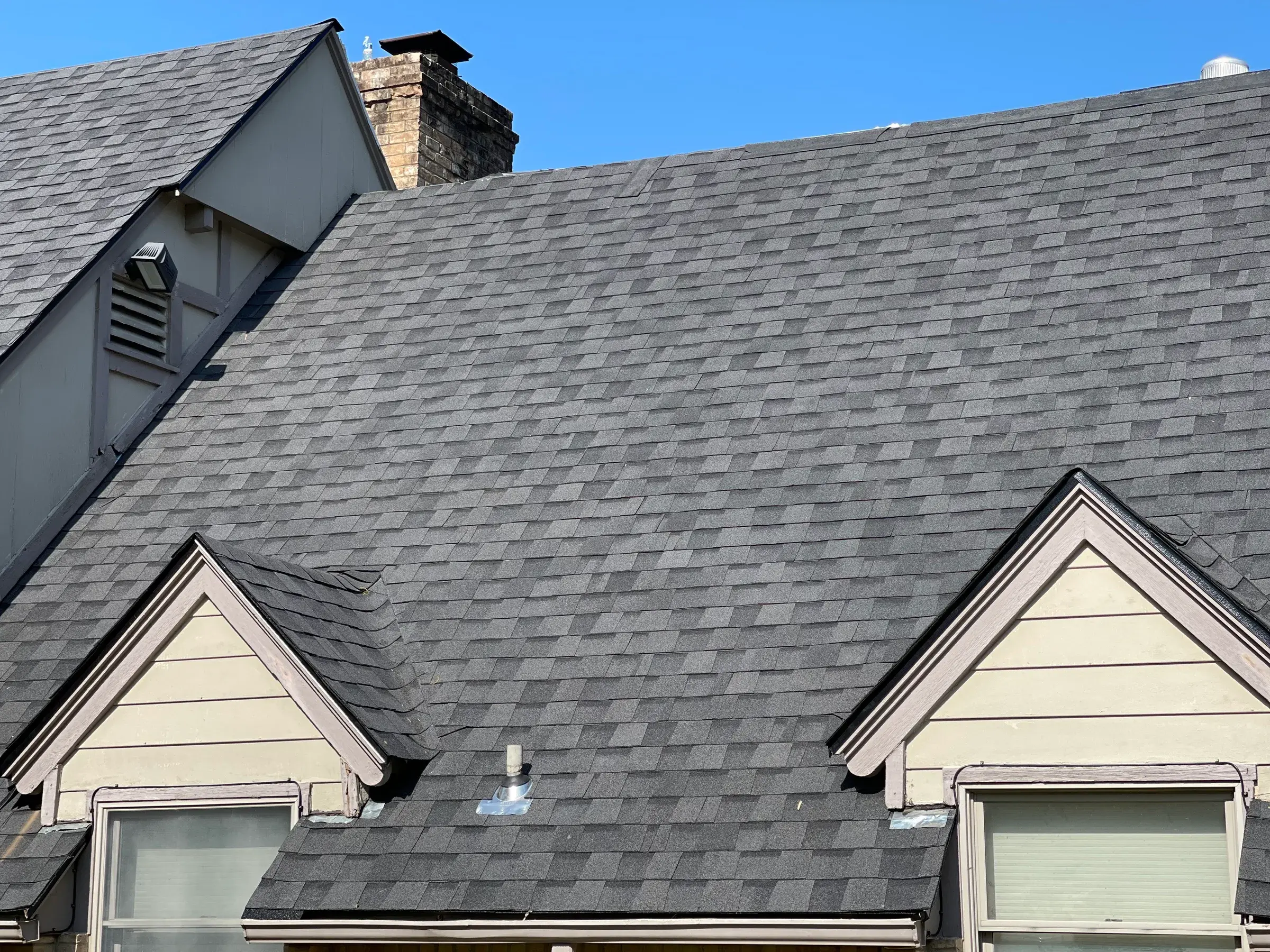
Roofing permit requirements are set by the local jurisdiction, not the state, so the answer for Miami, Oklahoma comes from the City's building official — not from a national article. Generally the contractor pulls the permit, not the homeowner. If a contractor asks you to pull it yourself, treat that as a warning sign worth understanding.
Why Permit Rules Are Local, Not Statewide
Oklahoma sets a floor. Your city sets the gate.
The Oklahoma Uniform Building Code Commission adopts the minimum building codes used across the state. Those are minimums by design — the Commission's own governing act says municipalities keep their authority to adopt more stringent requirements. So the state code tells you how a roof has to be built. Your city tells you whether you need a permit before anyone climbs on it.
That split is the whole reason a national roofing article is useless here. "Do I need a permit for a roof?" has no national answer. It doesn't even have an Oklahoma answer. It has a Miami answer, and a separate answer for an address out past the city limits. A house in town and a lake place in the county can follow the same state code and face completely different paperwork.
Who Sets the Rules in Miami, Oklahoma
In Miami, permits and inspections run through the Community and Economic Development department at the Civic Center. That office publishes the permit applications, takes the fees, and schedules the inspector. There is no state roofing permit and no county roofing permit standing behind it — for an address inside Miami city limits, this is the office that decides.
Worth knowing before you call: the City publishes a dedicated roofing application, separate from the general building permit application. It is titled "Application for New & Re-Roofing Permit" and its form file is revision-dated February 2020. A city that has printed a roofing-specific form is a city that expects to see roofing permits.
When a Roofing Permit Is Typically Required (and When Repairs May Not Need One)
Here is where we have to be straight with you, because most contractors in this market will not be.
The City of Miami currently publishes two answers about roofing permits, and they do not agree.
The City's Permits page lists the work that needs a building permit, and that list explicitly includes "new roofs & re-shingle." Read plainly, that means a re-shingle needs a permit. But the City's own FAQ answers the question "Is a permit required for a roof?" this way: "Yes, a permit is required any time there is metal roofing, decking or rafter construction. A permit is not required to replace or repair shingles only. You can only have 1 layer of shingles." Read plainly, that means a straight shingle swap does not need one.
Those two statements cannot both be the operating rule for a tear-off and re-shingle. We are not going to pick one for you and call it fact. What we can tell you is what else is on the page. The roofing application form exists and is titled for re-roofing. And the FAQ's answer on fees — $20 for the first $10,000 of project cost — does not match the fee schedule the City has posted since July 2015, which is built on square footage instead. When one answer on a page is out of date, the rest of that page earns a phone call.
| The job | What the City's published sources indicate | What to do |
|---|---|---|
| Full tear-off and replacement, asphalt to asphalt | Direct conflict. The Permits page lists "new roofs & re-shingle" as permit work. The FAQ says shingles only don't need one. | Call before the tear-off starts. Don't assume the FAQ. |
| New metal roof, or metal over an existing roof | Both sources point the same direction — the FAQ names metal roofing specifically. | Expect a permit. Your contractor applies. |
| Any work touching decking or rafters | The FAQ names decking and rafter construction as triggers. | Expect a permit, even if the job started life as a repair. |
| Rotten or split deck boards found after tear-off | Not addressed directly. But replacing boards is decking work, and state code requires asphalt shingles to land on a solidly sheathed deck. | Ask the building official whether the permit needs amending mid-job. |
| Small repair — a few shingles, no deck work | The FAQ says a permit is not required to replace or repair shingles only. | Still confirm. The Permits page reads more broadly than the FAQ. |
| Second layer of asphalt over existing asphalt | The FAQ says one layer only. State code bans it outright. | This isn't a permit question. It isn't allowed. Tear-off. |
| Roof on a new addition or detached garage | The Permits page lists room additions and detached structures as permit work. | Permit for the structure; the roof rides along with it. |
The one-layer rule is the one thing everybody agrees on
Both City sources land in the same place on layers, and so does the state. Oklahoma amended Section R908.3.1.1 of the residential code — the section governing roof re-cover — to add a fourth condition that blocks re-covering. In the Commission's own words, a roof re-cover is not permitted "where the existing roof has one or more application of asphalt shingles additional applications of asphalt shingles shall not be permitted."
Read that again, because it settles a fight people still have in this market. If you already have asphalt shingles, another layer of asphalt shingles is off the table in Oklahoma. Not discouraged. Not a bad idea. Not permitted. That is why the City's roofing application asks two questions side by side: "Total Current Layers" and "How Many Layers Will Be Removed." If a contractor offers to save you money by shingling over what's up there, he is quoting you work the state code doesn't allow — and we've written up the full comparison in our piece on <a href="/blog/roof-overlay-vs-tear-off">roof overlay versus tear-off</a>.
Why "just a repair" can become permit work
Oklahoma also amended Section R905.2.1 to define what a deck has to be. Asphalt shingles must be fastened to solidly sheathed decks, and the amendment defines solid sheathing as boards or panels without "deficit conditions" — gaps wider than the shingle manufacturer's instructions allow, or boards that are warped, split, cracked, deteriorated or rotten.
Now connect that to Miami's FAQ, which names decking as a permit trigger. A job you booked as a <a href="/services/roof-repair">roof repair</a> can cross into decking the moment the tear-off exposes soft boards — which happens often enough on older housing stock that it should never surprise anyone. Ask your contractor what happens to the permit if that's what's under there. A good answer exists. A shrug doesn't.
Who Pulls the Permit — and Why It Should Be the Contractor
Oklahoma law is unusually direct about this. Under 59 O.S. § 1151.17(A), when a roofing contractor applies for any permit required for roofing work, that contractor "shall supply the permit-issuing official that roofing contractor's registration certificate number," and the official "shall enter a roofing contractor's registration number on the permit." The statute also lets the state registrar investigate any roofing project to verify registration or the permit.
Miami's roofing application is built for exactly that. It has a field for the roofing contractor's name and address, a field marked "OK Lic #," and a checkbox asking whether a commercial job carries the commercial endorsement. The applicant signs a line acknowledging that the City "enforces the current roofing regulations and contractor's registration act per the Oklahoma Construction Industries Board."
So the permit isn't a receipt. It's a public record tying a named, registered contractor to your address and your scope of work. That record has teeth: § 1151.3(A) says evidence of securing a permit for roofing work from a governmental agency "shall be accepted in any court as prima facie evidence of the existence of a contract." A properly pulled permit is a piece of your paper trail — which is why permitting belongs inside the job, not beside it. Our walkthrough of the <a href="/blog/roof-replacement-process-step-by-step">roof replacement process step by step</a> covers where it lands in the sequence.
The Warning Sign: "You Pull the Permit Yourself"
If a roofer asks you to go down to the Civic Center and pull the permit under your own name, stop and find out why.
Sometimes the reason is innocent. Often it isn't. And here's the part almost nobody knows: pulling it yourself does not actually hide an unregistered roofer. Section 1151.17(B) says a person permitting work on their own property — even though they're exempt from registration themselves — must still supply the permit-issuing official "any roofing contractor registration number... of each roofing subcontractor engaged in roofing services and doing work covered by the permit," and the official enters those numbers before the job is inspected. The law closed that door.
What pulling it yourself does change is where the exposure sits. You become the applicant. You're the name on the record, responsible for the work passing inspection. Meanwhile the contractor's registration number never has to reach the City through him.
And consider what registration status is actually protecting. Section 1151.3(B) bars an unregistered person from bringing or maintaining "any claim, action, suit, or proceeding in any court of this state" related to their roofing business — but that cuts the way you'd expect only if you know his status going in. Add it to the list in our guide to <a href="/blog/questions-to-ask-roofing-contractor-oklahoma">questions to ask a roofing contractor in Oklahoma</a>: who is applying for the permit, and what number is going on it?
State Registration vs. Local Permitting: Two Different Things
This is where homeowners get talked in circles, usually by someone waving a registration card as if it were an approval to start work. It isn't, and the Roofing Contractor Registration Act says so itself. Section 1151.19 provides that the Act "shall be construed to be in addition to, and not in lieu of, any required licensure" and "shall not be deemed to conflict with or affect the authority of any state or local agency, board or commission whose duty and authority is to administer or enforce any law or ordinance."
Plain English: being registered with the state does not substitute for the City's permit. They are separate systems that answer separate questions.
| CIB roofing contractor registration | City of Miami building permit | |
|---|---|---|
| Who issues it | The Construction Industries Board's registrar, statewide | City of Miami Community and Economic Development |
| What it covers | One contractor's ability to do roofing work anywhere in Oklahoma | One job, at one address, for one scope of work |
| What it proves | Registration is current and liability insurance is on file with the state | The City knows the work is happening and can send an inspector |
| What it does NOT cover | It is not permission to start work at your address | It does not vouch for the contractor's registration, insurance, or skill |
| Insurance behind it | Not less than $500,000 liability for residential roofing work, with the CIB listed as certificate holder | None. A permit is not insurance and never was |
| How you check it | verifyroofing.cib.ok.gov — free and public | Ask for the permit number, then call 918-542-6685 |
| How long it lasts | Registered annually; suspended automatically if the liability policy lapses | The City's FAQ says permits are good for 6 months |
That verification tool is the single most useful thing on this page, and no one around here talks about it. Section 1151.18 requires the registrar to verify registration numbers to city, county and state officials and to the public, through an internet system that also notes complaints filed against a contractor. Check it yourself at verifyroofing.cib.ok.gov before you sign anything.
Check it close to the work, too — not months ahead. Registration is tied to that insurance certificate, and the statute says all registrations "shall be suspended on the date of the policy cancellation," with the registrar needing proof of insurance before restoring it. A contractor who was registered in March may not be in July.
What a Roof Inspection by the Building Official Looks For
We're not going to publish a checklist the City hasn't published. Miami's inspections page describes trade, rough and final inspections generally; it does not post a roofing-specific list of what the inspector checks. Anyone who prints one is guessing, and a guess about a code official's checklist is worse than no answer.
What we can tell you is what the City's own paperwork asks about, which is a fair signal of what matters: roof type, whether it's asphalt or metal, the current layer count, how many layers are coming off, the square footage, and the estimated job cost. Those are the same facts the state's re-cover and sheathing amendments turn on.
Practical notes from the City's inspections page: call by 4 p.m. for a next-business-day inspection, have your permit number ready, and know that someone over 18 has to be present for the inspector to enter the inside of the home. Call after 8 a.m. on the day and they'll give you a two-hour arrival window.
One thing to keep straight: the building official's inspection is a code check, not a condition report. It is not the same as the <a href="/services/roof-inspections">roof inspection</a> a roofer does to tell you whether you have damage and what it will take to fix. Different job, different purpose, different day.
Rural Ottawa County: When You're Outside City Limits
Ottawa County borders both Kansas and Missouri, and a lot of the roofs around here — lake places on the Grand, farmhouses out on the Neosho lowlands, homes tucked into the wooded east side — sit outside any city limits. The permitting picture there is genuinely different, and we're going to describe what's published rather than assert a rule.
Oklahoma law makes county building codes optional. Under 19 O.S. § 868.17A, a board of county commissioners "may, by resolution, adopt building codes, fire codes, or both," and any codes adopted that way apply only in the unincorporated areas of the county. Counties may employ building inspectors to enforce them. May — not must.
As for Ottawa County specifically: the departments the county publishes are its Election Board, Emergency Management, OSU Extension, and the 9-1-1 Coordinator for addressing. The county's permits page covers public service and pipeline crossing permits. We don't see a county building department published. That is an observation about what's posted, not a ruling that no permit is required at your address — so call the courthouse at 918-542-3121, at 102 E Central Ave in Miami, and ask before you rely on it.
What Unpermitted Roof Work Does to a Future Home Sale
We're roofers, not lawyers or realtors, so take this as the shape of the problem rather than advice about your situation. For anything specific — disclosure obligations, a deal already under contract, work a previous owner did — talk to your own attorney or your realtor.
The general issue is that a roof is the most expensive thing on a house that a buyer can see from the driveway, and there is no record that yours was done right. Permits are public. A buyer, an appraiser, or a lender's underwriter can look and find nothing where a re-roof should be. Then you are the record, and your word is doing work that a permit number would have done for free.
It gets sharper with layers. If a previous re-roof went over the top of existing asphalt, that's work Oklahoma's code doesn't permit, and it may be visible at the rake edge to anyone who knows to look. Median home value in Miami runs about $123,300 — the paperwork on a roof is not a rounding error against that number. When the roof is done right the first time, the permit and the inspection are the cheapest part of proving it.
How to Confirm Requirements for Your Address Before Work Starts
This is a fifteen-minute job and it belongs to you, even if the contractor is the one filing. Ask these before you sign, not after.
Confirm with the City of Miami building official before you sign
- Is a permit required for exactly this job at this address? Describe the real scope — tear-off, re-shingle, metal, decking — not just "a new roof."
- Which is current: the Permits page listing "new roofs & re-shingle," or the FAQ saying shingles-only needs no permit?
- Who will be named as the applicant on the permit — the contractor or me?
- What is my contractor's OK registration number, and has it been entered on the permit as the statute requires?
- What is the fee, and is it calculated from the flat roofing line or from square footage?
- Are inspection fees charged separately from the permit fee, and how many inspections should I expect?
- What inspection stages apply to this roof, and who calls them in — me or the contractor?
- How long will the permit stay valid, and what happens if the job runs past that?
- Does anything about my address change the answer — floodplain, a commercial structure, an addition?
- Separately: look the contractor up at verifyroofing.cib.ok.gov and check for complaints, this week — not last month.
Then write the answers down with the date and the name of whoever gave them to you. Fee schedules get revised, adopted code editions change on a schedule, and web pages go stale — as the conflict on Miami's own site shows. A dated note from the building official beats any article, including this one.
If you'd like us to look at the roof first, we do free inspections across Miami, Commerce and the rest of Ottawa County, and we'll tell you what the roof needs before anyone talks about paperwork. If we do the work, we pull the permit and our registration number goes on it. Whether that's a <a href="/services/roof-repair">repair</a> or a full <a href="/services/roof-replacement">roof replacement</a>, and whether you're in <a href="/locations/miami-ok">Miami</a>, up in <a href="/locations/commerce-ok">Commerce</a>, or out past the city limits, the permit question gets answered before the first shingle comes off. Call us at (209) 758-8550.
Questions people ask about this
Does a roof replacement need a permit in Miami, Oklahoma?
The City publishes two answers that conflict. Its Permits page lists "new roofs & re-shingle" among work requiring a building permit, while its FAQ says a permit is not required to replace or repair shingles only. The City also publishes a dedicated "Application for New & Re-Roofing Permit" form. Because only the building official can resolve this for your address and scope, call Community and Economic Development at 918-542-6685 before work begins.
Can I put new shingles over my old ones in Oklahoma?
No, not over existing asphalt. Oklahoma amended Section R908.3.1.1 of the residential code to bar a roof re-cover where the existing roof has one or more applications of asphalt shingles. The City of Miami's FAQ independently states you can only have one layer of shingles. This is a code prohibition, not a permit technicality — the old shingles come off.
Should the roofing contractor pull the permit, or should I?
Generally the contractor. Under 59 O.S. § 1151.17(A), a roofing contractor applying for a roofing permit must give the permit-issuing official their state registration certificate number, and the official enters it on the permit. If a contractor pushes you to pull it under your own name, ask why. It doesn't get around registration — § 1151.17(B) requires an owner-applicant to supply the registration number of each roofing subcontractor anyway — but it does move responsibility for the permit onto you.
Is a state roofing registration the same as a city permit?
No, and the law says so explicitly. Section 1151.19 of the Roofing Contractor Registration Act states the Act is "in addition to, and not in lieu of" other required licensure and does not affect the authority of any local agency enforcing an ordinance. Registration says the contractor may work in Oklahoma and has liability insurance on file — at least $500,000 for residential work. A permit says the City has approved this job at this address.
Do I need a permit if my house is outside Miami city limits?
Possibly not, but confirm rather than assume. Under 19 O.S. § 868.17A, a county board of commissioners may adopt building codes for unincorporated areas — it is optional, not required. Ottawa County does not publish a building department, and its permits page covers public service and pipeline crossing permits. Call the courthouse at 918-542-3121 to confirm for your address, and remember that the state code and the contractor registration requirement apply either way.