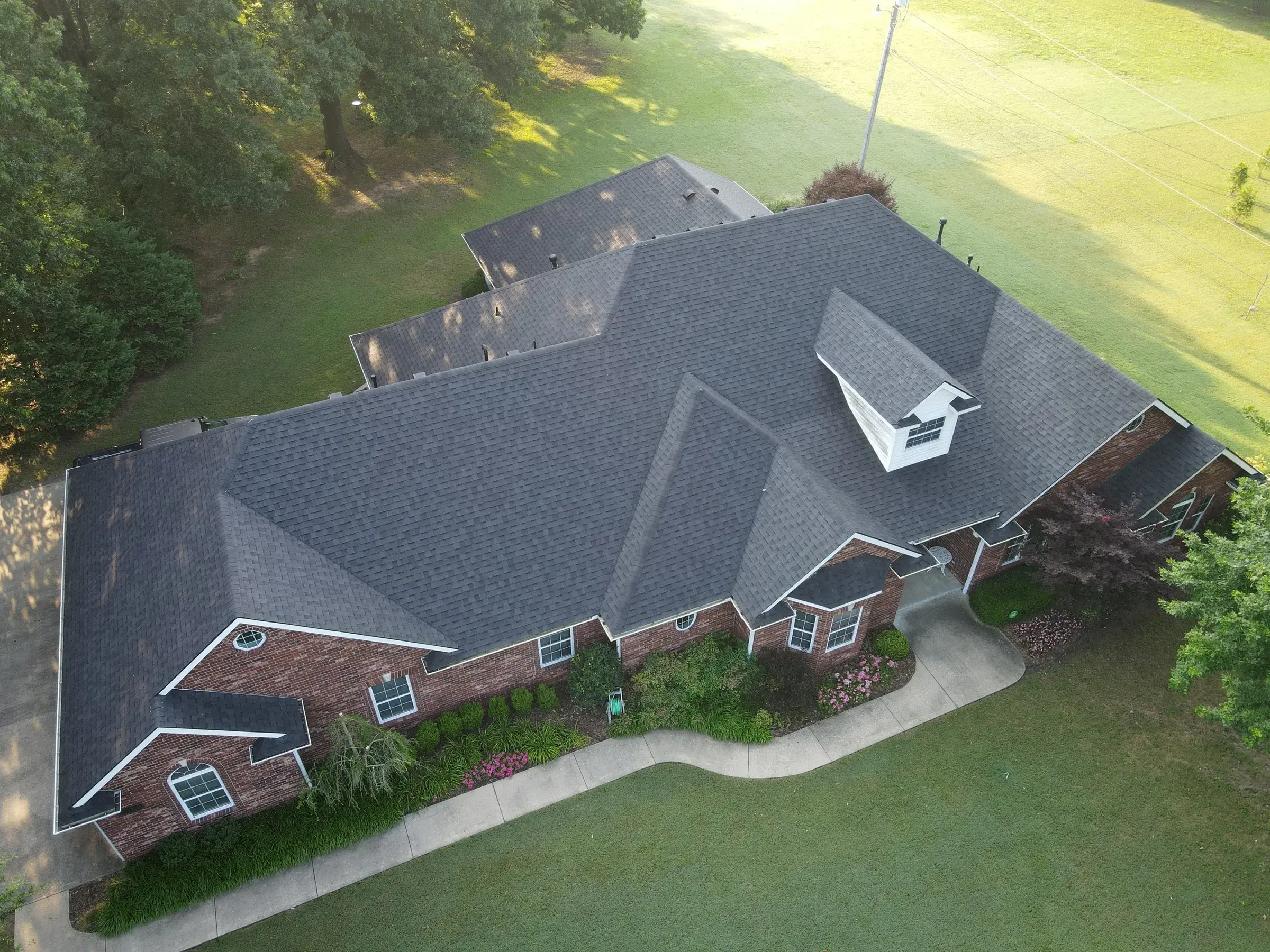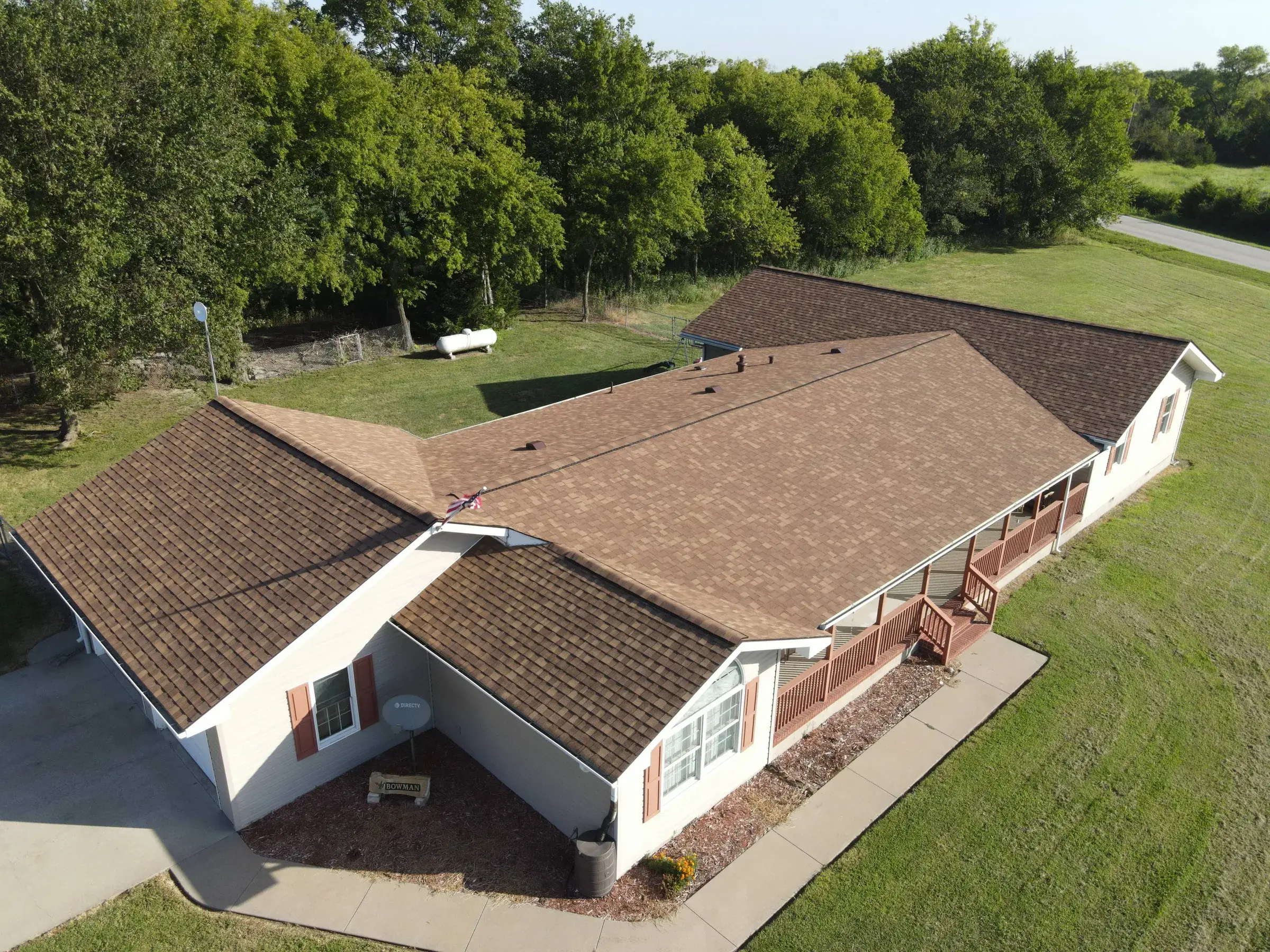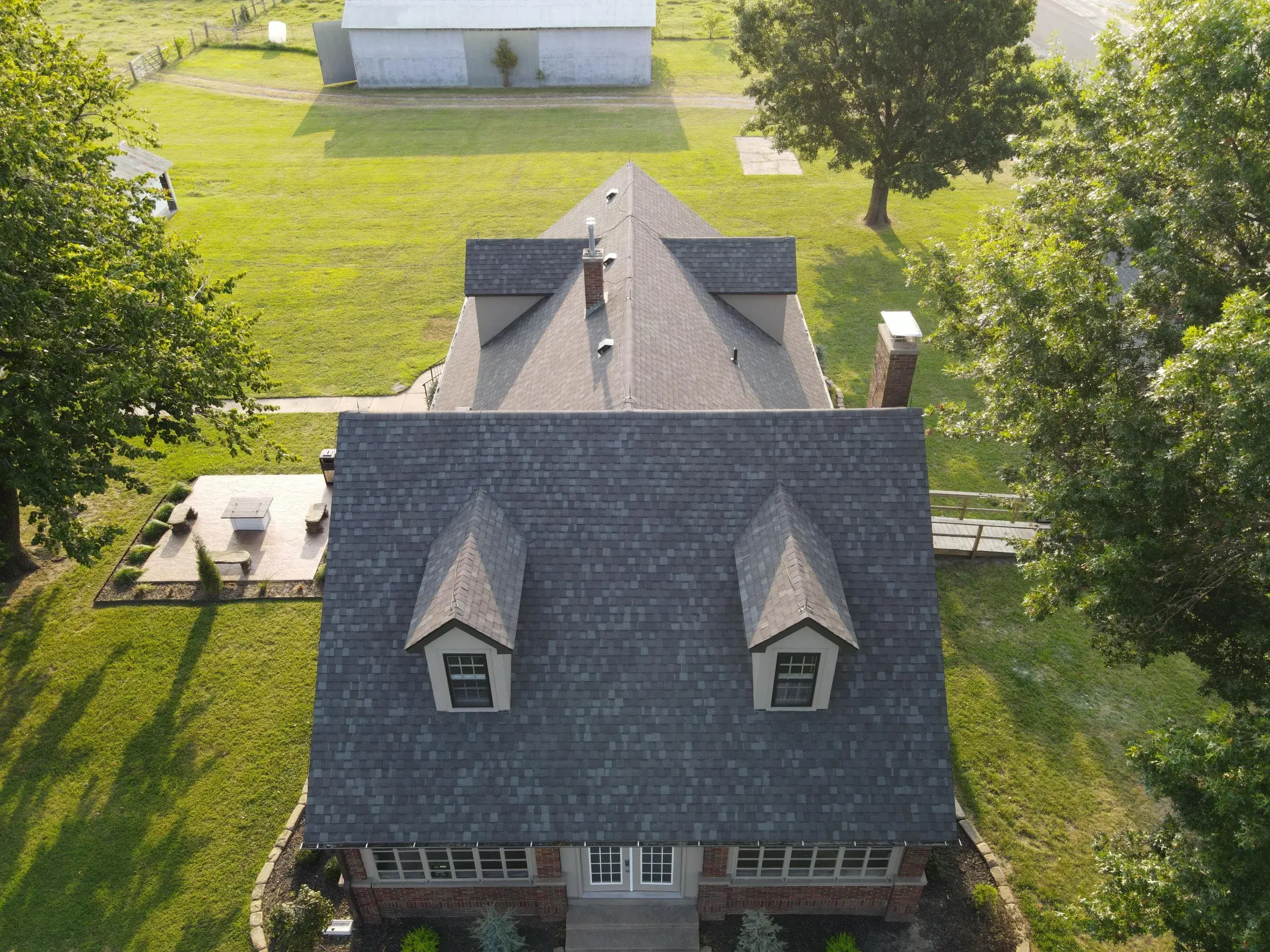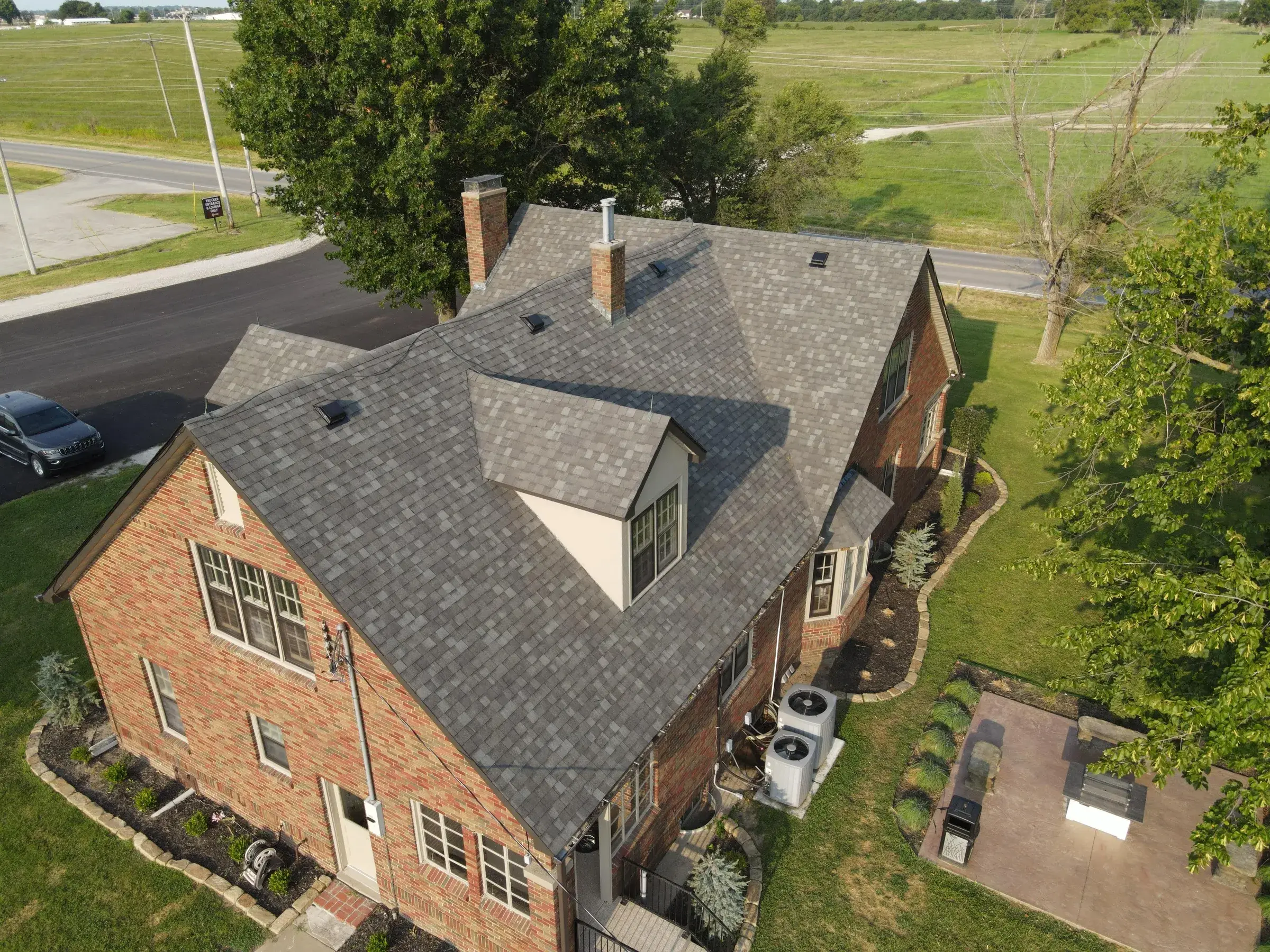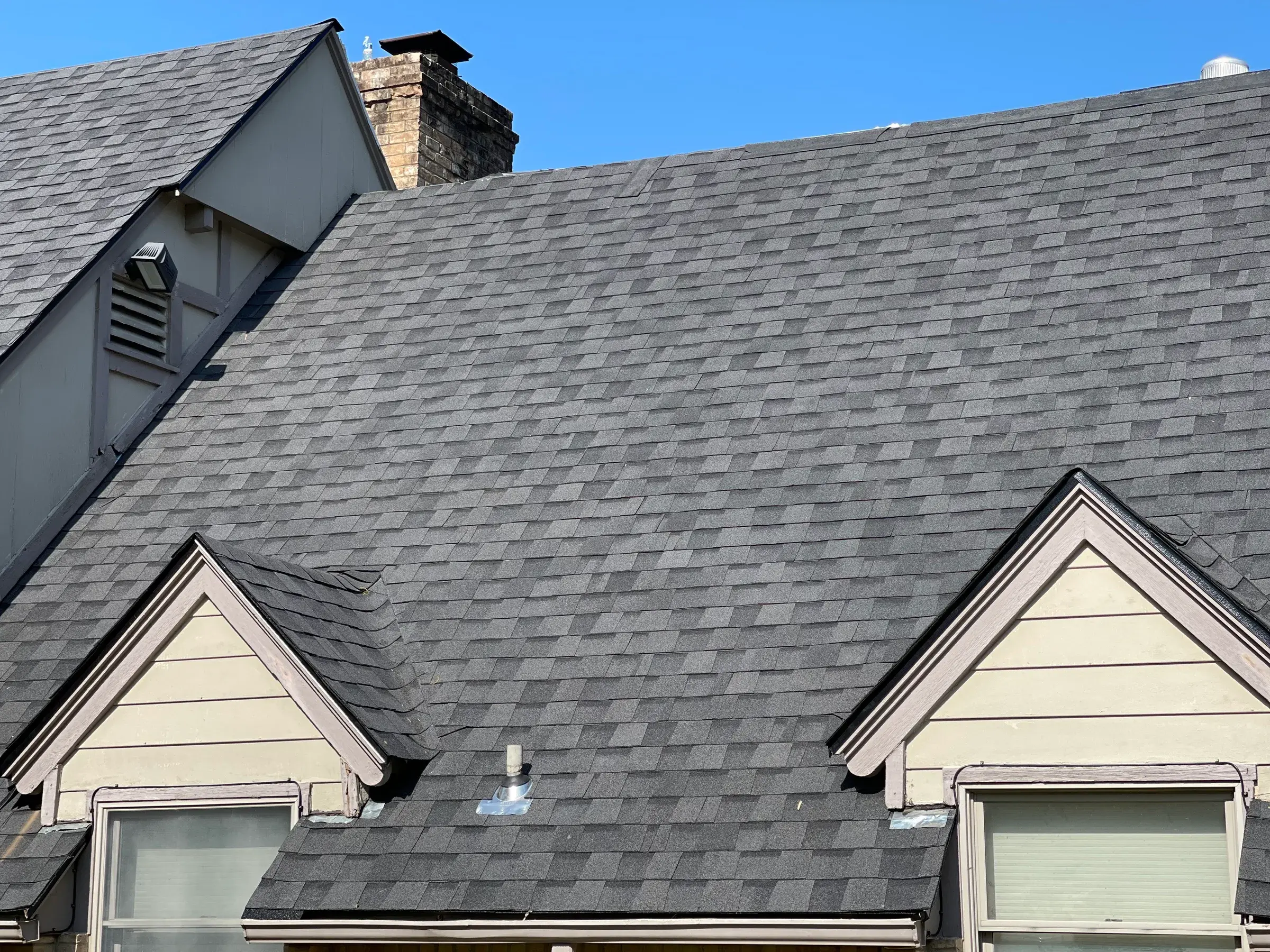
Before replacement day: take pictures and mirrors off walls on upper floors, cover attic belongings with plastic, move vehicles well clear of the driveway, clear patio furniture and grills from the perimeter, arrange to keep pets indoors and away from the noise, and confirm where the dumpster and material drop will sit.
Why Preparation Matters More Than People Expect
A roof replacement is not a repair. It is a controlled demolition happening a few inches above your ceiling drywall, followed by a rebuild, all in the same day or two. Understanding that one fact explains almost every item on the checklist below.
Oklahoma makes this more relevant than it is in some states. Oklahoma amended section R908.3.1.1 of the residential code to require a full tear-off rather than a shingle-over in defined conditions, so most Oklahoma replacements start with every old shingle and every old nail coming off the deck and going over the edge. That is thousands of pounds of material being pried loose directly over your head. The vibration travels down through the rafters into the wall framing, and the wall framing is what your pictures hang on.
The National Roofing Contractors Association tells homeowners to treat the job like a construction project rather than a service call, and that framing is the right one. The crew is responsible for the roof. You are responsible for everything under it and around it. Two hours of preparation the day before prevents most of the small disasters — the broken mirror, the crushed hosta bed, the cat that got out the side door, the car blocked in when you needed to be at work in Tulsa.
Inside the House: Walls, Ceilings, and Shelves
Anything hanging on an upper-floor wall should come down. Framed photographs, mirrors, wall clocks, mounted televisions, plates on rails, guitars on hangers. On a single-story house, that means every room. Nails work loose from vibration, and a mirror that has hung untroubled for fifteen years can walk off its hook in an afternoon of tear-off.
Look up next. Ceiling fans, flush-mount light fixtures, and can lights all have gaps around them, and those gaps connect to the attic. Attic dust comes down through them in a fine grey haze. Covering a bed and a dresser with an old sheet costs nothing and saves an evening of wiping.
Shelves, cabinets, and the things that rattle
Open the china cabinet and lay the stemware down, or box it. Same for anything glass on a high shelf, anything ceramic on top of a refrigerator, and any collectible on a floating shelf. If you have a room full of stacked storage tubs in a spare bedroom, push them away from the walls so nothing topples into a doorway.
Take photos of your interior walls and ceilings before the crew arrives, especially any drywall seams or nail pops you already have. Old fasteners in old drywall sometimes pop under vibration. Having a dated photo of what the ceiling looked like on Tuesday makes any conversation on Thursday short and factual instead of a disagreement.
The Attic: The Room That Gets the Worst of It
The attic takes more abuse than any other part of the house, and it is the part almost nobody prepares. When the crew pulls shingles, the deck flexes. Every gap between sheathing boards releases decades of accumulated dust, old granules, wood shavings, and the occasional roofing nail that drops straight through. If your Christmas decorations, wedding dress, or filing boxes live up there uncovered, they will not be uncovered in spirit by dinnertime.
Cover everything with plastic sheeting or move it out entirely. Plastic beats old blankets, because dust passes through fabric. If you store anything directly on the joists near the ridge, move it toward the eaves or take it downstairs — the ridge area sees the most traffic when the crew opens or replaces ridge vent.
Do this work in the evening or at first light, not at midday in summer. The Oklahoma Climatological Survey puts Miami's normal August daily high at 91.5°F, with 57 days a year above 90°F and 5 above 100°F. An unconditioned attic under a dark roof at 2 p.m. in August is genuinely dangerous, and no stored box is worth a heat emergency.
While you are up there, notice what you see. Daylight through the decking, dark staining on the underside of the sheathing, or crushed insulation at the eaves are all worth mentioning to your roofer before the job — the first two are among the [signs of roof decking damage](/blog/roof-decking-damage-signs), and the third usually points to a ventilation problem worth solving while the roof is already open. Baffles, ridge vent, and intake are far cheaper to correct during a [roof ventilation repair](/services/roof-ventilation-repair) performed alongside the replacement than as a separate trip later.
The Exterior Perimeter: Landscaping, Furniture, Grills, and AC Units
Debris falls in a band roughly out to the width of the eave and beyond, and it falls with force. Assume a six-foot working perimeter around the entire house is a demolition zone.
Move what moves: patio furniture, grills, smokers, potted plants, bird feeders, garden hoses, kids' toys, solar path lights, decorative flags, and the rain barrel. Low-voltage landscape lighting wire is the item people forget — it lives right where the tarps land and the ladder feet go.
Some things do not move. Air conditioner condensers, heat pumps, well houses, and propane tanks stay put and need to be discussed rather than draped. Do not simply throw a tarp over a running condenser and walk away; it needs airflow. Ask your roofer how they intend to protect it and whether the unit should be switched off at the breaker for part of the day.
Ottawa County is really two landscapes, and your prep depends on which one you live in. East of Miami, out toward the Ozark plains around Wyandotte and the Grand Lake shoreline, lots are wooded and rolling. That means low limbs over the roof, shaded eaves, and gutter runs already packed with leaf litter — worth clearing before the job so debris does not cement into a solid mat, and a good moment to schedule [gutter cleaning](/services/gutter-cleaning). West of town in the flat Neosho lowlands, you have open wind fetch across farmland instead, and the practical consequence is that lightweight debris, wrappers, and underlayment scraps travel. Ask the crew to weight the debris trailer's tarp on a breezy day.
Vehicles, Driveway Access, and Where the Dumpster Goes
Assume your driveway is unavailable from the moment the crew arrives until the moment they leave. Not partially. Entirely. Park on the street the night before, and park well clear of the drip line — a shingle bundle sliding off a roof does not care about your paint.
If your car lives in the garage, take it out the evening before. Garage doors get blocked by dump trailers, and a full trailer is not something anyone shuffles at 10 a.m. because you have an appointment in Joplin.
Two questions to settle in advance. First, what goes under the trailer's wheels and jacks? Plywood spreads the load and protects concrete and asphalt. Second, where does the material drop go? A pallet of shingles is thousands of pounds, and some crews load them onto the roof directly by conveyor while others stage them on the ground.
Gravel drives are common on the county roads out of town, and they change the math on cleanup. A roofing nail in a gravel driveway is nearly invisible and a magnet rolled over loose rock is less effective than it is on concrete. If you have gravel, raise it early and ask specifically how it will be handled rather than assuming.
One more Miami-specific item: the City of Miami requires a permit for new roofs and re-shingles. We pull it. You should never be the one filling out a roofing permit for work you hired someone else to do, and a contractor who asks you to pull it yourself is telling you something.
Pets and Kids: Planning the Day Realistically
Nail guns and compressors are loud, percussive, and directly overhead. Dogs that are fine with thunderstorms are often not fine with this, because it does not stop. Cats disappear into places you did not know existed and stay there.
Make an actual plan rather than hoping. Board the dog, send pets to a friend's house, or set them up in the room farthest from the work with a closed door, a sign on it, and something making noise of its own. Doors get propped open by crews carrying material, so a pet that bolts will find an opening at some point during the day.
Keep children out of the yard entirely. This is not caution for its own sake. OSHA's fall protection and residential roofing standards exist because the work zone genuinely is hazardous — falling material, ladders, and workers whose attention is on the deck and not on the ground. The perimeter is a jobsite, not a yard, until the crew packs up.
Roughly 13% of Ottawa County's housing sits vacant much of the year, most of it second homes around Grand Lake o' the Cherokees. If you are having a lake place re-roofed while you live somewhere else, name a local contact who can physically get to the property, and confirm in advance how the crew gets yard access, whether a gate code is involved, and where they can and cannot drive.
Neighbors: The Conversation Worth Having in Advance
Tell them. Two days ahead, in person if you can. Roofing crews in an Oklahoma summer start early to get ahead of the heat, and your neighbor deserves to hear that from you rather than from a compressor at 6:45 a.m.
Cover the practical items: which day, roughly how long, where the trailer will sit, and whether anything of theirs should move. On tight lots downtown along the old Route 66 alignment on Main, or anywhere with a shared drive, a car in the wrong spot can stall a whole morning. Give them your cell number so a problem reaches you and not the crew foreman, who is on a roof.
| Zone | Day before | Morning of |
|---|---|---|
| Interior | Take down pictures, mirrors, and wall-mounted TVs on all upper-floor walls. Box or lay down glassware. Move items off high shelves and the tops of cabinets. Photograph ceilings and walls. | Cover beds and dressers under ceiling fans and light fixtures with old sheets. Close interior doors. |
| Attic | Cover or remove all stored belongings using plastic sheeting, not fabric. Move boxes away from the ridge. Note any daylight through the decking and report it. | Stay out of the attic entirely once work begins. |
| Exterior | Move patio furniture, grills, planters, hoses, and toys at least six feet from the house. Coil and set aside landscape lighting wire. Clear gutters of leaf litter if the house is wooded. | Confirm the AC condenser plan with the crew. Bring in flags, wind chimes, and door wreaths. |
| Vehicles | Park on the street clear of the roof line. Pull anything you need out of the garage. Confirm what protects the driveway under the trailer. | Do not re-park in the driveway, even briefly. Assume the garage is blocked all day. |
| Pets and kids | Arrange boarding or a friend's house, or set up a closed interior room away from the work. Book it — do not improvise. | Secure pets before the crew arrives, not after. Keep children out of the yard for the whole day. |
| Neighbors | Tell adjacent neighbors the date, the rough duration, and where the trailer goes. Give them your cell number. | Check that no neighbor's car is parked where the trailer needs to sit. |
What the Day Actually Looks Like, Hour by Hour
Many residential replacements are completed in one to two days depending on size, pitch, and weather. A simple ranch on a walkable pitch moves fast. A cut-up roof with multiple valleys, dormers, and a steep pitch takes longer, and a crew that reaches midafternoon with more deck open than they can dry in will stop tearing off and start protecting.
The sequence below is the typical order of operations, not a schedule. Do not hold anyone to a clock.
| Phase | Rough timing | On the roof | Inside your house |
|---|---|---|---|
| Setup | First hour | Trailer positioned, tarps and plywood staged against the walls and over landscaping, ladders set, jobsite sign posted, material staged or loaded up. | Engines and voices. Nothing overhead yet. Good moment to ask the foreman anything. |
| Tear-off | Early morning onward | Old shingles, underlayment, and nails pried off and shoveled over the edge into the trailer, section by section. | The loudest, most physical part. Vibration in the walls, dust drifting down through fixtures, thumping directly overhead. |
| Deck inspection and repair | As each section opens | Sheathing checked for rot, delamination, and soft spots; damaged boards cut out and replaced; loose decking re-nailed. | Sudden quiet, then saws. If they find bad decking, this is when you get the call about added cost. |
| Dry-in | Behind the tear-off | Ice and water membrane at vulnerable areas, synthetic underlayment rolled and fastened, drip edge set, valleys and penetrations detailed. | Quieter. Staplers and hammers rather than shovels. The house is weather-tight again at this stage. |
| Install | Late morning through afternoon | Starter course, field shingles worked up the plane, step and counter flashing at walls, ridge vent, ridge cap. | Steady rhythmic nail-gun bursts moving across the ceiling. This is the long stretch. |
| Cleanup | End of the day | Debris loaded, tarps pulled, gutters checked, magnets run over the driveway, walks, and beds. | Quiet returns. Do not go out yet — let them finish the sweep. |
| Walkthrough | Before the crew leaves | Foreman walks the perimeter with you, points out what was replaced, and answers questions. | Your one scheduled chance to raise anything while the people who did the work are still standing there. |
Weather Delays and How Rescheduling Usually Works
You will probably get moved at least once. That is not a scheduling failure — it is northeast Oklahoma. The Oklahoma Climatological Survey records 4 to 5 days a year in this area with hail larger than three-quarters of an inch, and the wind and thunderstorm activity that comes with those systems shuts roofs down well before the hail does.
Two separate risks drive the decision. The obvious one is your house: an open deck and an incoming storm is the worst combination in roofing, which is why a responsible crew never opens more roof than it can dry in the same day. The less obvious one is the crew. A wet or frosty deck is a fall hazard, and with 89 nights a year below freezing here, a spring or fall morning can start with frost on north-facing planes that has to burn off before anyone climbs. That is also why crews watch the forecast rather than the calendar.
What matters is knowing the rules in advance. Ask before the job: who makes the call to postpone, what time of morning that call gets made, how you will be notified, and where you land in the queue afterward. Ask whether material already delivered stays on your property or goes back. Get the answers in writing in your contract — a policy you were told about once over the phone is not a policy. The full sequence, including how weather fits into it, is covered in our walkthrough of the [roof replacement process step by step](/blog/roof-replacement-process-step-by-step).
After the Crew Leaves: The Walkthrough and Magnet Sweep
Do the walkthrough before the trailer pulls out, not the next morning. Everything is easier to resolve while the crew and the equipment are still in your driveway.
The Asphalt Roofing Manufacturers Association points homeowners toward the details that actually determine whether a shingle roof performs: proper fastening, correct flashing at walls and penetrations, and clean valley work. You cannot inspect nail placement from the ground, but you can look at the lines, the ridge, and the flashings from the yard with binoculars, and you can ask the foreman to show you photographs of anything you cannot see.
Then walk the ground. Nails are the number one post-job complaint in this trade, and they end up in tires, dog paws, and bare feet. A magnet sweep is standard practice, but it is not magic and it is worse on gravel and in mulch beds than on concrete. Walk it yourself the next morning too, in daylight, and again after the first rain settles the mulch.
Post-job walkthrough checklist
- Walk the full perimeter with the foreman before the trailer leaves the property.
- Watch or ask about the magnet sweep on the driveway, sidewalks, street apron, and both sides of the house.
- Get down and check flower beds and mulch by hand — magnets struggle in mulch, and nails work down into it.
- If your driveway or parking area is gravel, ask specifically what was done there and check it yourself in daylight.
- Look in the gutters for shingle scraps, granule piles, and loose nails. Debris left in a gutter shows up as an overflow problem months later.
- Check the downspout outlets and any splash blocks for clogs from tear-off debris.
- Inspect landscaping, shrubs, gutters, fascia, siding, window screens, and the AC condenser for damage, and raise anything you find right then.
- Look at the deck, patio, and any exterior lighting or wiring you moved back into place.
- Confirm the driveway surface under where the trailer sat is undamaged.
- Ask what decking, if any, was replaced, and get photos of it.
- Confirm the permit and inspection status before final payment.
- Go back through the attic once, after the dust settles, to confirm no daylight and no fallen nails on stored belongings.
- Re-walk the yard the morning after and again after the first rain.
Two more items that are easy to forget. Turn the AC back on if it was switched off at the breaker, and check that your satellite dish, security cameras, or antenna are back and aimed — a dish that came off for the tear-off does not re-aim itself.
None of this is complicated. It is just easier to do before the crew arrives than to fix afterward. If you are still working out timing, scope, or budget, our pages on [roof replacement](/services/roof-replacement) and [what a roof replacement costs in Oklahoma](/blog/roof-replacement-cost-oklahoma) cover that side of it, and you can reach us for a free inspection [here in Miami](/locations/miami-ok) at (209) 758-8550.
Questions people ask about this
Do I need to be home during my roof replacement?
Not necessarily, but someone reachable should be. The moment that most often requires a decision is when the crew opens the deck and finds rotten or delaminated sheathing, since replacing it usually changes the price. If you cannot be there, confirm in advance who has authority to approve added decking work and at what dollar threshold. For a Grand Lake second home you are not living in, name a local contact who can physically get to the property that day.
Will roof replacement damage my ceilings or drywall?
Tear-off vibration can loosen existing drywall fasteners, which is why old nail pops sometimes reappear and why you should take mirrors and framed pictures off upper-floor walls first. Structural damage is not normal. Photograph your ceilings and walls the day before with the date on the file, so any conversation afterward is about facts rather than memory.
How do I know the roofing crew on my house is legitimate?
Read the sign in your yard. Oklahoma's 59 O.S. § 1151.17(D) requires a roofing registrant to post the registrant's name, endorsement, registration number, and telephone number at the job site. Take that number to the Construction Industries Board's public lookup at verifyroofing.cib.ok.gov and confirm it is current. Oklahoma registration for residential roofing requires liability insurance of at least $500,000.
What happens to my landscaping and my gutters during a tear-off?
Crews tarp shrubs and beds and lean plywood against the walls, but debris falls out to roughly the width of the eave and beyond, so move anything portable at least six feet from the house yourself. Gutters routinely catch shingle scraps and granules during tear-off. Check them during your walkthrough — debris left in a gutter turns into an overflow problem a few months later, usually during the first heavy rain.
What if it rains or hails on my scheduled day?
Expect at least one reschedule. The Oklahoma Climatological Survey records 4 to 5 days a year here with hail over three-quarters of an inch, and the storm systems that produce it stop work long before the hail arrives. A crew should never open more deck than it can dry in the same day. Ask before you sign who makes the postponement call, what time it is made, how you will be notified, and where you land in the queue afterward, and get it in writing.