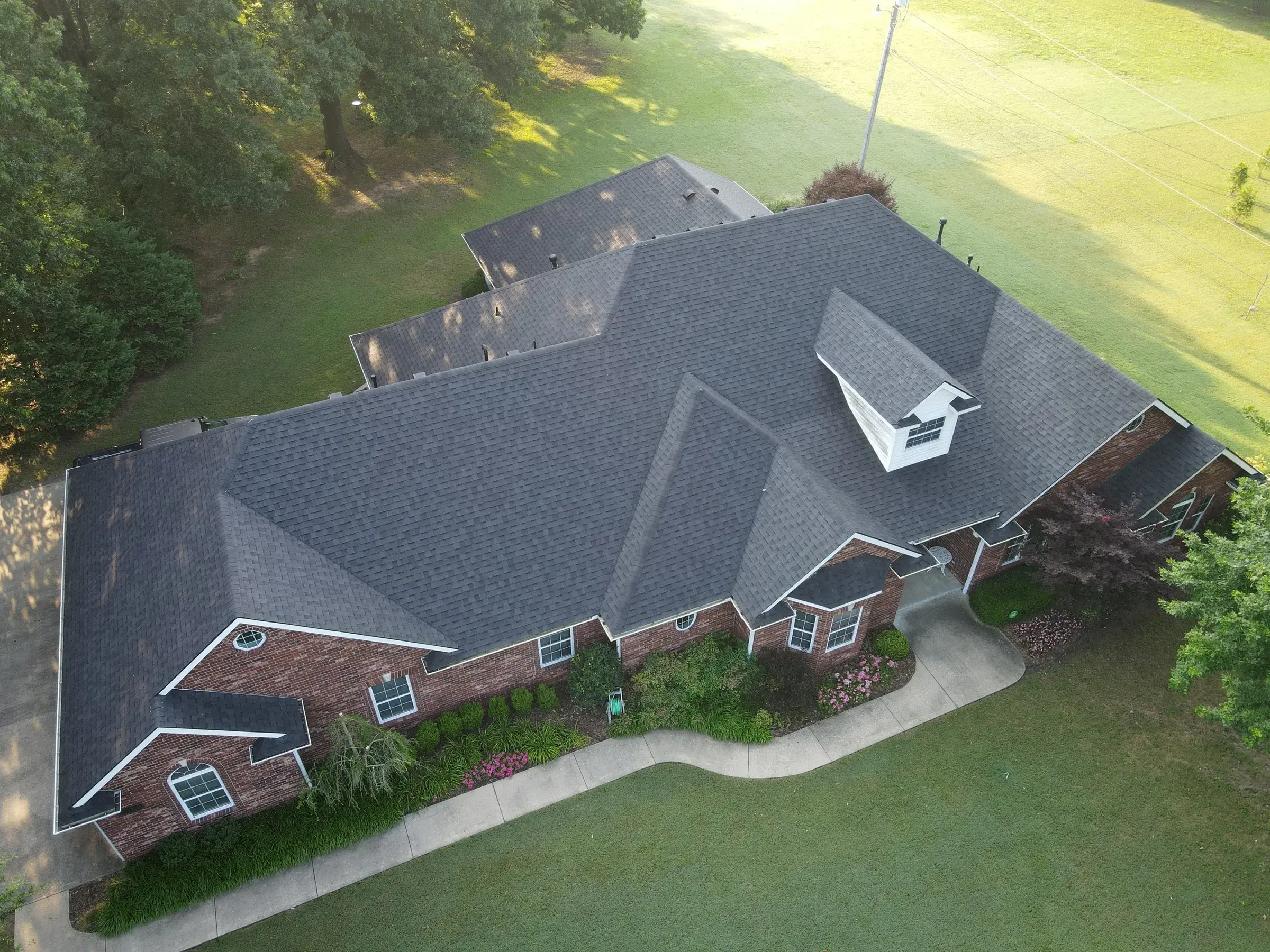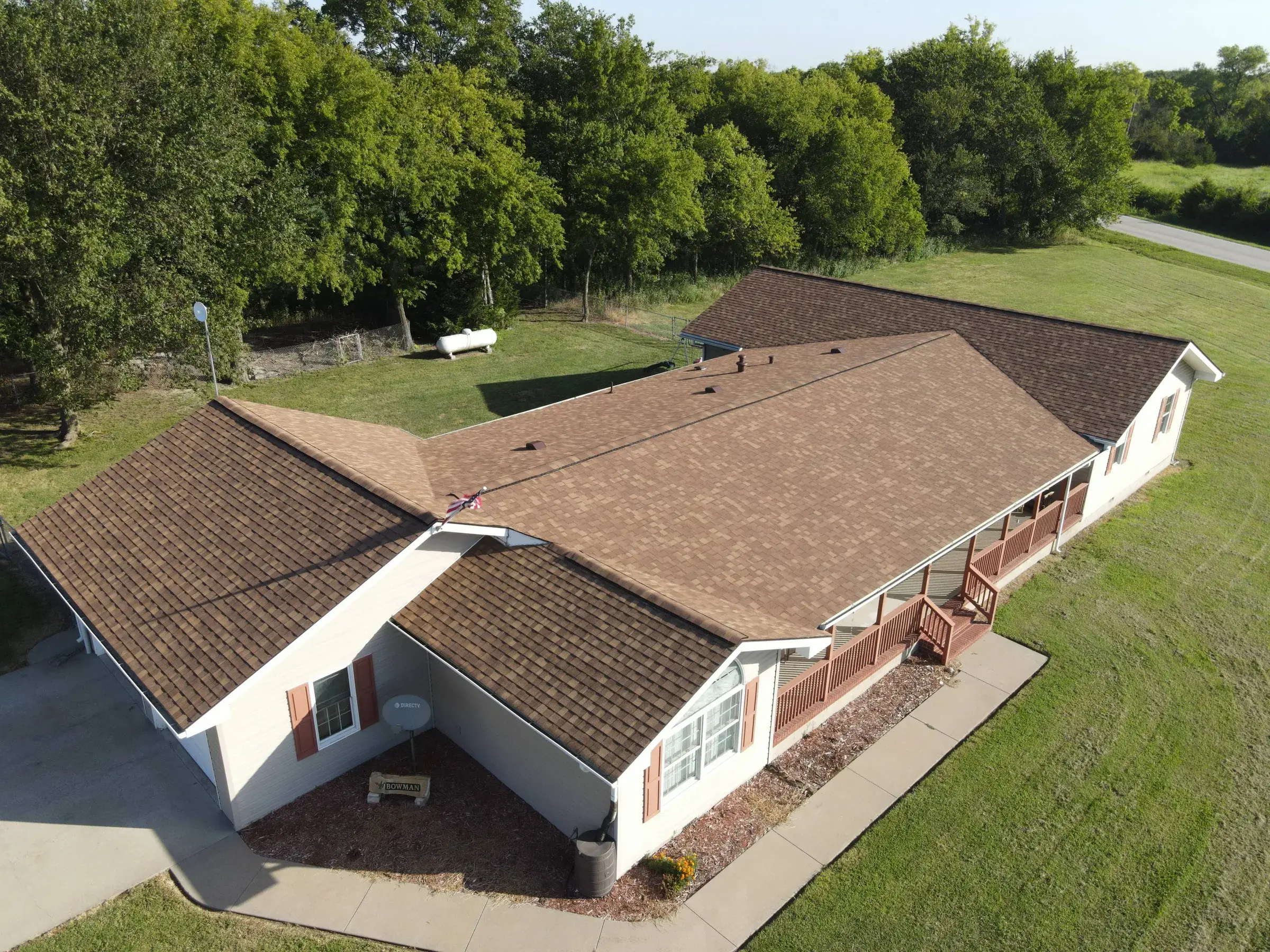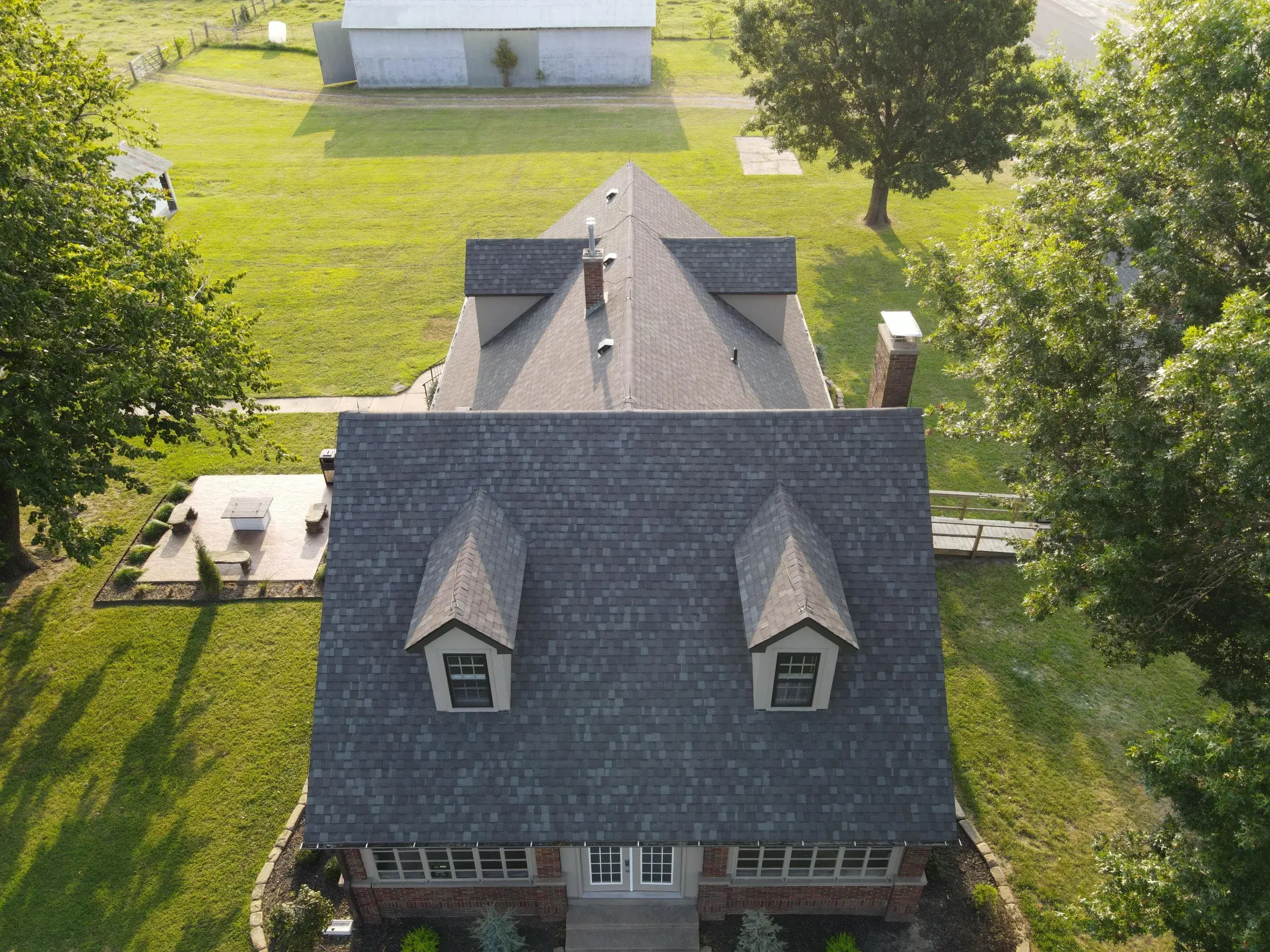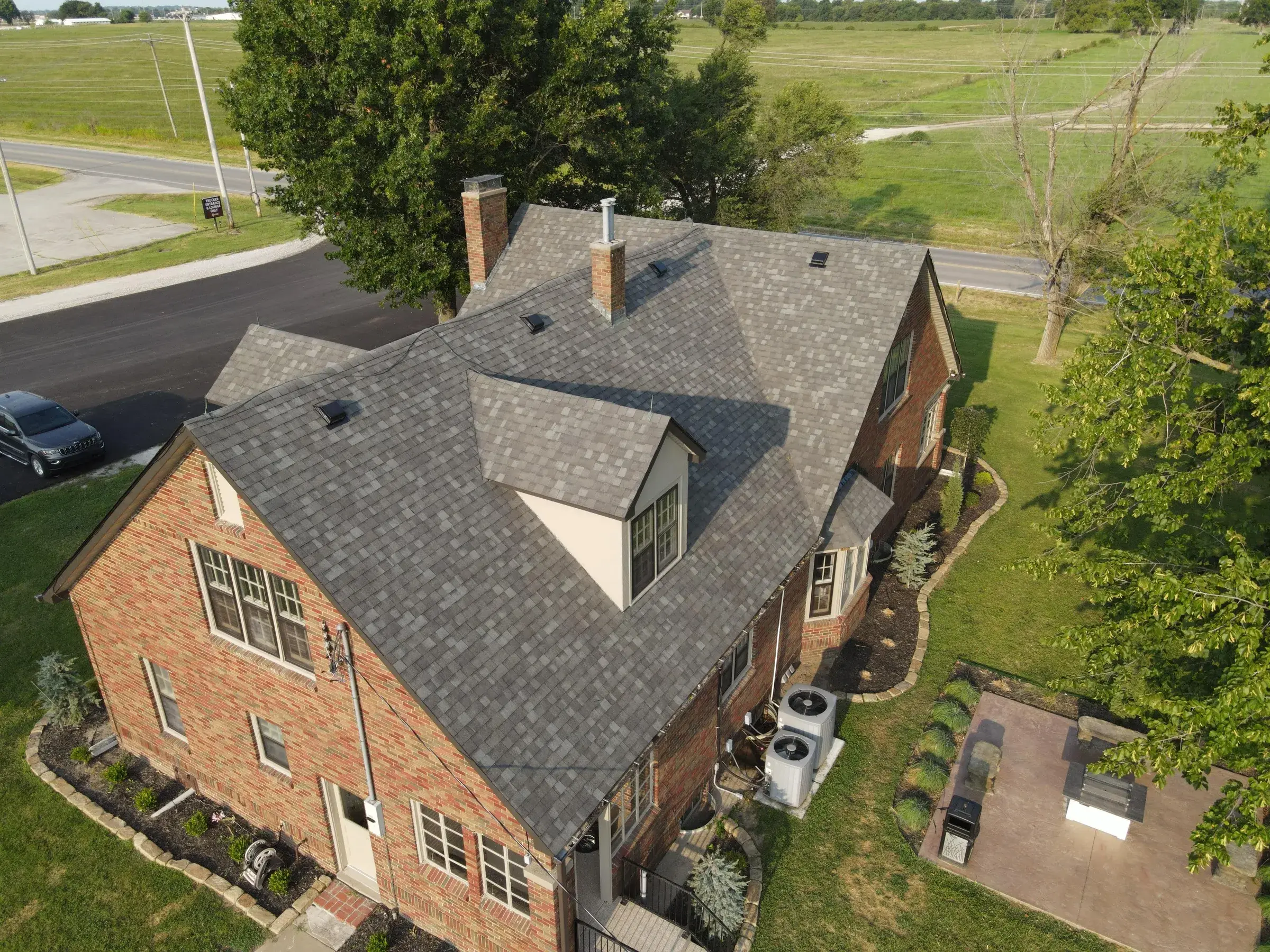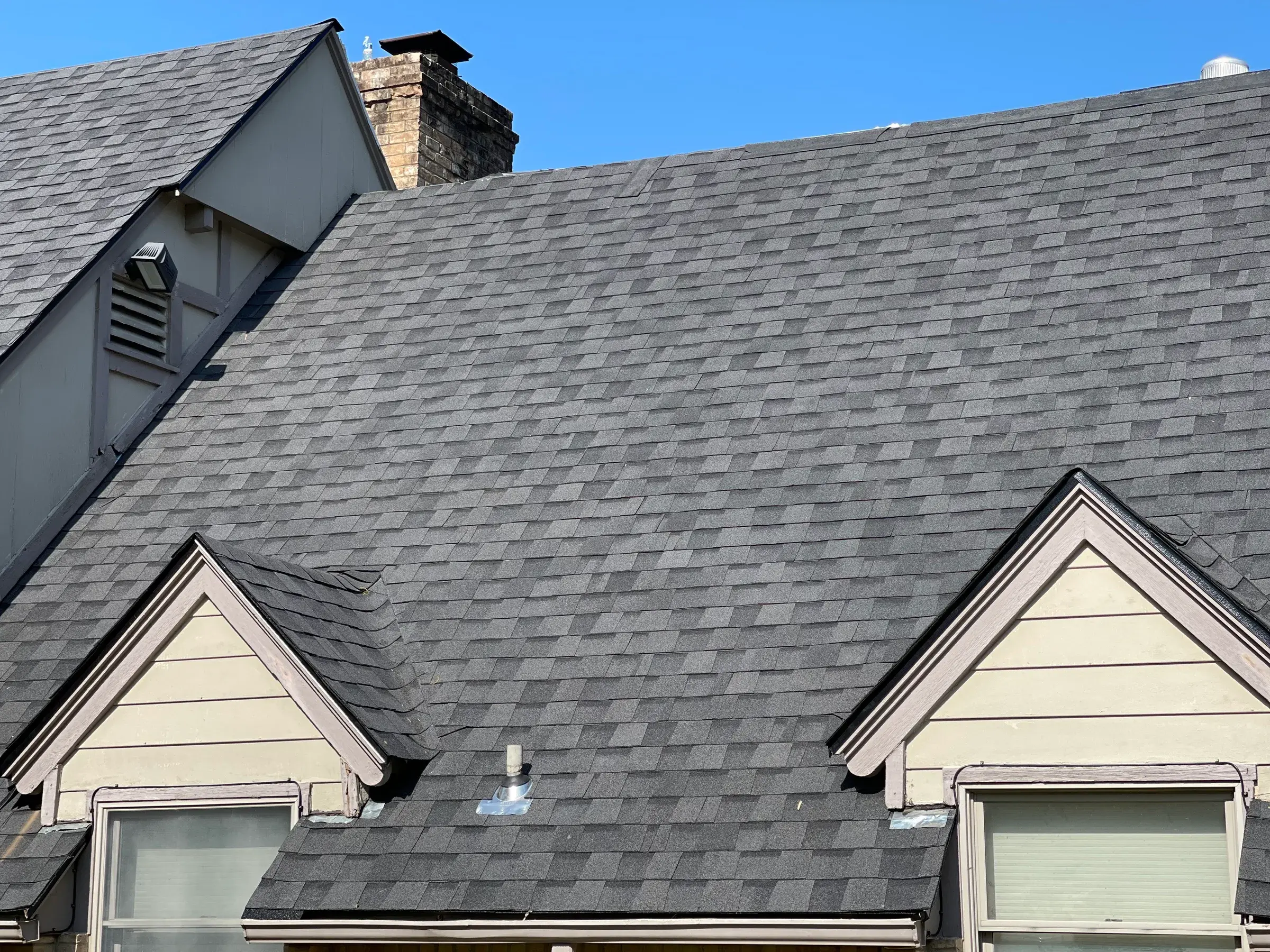
Ottawa County sits in northeastern Oklahoma where spring and early summer severe thunderstorms are a routine seasonal fact. Rather than rely on a contractor's numbers, you can pull the verified record yourself: NOAA's Storm Events Database and the Storm Prediction Center's report archive both let you filter hail and wind reports by county and date.
Where Ottawa County sits, and why severe weather is a planning problem rather than a surprise
Ottawa County is the far northeast corner of Oklahoma. It touches Kansas along the north line and Missouri along the east, covers roughly 485 square miles, and holds about 30,000 people. Miami is the county seat, sitting at 778 feet on the Neosho River with a population of roughly 13,000 at the 2020 Census.
That corner of the state gets the full spring setup: warm, wet air moving north out of the Gulf, dry air coming off the high plains, and a jet stream overhead to tilt storms into rotating supercells. Those are the storms that make big hail and straight-line wind. The Oklahoma Climatological Survey puts hail larger than 0.75 inch over this part of the state on about four to five days a year. That is not a huge number. It is also not zero, and it repeats every single year.
So the honest framing is this: you are not waiting to see whether a hailstorm arrives in Ottawa County. You are waiting to see whether one lands on your particular roof. Those are different questions, and the second one has an answer you can look up yourself.
How to pull verified hail and wind reports for your county from NOAA's Storm Events Database
Every roofer in this market will tell you a storm hit. Very few will tell you where to check. Here is where to check.
NOAA's National Centers for Environmental Information runs the Storm Events Database — the official archive of severe weather reports in the United States, filterable by state, county, event type, and date. It is free, it needs no account, and it is the same record an adjuster's hail-verification vendor is ultimately drawing from.
The actual steps
- Search for "NOAA NCEI Storm Events Database" and open the site's Search page (ncdc.noaa.gov/stormevents).
- Set Event Types. Check Hail and Thunderstorm Wind. Add Tornado if you want it. Leave the rest unchecked — flood and winter weather events will bury your results.
- Set the Date Range. Start with the month you think you were hit. If you're doing a general survey of your exposure, run January through December for the last ten years, one year at a time.
- Set State to Oklahoma, then set County to Ottawa. This is the field that matters. Do not search by city — reports are logged to county.
- Click Search. You get a table of events, each with a date, a type, a magnitude, and a location.
- Click any individual event to open its detail page. That's where the narrative, the nearest-town reference, and the latitude/longitude live.
- Save a PDF or a screenshot of each event that matters to you, with the date visible.
The Storm Prediction Center keeps a companion archive — daily severe weather reports and regional climatology — that is useful for a same-week check before NCEI finishes its quality control. NCEI is the record of authority. The SPC archive is the quick look.
Reading a storm report: date, magnitude, path, and distance from your address
A storm report is a short record with a handful of fields. Each one does a specific job when a roof claim is being evaluated. Here is what they mean in plain language.
| Field | What it is | Why it matters to a roof claim |
|---|---|---|
| Begin Date/Time | When the event was observed, local time | Your policy almost certainly requires prompt notice of loss. This is the date of loss you'd report. |
| Event Type | Hail, Thunderstorm Wind, Tornado | Wind and hail are often treated differently in your policy — sometimes with a separate deductible. The event type frames the claim. |
| Magnitude | Hail diameter in inches, or wind speed in knots/mph | Roughly 1 inch is where common asphalt shingles start taking real bruising. Smaller hail can still damage soft metals — vents, flashing, gutter aprons — first. |
| Location / Nearest Town | The town the report was logged against (e.g., "MIAMI" or "COMMERCE") | Tells you the neighborhood, not the address. Reports are logged to a point of observation. |
| Latitude / Longitude | Coordinates of the observation | The one field that lets you measure actual distance to your house. Paste it into a map. |
| Source | Who reported it — trained spotter, public, emergency manager, mesonet | A trained-spotter hail measurement carries more weight than a secondhand phone call. |
| Event Narrative | A sentence or two of description | Sometimes names a street, a highway mile marker, or a specific damage observation. Read it. |
Two things to notice. First, magnitude is what was observed at one point — not the maximum the storm produced everywhere. Second, hail reports exist because somebody reported them. A stone that fell in a pasture west of town at 2 a.m. is in nobody's database.
Why "a storm was reported in the county" is not the same as "hail hit my house"
This is the single most misunderstood thing in storm-damage roofing, and it cuts both ways.
Hail cores are narrow. A supercell can drop 1.5-inch stones on one side of Miami and leave the neighborhood four streets over completely untouched. A county-level report tells you a storm existed inside 485 square miles. It does not tell you it existed over your driveway. When somebody uses a county report as proof your roof is damaged, they are skipping the only step that matters.
It cuts the other way too. Ottawa County is thinly populated west of Miami — open farmland in the Neosho Lowlands where there is nobody standing outside with a hail gauge. Absence of a report out there is not evidence that nothing fell. If your roof shows damage and the database is quiet, the roof is still the better witness. A proper on-site inspection — soft metals, the vents, the gutter apron, chalked test squares on each slope — is what establishes what actually happened at your address.
The record and the roof have to agree. That's the standard. Our [roof inspections](/services/roof-inspections) are free and produce a dated photo report you can hold up against whatever NOAA has on file for that day.
Seasonality: how the region's severe weather calendar actually runs
The National Weather Service forecast office in Tulsa covers northeast Oklahoma, including Ottawa County, and its public severe weather information describes the pattern most people here already feel in their bones: a primary spring peak, a quieter but real secondary window in the fall, and damaging wind possible any time a thunderstorm is possible.
Rather than repeat a number, use the Storm Events Database to build the calendar for your own county. Run Ottawa County, hail and thunderstorm wind, one year at a time for ten years, and look at which months fill up. You will have a locally accurate seasonality picture in about twenty minutes — and it will be yours, not a marketing claim.
Worth adding to the calendar: Ottawa County averages 89 nights a year below freezing, per the Oklahoma Climatological Survey's 1991–2020 normals. Freeze-thaw cycling is the quiet half of this market. Hail cracks a shingle's mat; winter opens the crack. Damage from a June storm often doesn't leak until the following February.
The east/west split in Ottawa County: Ozark Plains vs. Neosho Lowlands
Ottawa County is not one landscape. The eastern side sits in the Ozark Plains — rockier, wooded, rolling, running toward Grand Lake and the Missouri line. The western side is the Neosho Lowlands: flat prairie and farmland. That line is real, and it changes what fails on a roof.
| Ozark Plains (east — toward Wyandotte, Grove, the Missouri line) | Neosho Lowlands (west — toward the Kansas line and open farmland) | |
|---|---|---|
| Terrain | Rolling, rocky, cut by drainages | Flat to gently rolling prairie |
| Tree cover | Heavy — mature hardwoods, often overhanging | Sparse — shelterbelts and yard trees only |
| Dominant wind risk | Falling limbs and impact damage; trees break up the wind field | Long, uninterrupted wind fetch straight at the roof — ridge caps, rakes, and starter courses take it first |
| Hail behavior | Canopy intercepts some small stones; large stones come through unimpeded | Nothing intercepts anything |
| Recurring maintenance issue | Shaded slopes hold moisture — moss, algae streaking, granule loss, debris packed in valleys and gutters | Sun and UV load on exposed slopes; wind-driven grit; sealant strips baked and lifted |
| What we look hardest at | Valleys, north slopes, limb strike marks, gutter debris load | Ridge and hip caps, rake edges, drip edge, nail-line lift on the windward slope |
Practical version: if you live east, your enemy is shade and debris plus occasional violent impact. If you live west, your enemy is relentless wind and sun. A roof in Wyandotte and a roof eight miles west of Miami age differently, and they should be inspected differently.
Moisture and humidity near the Neosho: attic, soffit, and fascia consequences
Miami sits on the Neosho, also called the Grand. The USGS maintains flood-inundation mapping for the river near Miami, and if you live in the low-lying neighborhoods you already know your ground-level flood situation better than any roofer does.
To be clear about what a roof can and cannot do: a roof is not flood protection. River water is a ground-level event and nothing on your roof affects it. What river proximity does affect is the air. Persistently higher humidity, more nights at the dew point, and repeated saturation of the soil around a house all raise the moisture load your attic has to shed.
That shows up in specific places. Roof decking that stays damp grows mold on the underside — you can see it as gray or black staining between the rafters. Soffit vents (the intake vents under your eaves) clog with paint, insect screen debris, or blown-in insulation, and once intake stops, the ridge vent has nothing to pull and the attic just sits humid. Fascia — the flat board your gutters hang on — rots from behind, at the top edge, where nobody looks. Nail heads sweat and back out. Shingles above a chronically humid attic curl earlier than the same shingles across town.
None of that is storm damage, and no insurance policy is going to pay for it. It is maintenance, and it's cheap maintenance if you catch it. When we're up there after a storm, the attic is part of the look, because a wet attic will fail a roof faster than a hailstone will.
What this means for material selection and impact-resistant roofing
Four to five hail days a year, 57 days above 90 degrees, 89 freezing nights, and about 62 percent annual sunshine. That combination — impact, heat, UV, and freeze-thaw — is the design problem in Ottawa County.
Impact-resistant shingles, described accurately
Impact resistance is measured against UL 2218, a standardized test that fires steel balls at a shingle and grades it Class 1 through Class 4, with Class 4 the toughest. The Insurance Institute for Business and Home Safety (IBHS) has published research on how these products behave, including the point most sales pitches leave out: laboratory impact ratings are not a promise that a shingle survives every real hailstone, and some impact-resistant products age differently than the test implies.
What is true: a Class 4 shingle is meaningfully harder to bruise than a standard three-tab. What is not true is that Oklahoma requires your insurer to give you a discount for installing one. It does not. Some carriers offer a credit, some don't, and the amount is between you and your carrier. Ask your insurance agent directly whether your specific policy offers an impact-resistant credit, and get the answer before you spend the money — not after.
On the code side: Oklahoma amended IRC section R908.3.1.1 so that in defined conditions a re-roof must be a full tear-off rather than a shingle-over. That matters here. A second layer over a hail-bruised first layer hides the damage, cooks hotter, and gives fasteners less to bite. The City of Miami requires a permit for new roofs and re-shingles, and we pull it.
Building a pre-storm file so you can prove a before-and-after
The strongest position in any hail claim is being able to show what the roof looked like the week before the storm. Almost nobody can. It takes about an hour to fix that, once.
Your pre-storm home file — build it on a calm Saturday
- Dated photos of every roof slope from the ground, taken from the same four corners each time, in daylight — repeat once a year
- Close-up photos of ridge caps, valleys, and any visible flashing, if you can get them safely from a ladder at the eave (do not walk the roof)
- Photos of gutters, downspouts, fascia, soffit vents, and the drip edge
- Photos of soft metals: vent hoods, turbines, the AC condenser fins, mailbox, and any metal shed — these bruise before shingles do and become your dent baseline
- Attic photos from the hatch: decking underside, any existing staining, insulation depth
- A copy of your policy declarations page — specifically your wind/hail deductible and whether you have Replacement Cost Value or Actual Cash Value on the roof
- Your roof's install date, the manufacturer, the product line, and the color, plus any leftover bundle wrapper photographed for the product code
- Any prior roof invoice, permit, or inspection report
- The contractor's Oklahoma CIB registration number for any work ever done on the house
- All of it in one cloud folder — not on the phone that will be in the truck when the tree comes through
If a storm does hit, the after-photos are what get compared to this. We wrote a separate walkthrough on [documenting roof storm damage with photos](/blog/documenting-roof-storm-damage-photos) that covers what an adjuster is actually looking for in the after set.
Setting expectations: what your policy's wind and hail terms will do in a bad year
Pull out your declarations page before storm season, not after. Three lines decide most of what happens.
First, the wind/hail deductible. In this market it is frequently separate from your all-other-perils deductible, and it is often a percentage of your dwelling coverage rather than a flat dollar figure. On a $200,000 dwelling limit, a 2 percent wind/hail deductible is $4,000 out of pocket before your policy pays a dollar. People find this out at the worst possible moment.
Second, RCV versus ACV on the roof. Replacement Cost Value pays what it costs to replace the roof today. Actual Cash Value subtracts depreciation for the roof's age, which on a fifteen-year-old roof can be most of the value. Some policies also carry a roof-surfaces payment schedule that steps ACV down by age. Know which one you have.
Third, the notice period. Policies require prompt reporting of a loss. That's another argument for having the NOAA date in hand.
What a roofer can properly do is narrow, and it's still useful. We document the damage with a dated photo report. We provide a written estimate for the work we would perform. We can meet your adjuster on the roof if you ask us to. We'll walk you through how the process generally runs. Your insurer decides coverage under your policy — that decision was never ours to make. If you want the longer version, we broke down [how homeowners insurance treats hail damage to a roof](/blog/does-homeowners-insurance-cover-hail-damage-roof) separately.
Verify whoever you hire — including us
Oklahoma's Construction Industries Board publishes a public roofing contractor lookup at verifyroofing.cib.ok.gov. Type in a company name and see whether the registration is real and current. Oklahoma requires a registered residential roofing contractor to carry at least $500,000 in commercial general liability coverage. That tool takes thirty seconds and it is the best thirty seconds you'll spend after a storm, when out-of-state trucks fill the parking lots along Main Street.
Be careful with the word "licensed" in this region generally. Oklahoma, Kansas, and Arkansas issue registrations rather than licences, and Missouri has no state roofing licence at all — so a company advertising a state roofing licence in Joplin is describing something that doesn't exist.
Where to start
Spend twenty minutes in the Storm Events Database and build the Ottawa County picture for yourself. Spend an hour building the pre-storm file. Read your declarations page. Those three things put you further ahead than any roof product will.
When you want a second set of eyes on the roof itself — in [Miami](/locations/miami-ok), [Commerce](/locations/commerce-ok), [Grove](/locations/grove-ok), or anywhere else in [Ottawa County](/locations/ottawa-county-ok) — our inspections are free, and if we find [storm damage](/services/storm-damage-roof-repair) you'll leave the conversation with photos and a written estimate whether or not you ever hire us. Call (209) 758-8550.
We are roofing contractors, not public adjusters or insurance attorneys. Coverage decisions are made by your insurer under your policy.
Questions people ask about this
Is a NOAA storm report enough to get my hail claim approved?
No. A report in the Storm Events Database establishes that a storm occurred somewhere in Ottawa County on a given date — that's it. Hail cores are narrow, and a report logged near Commerce says nothing definitive about a roof west of Miami. Your insurer will want evidence of damage at your specific address, which is what a dated photo report from an on-site inspection provides. The NOAA record and the roof condition have to agree.
What if my roof is damaged but there's no NOAA report for my area that day?
That happens, particularly in the western half of the county where the Neosho Lowlands are thinly populated and there's nobody outside measuring hail. Storm reports exist only because a person reported them. Absence of a report is not proof that nothing fell. The physical evidence on the roof — bruised shingles, dented soft metals, spatter marks on vent hoods — is still the primary evidence, and you can pair it with radar-derived hail data your adjuster's vendor will likely pull anyway.
Do Class 4 impact-resistant shingles get me an insurance discount in Oklahoma?
Not automatically, and no law requires one. Oklahoma statute does not mandate an impact-resistant roofing credit — some carriers offer one voluntarily, others don't, and the amount varies. Ask your own agent whether your policy has such a credit, and confirm it in writing before you pay the upgrade. The genuine argument for Class 4 is the UL 2218 impact performance itself, not a promised premium reduction.
Can you handle my insurance claim for me?
No, and no Oklahoma roofer legitimately can. Under 36 O.S. §6202, representing an insured's interests in a claim for compensation is public adjusting, and doing it without a licence is a misdemeanour. What we can do is document the damage with a photo report, give you a written estimate for the work we'd perform, meet your adjuster on site if you ask, and explain how the process generally works. Your insurer decides coverage under your policy.
Does living near the Neosho River mean I need a different kind of roof?
Not a different roof — a different maintenance focus. A roof has nothing to do with river flooding, which is a ground-level event. What river proximity does change is the ambient moisture your attic has to shed. Low-lying neighborhoods tend to see more decking mold, clogged soffit intake vents, and fascia rot behind the gutters. Keeping intake ventilation clear matters more there than it does out on the west-county prairie.