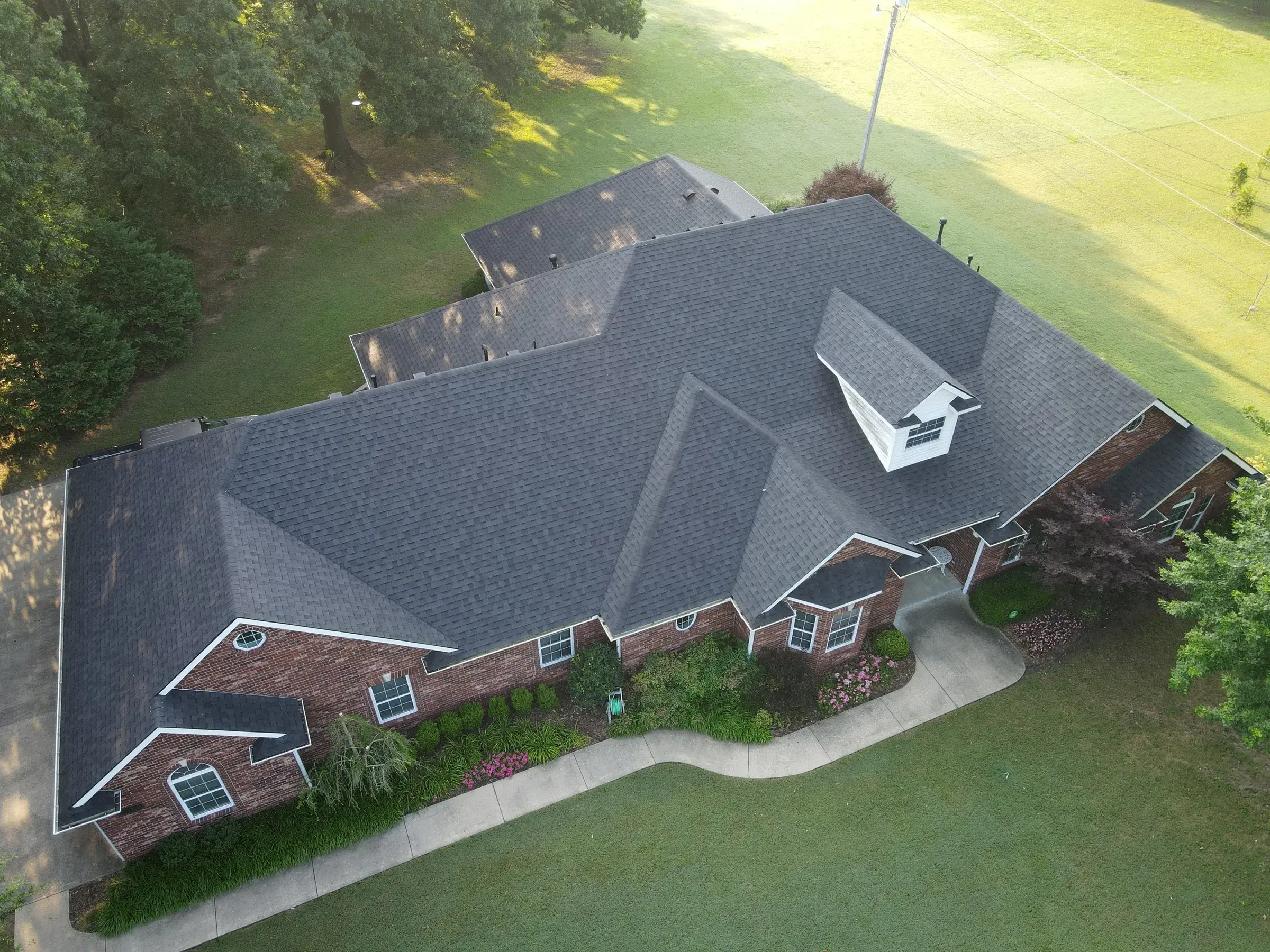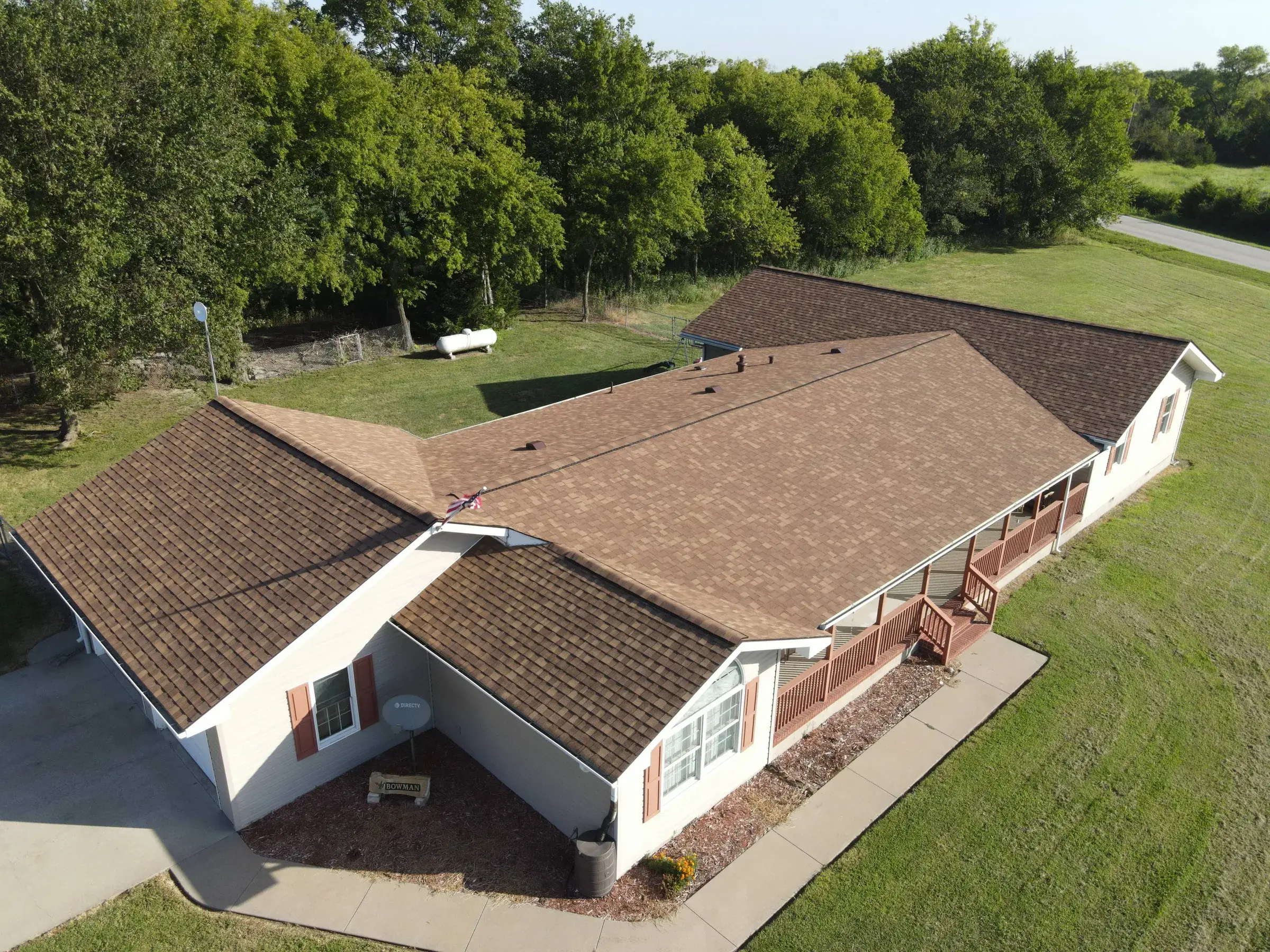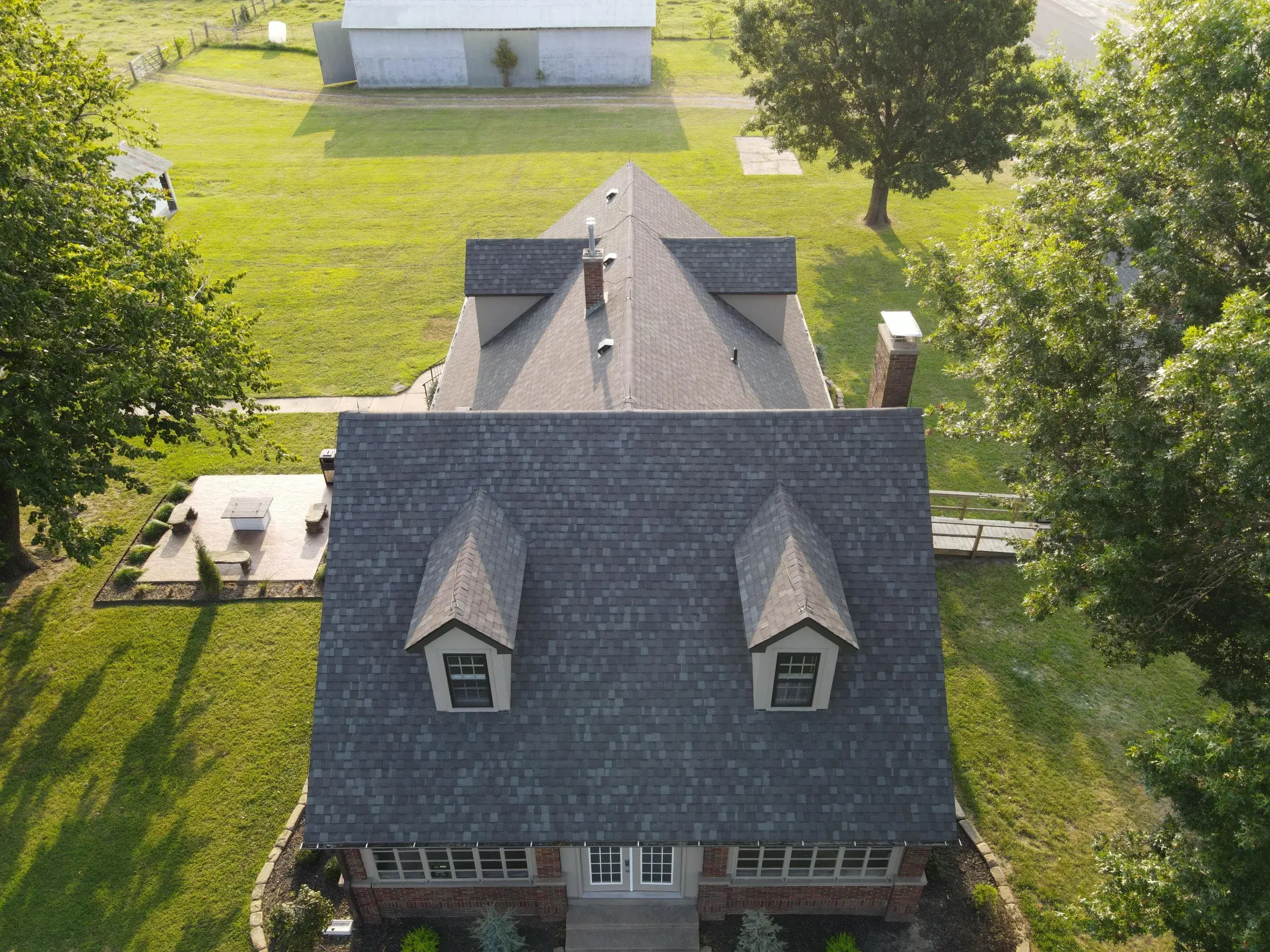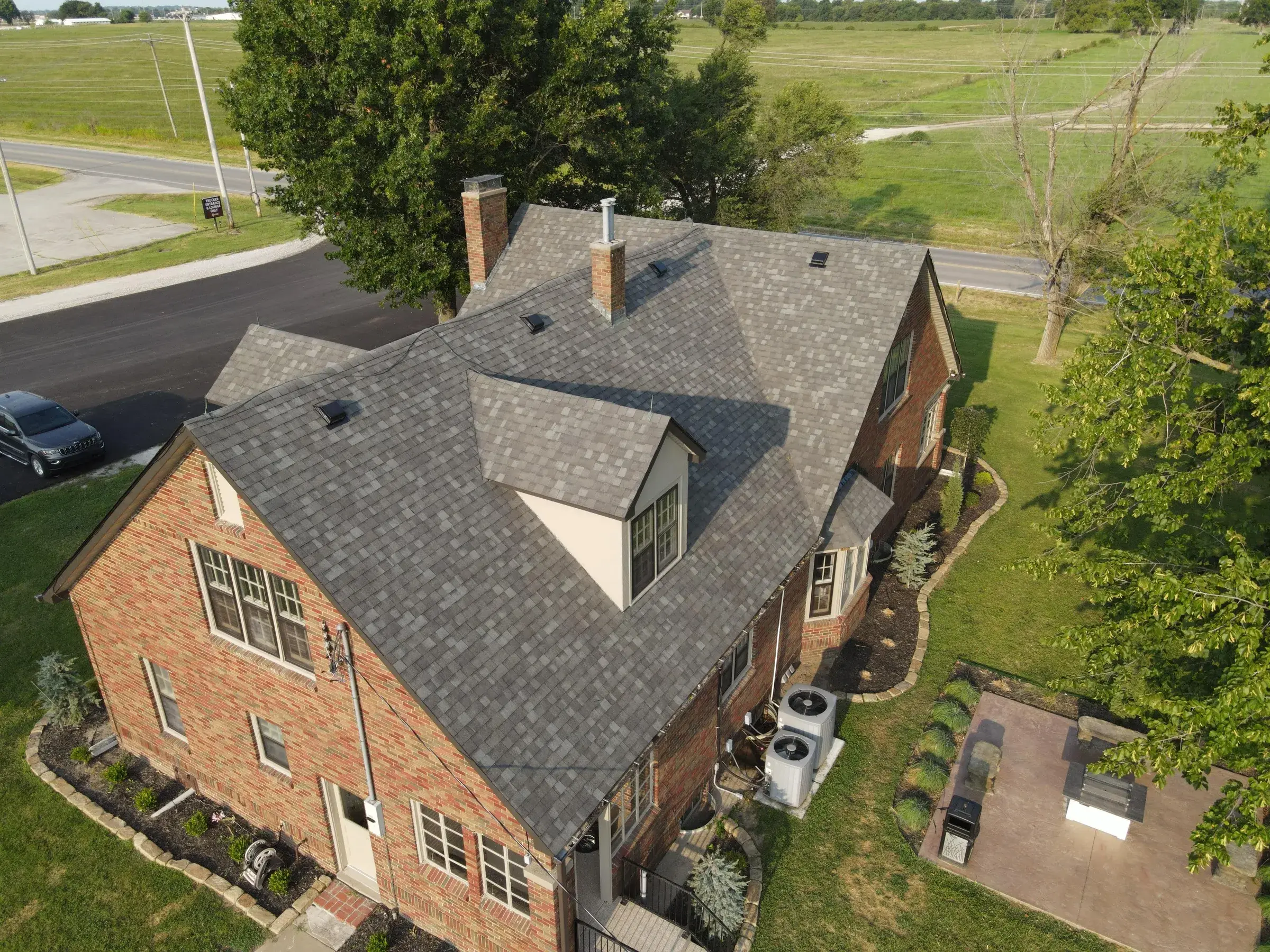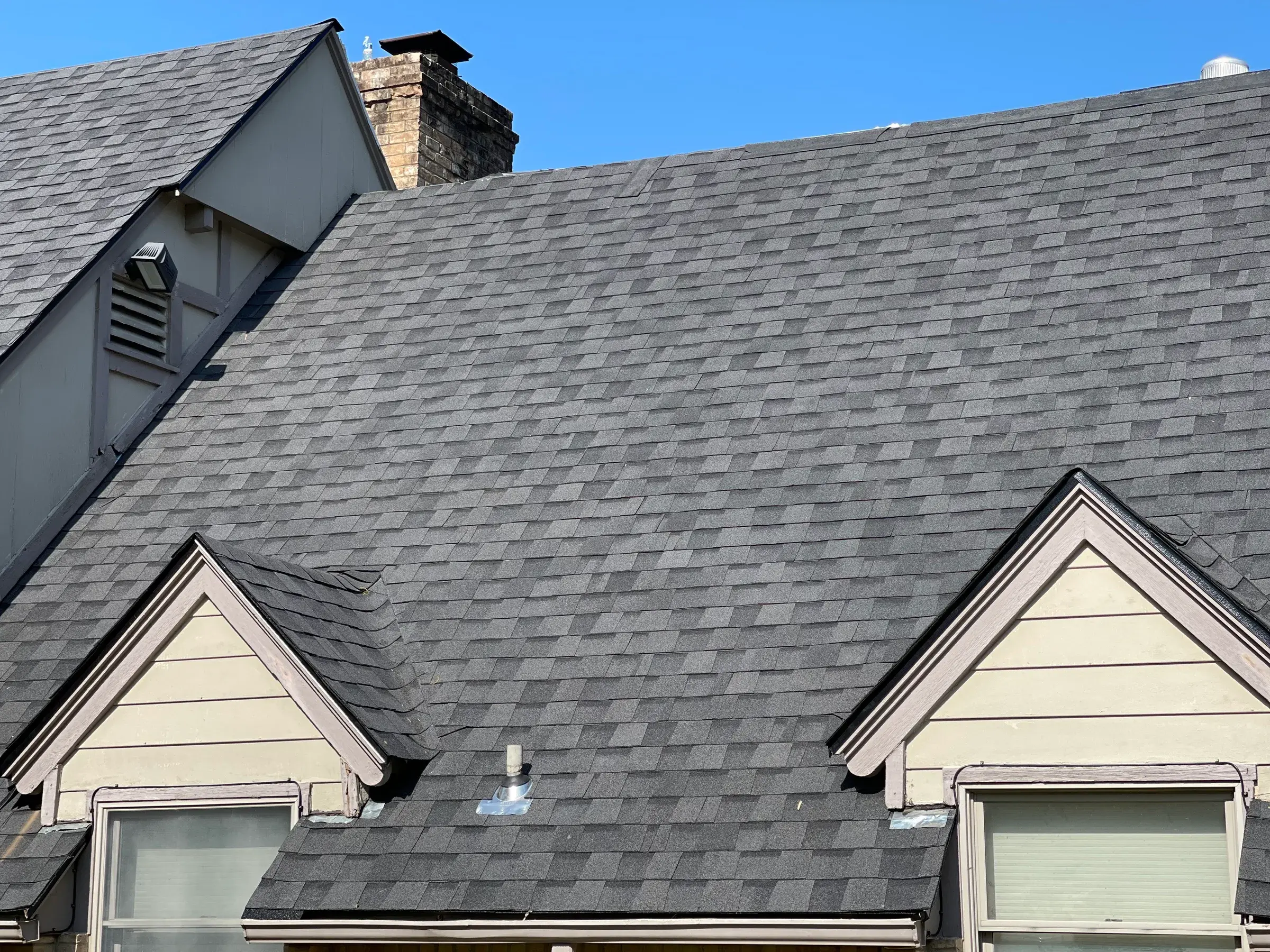
Asphalt shingles cost less installed, are easier to repair, and are the default on most homes. Metal roofing costs more up front, generally lasts longer, and handles wind uplift well when properly fastened. Hail affects them differently: hail tends to fracture shingle mats but dent metal panels, which raises cosmetic-versus-functional damage questions with insurers.
The honest summary: what each material is genuinely better at
Most comparisons of these two materials are written by someone who sells one of them. So start here: asphalt and metal are not two grades of the same product. They fail differently, they get repaired differently, and they respond differently to the specific weather that hits Ottawa County.
Asphalt shingles are individual units laid in courses. Damage is local, and repair is local — you can pull six shingles out of a slope and leave the rest alone. Metal panels are large, continuous, and mechanically tied together. That continuity is exactly why they handle wind well, and exactly why a mid-field repair is more involved than swapping a shingle.
Northeast Oklahoma pushes on both. The Oklahoma Climatological Survey's 1991–2020 normals for this area record 4 to 5 days a year with hail larger than 0.75 inch, 57 days above 90°F, and 89 nights below freezing. That combination — impact plus a hard annual thermal cycle — is the real test here, not any single storm.
Head-to-head, by specification
| Factor | Asphalt shingles | Metal panels |
|---|---|---|
| Installed cost | The market baseline. Spread is driven by pitch, number of tear-off layers, deck condition, and roof complexity. | Commonly runs a multiple of the asphalt figure on the same roof — panel type (standing seam vs. exposed-fastener), steel gauge, coating, and trim detailing drive the spread. Ratio, not a price. Get a written number for your roof. |
| Service life | Commonly reported industry ranges put architectural shingles in the two-to-three-decade band. Ventilation, UV load, and installation quality move it more than the shingle brand does. | Commonly reported ranges are substantially longer — often double. The finish usually ages before the steel does. |
| Weight | Roughly 2.5 to 4.5 lbs per square foot depending on shingle line. | Lighter — steel panels are typically around 1 to 1.5 lbs per square foot. |
| Hail behavior | Hail bruises or fractures the asphalt mat. Functional damage. Often not visible from the ground. | Hail dents. The Metal Construction Association's technical bulletins on hail address this directly: dents to a metal panel are usually cosmetic and the panel keeps shedding water. |
| Noise | Effectively a non-issue over a decked, insulated attic. | Louder only in specific assemblies. See the section below — the deck and attic matter more than the metal. |
| Repairability | Easy. The hard part is color-matching a 10-year-old roof. | Straightforward on exposed-fastener panels; more involved on standing seam, where panels run eave to ridge under concealed clips. |
| Fire | Fiberglass-mat shingles are generally rated Class A as an assembly. | Steel is noncombustible, but the assembly rating depends on the deck and underlayment beneath it — not on the steel alone. |
| Reflectance | Standard shingles absorb heat. Reflective ("cool roof") shingle lines exist and are rated. | Painted metal with reflective pigments rates high. Real, but attic ventilation and insulation matter more here than the covering does. |
One row is deliberately empty of a winner. Wind is a fastening question on both, and we'll take it apart below.
Installed cost: why metal costs more, and what drives the spread
We don't publish a per-square price, and you should be skeptical of anyone who does. The number moves too far on variables that only exist on your specific roof. Here is what actually moves it.
Tear-off is the first driver, and Oklahoma has a rule about it that most homeowners never hear. Oklahoma amended IRC section R908.3.1.1 so that in defined conditions the existing roof covering has to come off rather than be covered over. That matters most to the metal conversation, because "metal right over your old shingles, no tear-off" is a common sales pitch. It isn't always legal here. When a tear-off is required, the disposal and the labor go into the quote either way — and it's also the only moment anyone gets to look at your deck.
Complexity is the second driver. Valleys, dormers, chimneys, skylights, and sidewalls are where both systems get expensive, but metal punishes complexity harder. A simple gable ranch on the Neosho Lowlands west of town is close to a best case for standing seam: long, uninterrupted panel runs and few penetrations. A cut-up roof with six valleys is a lot of custom flashing and a lot of hand work.
Then: panel type and gauge. An exposed-fastener panel and a concealed-clip standing seam roof are both "a metal roof" and they are not remotely the same product or the same price. Steel gauge (lower number, thicker steel), the coating system, and the trim package all move the figure. On the asphalt side, the equivalent spread is three-tab vs. architectural vs. an impact-rated line.
Deck condition is the wildcard nobody can quote blind. Decking can't be evaluated from the driveway. It's found during tear-off, and a good estimate says what per-sheet replacement costs rather than pretending the number is zero. The City of Miami requires a permit for a new roof or a re-shingle, and we pull it — the inspection is part of what you're paying for.
With the median home value in Miami at $123,300 per the Census Bureau's 2020–2024 American Community Survey, a roof is a large fraction of the asset. That's an argument for a written scope with the drivers itemized, not for the cheapest bid.
Service life expectations and what shortens them
No honest roofer guarantees a lifespan, and no manufacturer's warranty is a lifespan estimate — those are two different documents doing two different jobs. What we can talk about is what shortens service life, because that's where you have control.
For asphalt, the enemies are heat and UV. Ottawa County gets roughly 62% of possible annual sunshine and 57 days above 90°F, with an August daily max normal of 91.5°F. The record high in Miami is 116°F, set in 1954. Shingles age by losing volatile oils out of the asphalt; heat and UV accelerate that, and an underventilated attic accelerates it from below. The NRCA Roofing Manual for steep-slope systems consistently frames shingle performance around ventilation, deck condition, and installation quality — not the brand on the wrapper. A poorly ventilated roof will beat a good shingle.
For metal, the enemies are thermal cycling and water that can't leave. Eighty-nine freeze nights a year plus 57 days over 90 means panels expand and contract constantly. Standing seam handles this with floating clips that let the panel move. Exposed-fastener panels don't move independently — the screw holes slowly elongate, and the neoprene washers under those screw heads degrade under UV. That's screw backout, and it's the single most common reason an exposed-fastener roof in this climate starts leaking long before the steel is worn out. It's maintenance, not a defect, but it is real.
Geography splits this county in a way that's worth knowing. East of Miami, in the rockier, wooded Ozark Plains, roofs get shade, tree debris, and limb strikes — shaded shingles grow algae and moss, and debris packs into metal valleys and sits wet. West, in the open Neosho Lowlands, there's less debris and more wind fetch. Same county, two different aging patterns.
Hail behavior: dents vs. fractures, and the cosmetic-damage question
This is where the two materials diverge most, and where most of the confusion lives.
Hail hits an asphalt shingle and fractures the mat, or bruises it — a soft spot where the fiberglass mat is broken and the granules have been driven into the asphalt. A bruise doesn't leak the day it happens. It leaks in year three, when the exposed asphalt has weathered through. This is functional damage, and it is largely invisible from the ground. Here is what it actually looks like on the roof: a dark circular spot where granules are missing, with a mat that gives slightly under a thumb, like a bruise on fruit. Research from the Insurance Institute for Business & Home Safety on roof covering performance has been clear that aged shingles are not the same as new shingles in impact testing — a roof's hail resistance is not a fixed property.
Hail hits a metal panel and dents it. The panel is still a continuous, water-shedding surface. The Metal Construction Association's technical bulletins on hail make this point plainly: dents in the field of a metal panel are typically cosmetic and don't compromise the roof's function. Metal doesn't shrug off hail — it just registers it differently. And it registers it visibly and permanently, which is the crux of the insurance issue.
About impact ratings
UL 2218 and FM 4473 are the two impact standards you'll see quoted. UL 2218 drops steel balls; FM 4473 fires ice balls. Class 4 is the top UL 2218 class — the test specimen has to take two hits in the same spot without cracking. Both asphalt and metal products carry Class 4 ratings. Two things to keep straight: Class 4 is a laboratory result on a new specimen, not a promise about your roof after ten summers, and Oklahoma does not mandate an insurance discount for impact-rated roofing. Nothing in Title 36 requires one. Ask your own insurer whether they offer a credit, because some do and some don't, and the answer is theirs, not ours.
Wind performance: uplift, fastening, and edge failure
Wind does not peel a roof off from the middle. It gets under an edge — a rake, an eave, a ridge — and works inward. Both systems live or die at the perimeter.
Metal's advantage is continuity. A standing seam panel runs eave to ridge as one piece, locked to concealed clips that are screwed into the deck. There's very little for wind to grab. The standards behind uplift claims are worth knowing by name: ASTM E1592 measures the structural performance of sheet metal panel systems under uniform static air pressure, and UL 580 and UL 1897 cover uplift resistance of roof assemblies and coverings. If someone quotes you a wind number, ask which of those it came from and on which assembly — a rating belongs to a tested system, not to a piece of steel.
Asphalt's wind resistance depends almost entirely on installation. The self-seal strip has to bond, which means shingles laid in cold weather may not seal until the next warm stretch. Nails have to land in the nailing zone, and they have to be driven flush — overdriven nails cut through the mat and the shingle is effectively unfastened. Starter course at the eaves and rakes is what stops the first shingle from lifting. None of that is visible once the roof is done, which is why the crew matters more than the product.
West of Miami, out on the open prairie of the Neosho Lowlands, there's meaningful wind fetch and few windbreaks. That's a genuine argument for metal, or at minimum for tight edge detailing on asphalt. And a note on what Oklahoma's code does not say: the design wind speed cell in Oklahoma's adopted residential code table is left blank. Anyone quoting you a specific mph requirement as state law is guessing.
Noise, condensation, and the myths that follow metal roofs
"Metal roofs are loud in the rain" comes from barns and carports, and on a barn it's true. A panel screwed to open purlins with nothing behind it is a drum head. Your house is not a barn.
A metal roof over a solid wood deck, with underlayment, an air space, attic insulation, and a ceiling below it, has five layers between the panel and your ears. Homeowners who convert from asphalt to metal typically report a noticeable difference in heavy hail — a real percussive sound — and very little difference in rain. If you're doing an open-beam ceiling or a porch roof with exposed framing, that's a different story, and worth being honest about before you sign.
Condensation follows the same logic. Metal is a good conductor, so if warm, moist indoor air reaches the cold underside of a panel, it will sweat. In a properly built assembly it never gets there — the underlayment, the insulation, and a ventilated attic keep it away. Where condensation actually bites people is in unvented spaces, closed-cell retrofits done wrong, and metal installed directly over framing with no underlayment. It's an assembly problem, not a metal problem.
One more that's specific to the four states we work across: metal sheds ice and snow in slabs rather than melting it off gradually. That's fine over a shrub bed and a problem over a front door, a walkway, or an HVAC unit. Snow guards exist for exactly this and cost far less installed than added later.
Weight, structure, and whether your framing cares
This is the shortest section, because the answer is usually no.
Steel panels run roughly 1 to 1.5 lbs per square foot. Architectural asphalt runs roughly 2.5 to 4.5. Metal is lighter than what's already up there. Going from asphalt to metal is a structural downgrade in load, not an upgrade — your rafters will not notice.
The weight conversation only matters in two places. First, a second layer of asphalt over an existing one: that stacks load and traps heat, and Oklahoma's amendment to R908.3.1.1 constrains when you can do it. Second, manufactured housing. Roughly 12.2% of Ottawa County's 13,701 housing units are mobile or manufactured homes per the American Community Survey, and those roofs have their own structural rules, their own attachment details, and often a very low slope. They are not a scaled-down stick-frame roof and shouldn't be quoted like one.
Slope, not weight, is the real structural gate. Asphalt shingles have a minimum slope below which they aren't a valid roof covering at all — below roughly 4:12 they require a doubled underlayment, and below roughly 2:12 they're off the table. Several metal panel profiles go lower. If your roof is shallow, the material decision may already be made for you.
Repairability and future work: replacing a shingle vs. replacing a panel
Everyone compares the day of installation. Almost nobody compares year twelve, when a limb comes down.
| What happened | On an asphalt shingle roof | On a metal panel roof |
|---|---|---|
| Wind lifts a few units on one slope | Straightforward. Break the seal above, pull the nails, slide new shingles in. Small job. | Rare — but if a panel releases at a clip or a seam, the fix reaches into adjacent panels. Not small. |
| A limb punctures the covering | Replace the damaged shingles and any broken decking beneath. Contained. | Steel resists puncture better than asphalt. A dent stays a dent; a true puncture usually means replacing the full panel, eave to ridge. |
| Widespread hail across the field | Bruising and mat fracture are functional. Enough of it across enough slopes and you're talking replacement, not repair. | Dents across the field are typically cosmetic and the roof keeps working. Your policy language, not the panel, decides what happens next. |
| Pipe boot or flashing fails | Common wear item. Replace the boot, reset a few courses. Routine. | Same failure, same fix, but the flashing is usually custom-formed to the panel profile. Fabrication, not off-the-shelf. |
| Color match after ten years | This is the honest weak spot. Granules fade. A repair patch will show. Sometimes the answer is to pull from a slope nobody sees. | Painted finishes chalk and fade too. New panels next to weathered ones will read as a repair. |
| Routine maintenance | Essentially none beyond keeping valleys and gutters clear and checking after storms. | Exposed-fastener panels need their screws checked and retorqued periodically as the washers age. Standing seam largely doesn't. Ask which you're being quoted. |
The pattern: asphalt is cheap and easy to fix imperfectly; metal rarely needs fixing but is expensive and involved when it does. Which one you prefer depends on whether you'd rather absorb small, frequent, visible repairs or few, large, invisible ones. Either way, the honest first step is a look at what's up there now — that's what a [roof inspection](/services/roof-inspections) is for, and ours is free.
Fire, energy, and reflectance differences
Fire ratings get oversold in both directions. Steel doesn't burn — but a roof's fire classification belongs to the tested assembly, including the deck and underlayment, not to the covering by itself. Modern fiberglass-mat asphalt shingles are generally rated Class A, the highest classification, as an assembly. So on the most common question — will this roof resist fire from outside — both systems land in the same place. Metal's real edge is against airborne embers and radiant heat, which is a bigger deal in a wildfire-interface area than it is in Ottawa County.
Reflectance is more interesting here. With 57 days a year above 90°F, 5 above 100°F, and 62% of possible sunshine, there's a real solar load on Miami roofs. A light-colored painted metal panel with reflective pigments will run cooler than a dark shingle. That's physics and it's measurable.
But keep the magnitude honest. A hot roof deck matters far less to your summer bill than R-value at the ceiling plane and adequate soffit-to-ridge ventilation. If your attic is underinsulated and underventilated, a reflective roof is an expensive way to address a cheap problem. Fix the attic first. If you then want the reflectance too, take it — just don't buy the roof expecting it to pay for itself. Nobody can promise you a number, and anyone who quotes you a percentage saving made it up.
Which one fits which house: a decision framework, not a verdict
There is no winner. There's a fit. Work through these honestly and the answer usually falls out.
Work through this before you choose
- How long will you own the house? Under seven years, metal's longer service life mostly benefits the next owner. Fifteen-plus years, the math shifts and metal starts making sense on its own terms.
- What's your roof slope? Below roughly 4:12, asphalt needs doubled underlayment. Below roughly 2:12, asphalt isn't an option and metal profiles may be your only path.
- How complex is the roof? Long, simple runs favor metal — few penetrations, few custom flashings. Six valleys and three dormers push metal's cost up hard and make asphalt more sensible.
- Which side of the county are you on? Wooded, shaded, debris-prone east side: think about valleys that stay wet, moss on shingles, and limb strikes. Open west-side prairie with real wind fetch: continuity and edge detailing matter more.
- Is this a lake place you visit on weekends? Around 13% of Ottawa County's housing units sit vacant, largely second homes near Grand Lake. A low-maintenance roof on a house you don't watch closely is worth more than the spreadsheet says.
- Have you read your own policy? Find out whether your homeowner's policy carries a cosmetic damage exclusion before you commit to metal, not after. Call your agent.
- Exposed-fastener or standing seam? If you're quoted metal, know which one. They cost different, age different, and carry different maintenance. Don't let the word 'metal' hide the distinction.
- Any HOA or appearance constraints? Some subdivisions restrict panel roofs. Check the covenants first — this has killed more metal jobs than price has.
- Does anything dump onto a walkway or a door? Metal sheds ice and snow in slabs. Snow guards designed in cost a fraction of snow guards added later.
- Did you verify the contractor? Look up any bidder at verifyroofing.cib.ok.gov before you sign anything. Registration requires at least $500,000 in liability coverage for residential work. It takes two minutes.
If you want a rule of thumb: on a straightforward roof, on a house you intend to keep, in an open-wind location, [metal roofing](/services/metal-roofing) earns its premium. On a complex roof, on a house you may sell inside a decade, or on a budget that has to work this year, [asphalt shingles](/services/asphalt-shingle-roofing) are not a compromise — they're the right answer, and they're the right answer on the large majority of homes here for good reasons.
What shouldn't decide it: a salesman's urgency, a lifespan promised as a guarantee, or a claim about what your insurer will do. We're a family-owned shop on Main Street in Miami — the old Route 66 alignment through town — working across Oklahoma, Kansas, Missouri, and Arkansas, from town roofs to [Grand Lake](/locations/grand-lake) properties. If you're weighing a [full roof replacement](/services/roof-replacement) and want both materials priced on the same scope so you're comparing the same roof twice, call us at (209) 758-8550. The inspection and the quote are free, and you'll get the drivers itemized so you can see what you're actually paying for.
Questions people ask about this
Will a metal roof lower my insurance premium in Oklahoma?
That's entirely up to your carrier. Oklahoma does not mandate a discount for metal or for impact-rated roofing — nothing in state insurance law requires one. Some insurers offer a credit for impact-rated coverings and some don't, and some apply a cosmetic damage exclusion to metal roofs that may come with its own premium adjustment. Ask your own agent about your own policy before you factor any savings into the decision.
Do hail dents mean my metal roof is damaged?
Usually not in a functional sense. The Metal Construction Association's technical bulletins on hail address this directly: dents in the field of a metal panel are typically cosmetic, and the panel continues shedding water as designed. The complication is that many policies written in hail states carry a cosmetic damage exclusion specifically for this situation. That's a coverage question your insurer decides under your policy — find the endorsement in your declarations page and read it.
Can I put a metal roof directly over my existing shingles?
Not always in Oklahoma. The state amended IRC section R908.3.1.1 to require tear-off rather than shingle-over in defined conditions, so a recover isn't automatically available just because someone offers it. Ask any contractor proposing it which condition your roof falls under and get the answer in writing. Tear-off is also the only chance anyone has to see your decking, which nobody can evaluate from the ground.
Are metal roofs actually noisy in rain and hail?
Over a solid deck with underlayment, an air space, attic insulation, and a ceiling below, the difference in rain is minimal — you have five layers between the panel and your ears. Heavy hail is genuinely more audible than it is on asphalt. The barn-roof reputation comes from panels screwed to open purlins with nothing behind them, which is a different assembly than a house roof. Open-beam ceilings and porch roofs are the exception worth discussing up front.
How do I check whether a roofing contractor is legitimate here?
Use the Oklahoma Construction Industries Board's public verification tool at verifyroofing.cib.ok.gov. Registration for residential roofing requires carrying at least $500,000 in liability insurance. Note that Oklahoma, Kansas, and Arkansas issue registrations rather than licences, and Missouri has no state roofing licence at all — so the word 'licensed' on a truck door carries less meaning in this four-state market than most homeowners assume. Verify it yourself rather than taking anyone's word.